 Kerala government fails
  Uncertainty over Ireland vs Israel Nations League game after training and news conference delayed
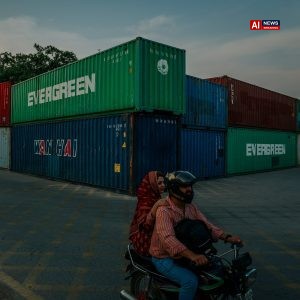
  Pakistani security forces deploy over 1,500 containers on Islamabad streets.
  As work requirements kick in for Medicaid, some states are taking a tougher stance
  Where things stand after Iran’s new pitch for a deal to open the Strait of Hormuz
 Pakistani security forces deploy over 1,500 containers on Islamabad streets.
**
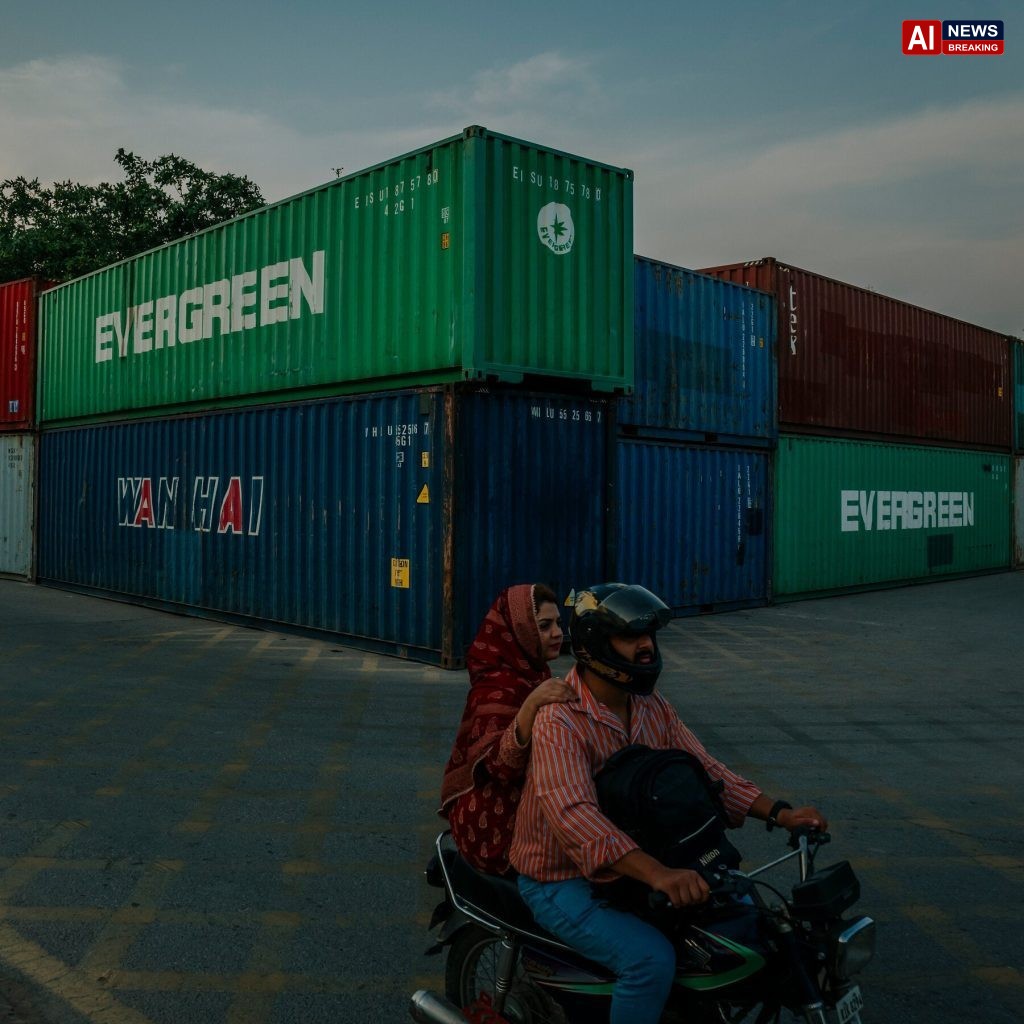
A Tetris-Like Maze Blocks Protests in Pakistan’s Capital - AI News Breaking
Pakistani security forces have transformed the streets of Islamabad into a concrete labyrinth, positioning more than 1,500 shipping containers along major thoroughfares in a bid to thwart a wave of opposition protests that have been gathering momentum in the capital. The massive deployment, described by observers as a “tetris‑like” maze of metal boxes, effectively cuts off key routes into the city centre, raising concerns about the impact on civil liberties, urban mobility and the broader political climate ahead of a crucial election cycle.The operation, which began in the early hours of Tuesday, saw police and paramilitary units transport the containers from the city’s industrial outskirts to strategic choke points around the Zero Point intersection, the Margalla Road corridor and the vicinity of the National Assembly. Satellite imagery and on‑the‑ground footage confirm that the containers have been stacked in a seemingly haphazard yet deliberately obstructive pattern, creating dead‑ends, narrow passages and blind spots that make navigation through the capital’s core extremely difficult..
While officials claim the measures are intended to “ensure public safety” and “prevent unlawful assemblies,” critics argue the tactic is a thinly veiled attempt to silence dissent.The protests, organised by a coalition of opposition parties and civil society groups, were sparked by recent legislative changes that many view as consolidating power in the hands of the ruling party. Demonstrators have called for the repeal of the new electoral reform bill, an independent inquiry into alleged vote‑rigging, and greater transparency in the allocation of foreign aid. Over the past week, rallies have drawn crowds of up to 20,000 people in the outskirts of the capital, with participants marching towards the parliamentary precinct to demand a televised debate with government representatives..
The government’s response has been to label the gatherings as “illegal” and “potentially destabilising,” a narrative that has been reinforced by the deployment of the container barriers.Local residents, who have lived under the shadow of the capital’s grand boulevards for decades, report a sudden disruption to daily life. Commuters face prolonged detours, public transport routes have been rerouted or suspended, and delivery trucks struggle to navigate the congested labyrinth. “I used to drive to work in ten minutes; now I spend an hour circling blocked streets,” said Ayesha Khan, a university professor who lives near the Islamabad Expressway..
“It feels like the city has been turned into a fortress, and we are the prisoners.” Small businesses near the barricades have also reported a sharp decline in foot traffic, with some owners fearing permanent loss of revenue if the closures persist.Human‑rights organisations have swiftly condemned the use of physical barriers to curtail the right to peaceful assembly. Amnesty International released a statement urging the Pakistani government to “respect international human‑rights obligations and refrain from employing disproportionate measures that impede lawful protest.” The statement highlighted that while states have a legitimate interest in maintaining public order, any restrictions must be necessary, proportionate and non‑discriminatory. A similar warning came from the United Nations Office of the High Commissioner for Human Rights, which noted that “the erection of massive container walls can constitute a form of intimidation and may chill the exercise of fundamental freedoms.”The legal basis for the container deployment remains opaque..
Government spokesperson Farhan Ahmed cited the “Public Safety Ordinance” as the authority under which the measures were taken, yet legal scholars point out that the ordinance does not explicitly grant powers to block public highways with such extensive structures. Professor Malik Aslam of Quaid-i-Azam University argues that “the lack of a clear legal framework about the constitutionality of the operation and could invite judicial review.” So far, no formal petition has been filed in the Islamabad High Court, but lawyers’ associations have signalled readiness to challenge the restrictions if they persist beyond a reasonable period.International reactions have been measured but pointed. The United Kingdom’s foreign office, in a diplomatic note to Islamabad, expressed “concern about reports of excessive crowd‑control measures and urged the Pakistani authorities to ensure that any restrictions on peaceful assembly are in line with international standards.” The United States, while traditionally cautious in commenting on internal security matters, released a brief statement reminding all parties of the importance of “upholding democratic norms and the rule of law.” These remarks, though diplomatic, add pressure on a government already navigating a delicate balance between security imperatives and democratic legitimacy.Inside the corridors of power, the decision to seal off Islamabad appears to have been coordinated at the highest levels..
Sources close to the Ministry of Interior disclosed that the operation was approved in a late‑night meeting attended by senior officials from the Inter‑Services Intelligence, the Federal Investigation Agency and the Capital Development Authority. The rationale, as conveyed to the press, was to “pre‑empt any attempts to breach the parliamentary precinct and to protect critical infrastructure from potential sabotage.” However, the absence of a clear communication strategy has left many citizens and journalists scrambling for reliable information, feeding an environment of speculation and mistrust.Journalists covering the protests have encountered a parallel set of challenges. Several media outlets reported that their reporters were turned away from the perimeters by armed guards, and that live‑streaming equipment was seized on multiple occasions..
The Pakistan Press Council issued an advisory urging authorities to “respect the freedom of the press” and to allow accredited journalists access to public spaces, emphasizing that “transparent reporting is essential for an informed citizenry.” The tightening of media access, combined with the physical barriers, has amplified fears of an information blackout at a time when the nation’s political trajectory is under intense scrutiny.The opposition, meanwhile, has adapted its tactics in response to the container maze. Organisers have shifted focus to virtual platforms, livestreaming speeches from private residences and using encrypted messaging apps to coordinate flash‑mob demonstrations in less‑monitored neighborhoods. In a televised address, opposition leader Bilal Hussain warned that “the government’s attempt to imprison the capital with steel boxes will not silence the voice of the people.” He called on supporters to remain peaceful but resolute, urging them to document any instances of state overreach and to share them widely on social media.Economic analysts warn that prolonged disruptions in Islamabad could have ripple effects across the broader national economy..
The capital serves as a hub for governmental agencies, multinational corporations and key transport links; any sustained blockage can delay bureaucratic processes, impede trade logistics and erode investor confidence. A recent report by the State Bank of Pakistan highlighted a modest slowdown in domestic credit flows, attributing part of the trend to “operational uncertainties in the capital region.” While the container walls may appear as a short‑term security solution, the long‑term cost to economic stability could be significant if they remain in place for weeks.As the standoff continues, the prospect of a.
Updated: September 26, 2026
Insight: The steel‑box maze signals a shift from reactive policing to a permanent urban fortification, hinting that the state now views dissent as a structural threat rather than a fleeting protest.
If the barriers persist, they could erode both civic trust and investor confidence, turning Islamabad’s streets into