 Kerala government fails
  Uncertainty over Ireland vs Israel Nations League game after training and news conference delayed
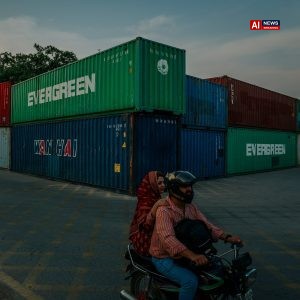
  Pakistani security forces deploy over 1,500 containers on Islamabad streets.
  As work requirements kick in for Medicaid, some states are taking a tougher stance
  Where things stand after Iran’s new pitch for a deal to open the Strait of Hormuz
 Kerala government fails
**
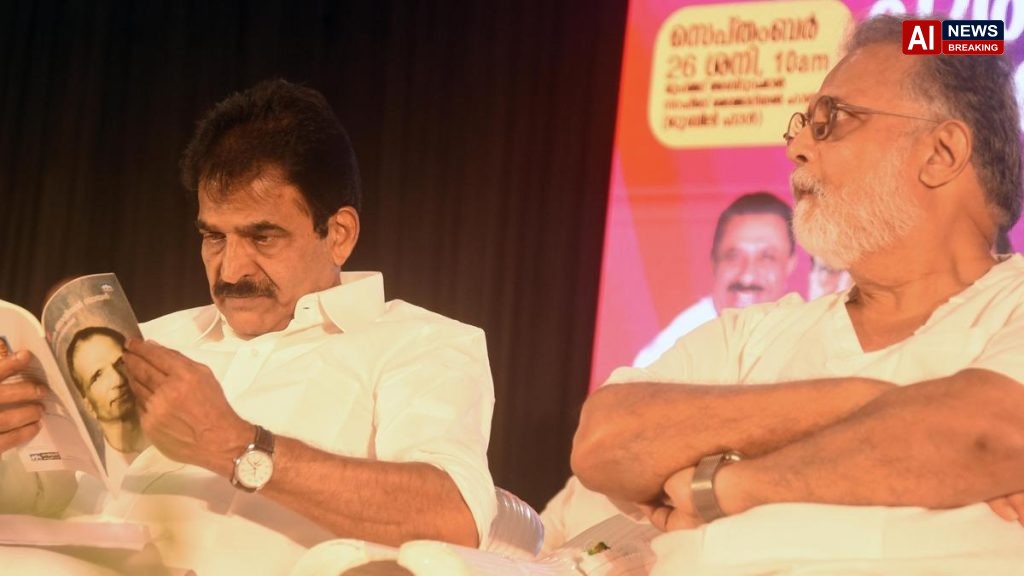
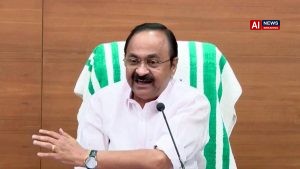
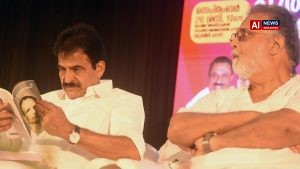
Tushar Gandhi ‘disappointed’ with Kerala government over IDSFFK row Mahatma Gandhi’s great‑grandson, Tushar Gandhi, has voiced strong criticism of the Kerala state administration after it failed to intervene when the Centre denied clearance to thirty‑one films slated for the International Documentary and Short Film Festival of Kerala (IDSFFK). Speaking to reporters in New Delhi on Tuesday, the activist said the government’s “lack of courage” reflected a disturbing trend of political acquiescence to central authority, undermining the autonomy of the country’s vibrant regional film culture. The episode has sparked a broader debate about federalism, artistic freedom and the role of state governments in protecting cultural expression..
The controversy began when the Ministry of Information and Broadcasting, citing “security concerns”, rejected the certification of a batch of documentaries and short films that had been selected by the IDSFFK organising committee. Among the denied works were titles dealing with environmental degradation in the Western Ghats, a historical drama about the 1921 Malabar uprising, and a feminist narrative set in a rural Kerala village. Festival officials argued that the films had already cleared the Central Board of Film Certification and that the sudden ban was an overreach, leaving the festival’s schedule in disarray just weeks before its opening night..
Kerala’s cultural affairs minister, K. Krishnakumar, responded to the impasse by issuing a statement that the state would “respect the centre’s decision while exploring legal recourse”. Critics, however, contend that the phrasing revealed a passive stance, suggesting the government preferred to avoid confrontation rather than champion the filmmakers’ right to showcase their work..
Tushar Gandhi, who heads the non‑profit “Gandhi Heritage Foundation”, seized on the language, saying the state had “failed to stand up for the very democratic values it claims to uphold”. In an interview on national television, Gandhi recounted his own family’s longstanding commitment to freedom of expression, tracing the lineage back to Mahatma Gandhi’s advocacy for uncensored speech during the independence movement. “Our forebears taught us that truth must be spoken, even when it makes those in power uncomfortable,” he said..
“When a state government bows to a dictatorial edict, it not only silences artists but also erodes the moral authority of the people it represents.” Legal experts have weighed in, noting that the centre’s move may be vulnerable to challenge under the Constitution’s Article 19(1)(a), which guarantees freedom of speech and expression. Senior advocate Anuradha Menon argued that the festival’s selection process was a form of “cultural speech” protected by the supreme law, and that any restriction must satisfy the stringent “reasonable restriction” test. “The government must show that the denial is necessary for the protection of public order, decency or morality,” she warned, adding that “the blanket denial of thirty‑one films appears arbitrary.” The film community has rallied in solidarity, with over 500 filmmakers and industry workers signing an open letter demanding the immediate reversal of the bans..
The letter, circulated on social media platforms, called for the Kerala government to file a writ petition in the Kerala High Court, arguing that the state has a constitutional duty to safeguard artistic expression within its jurisdiction. Several prominent directors, including Lijo Pillai and Shaji N. Karun, have pledged to boycott the festival unless the disputed films are reinstated. In response, the state’s chief ary, Dr R. Vijayakumar, convened an emergency meeting with senior officials of the Ministry of Information and Broadcasting..
Sources close to the discussions revealed that the central ministry cited “potential communal sensitivities” as the primary reason for the denial, a justification that many observers view as a pretext. The meeting reportedly concluded with an agreement to seek a “mutual understanding”, but no concrete timeline was offered for the reinstatement of the films. The IDSFFK, which has grown into one of South Asia’s most respected platforms for documentary cinema, faces a logistical nightmare..
Organisers had already printed programmes, booked venues and arranged travel for international guests. The uncertainty has forced many to reconsider attendance, threatening the festival’s reputation and its economic impact on the state’s tourism sector. According to the Kerala Tourism Department, the festival typically generates approximately ₹150 crore in direct and indirect revenue each year..
Political analysts suggest that the episode could have ramifications beyond the cultural sphere. “Kerala has historically positioned itself as a bastion of progressive politics,” said Dr M. Sanjay, a senior fellow at the Institute of Federal Studies. “If the state government continues to defer to the centre on matters of artistic freedom, it may embolden further encroachments, potentially reshaping the balance of power between Delhi and the states.” The commentary arrives at a time when several other states, including Tamil Nadu and West Bengal, are also grappling with central directives on content regulation..
Meanwhile, the central government has defended its decision, with the Information Minister, Prakash Javdekar, stating that “the safety and harmony of our nation remain paramount”. He reiterated that the films in question had not undergone a separate security vetting, and that the ministry was “open to dialogue” but would not compromise on national interest. The minister’s remarks were met with a chorus of criticism from civil‑rights organisations, which warned that such a stance could set a “dangerous precedent” for future cultural censorship..
Public opinion appears divided. A recent poll conducted by the Indian Opinion Survey found that 42 %.
Kerala’s silent acquiescence to a centrally‑imposed ban signals a troubling tilt toward hierarchical federalism, where state‑level cultural autonomy becomes a casualty of political expediency. The episode not only jeopardises the festival’s economic engine but also emboldens future central overreach, threatening the broader ecosystem of dissenting artistic voices across India.