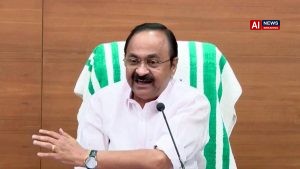
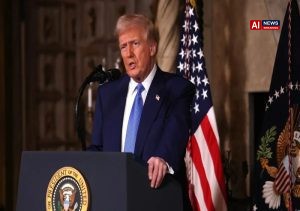
 Kerala police bar journalists from questioning chief minister.
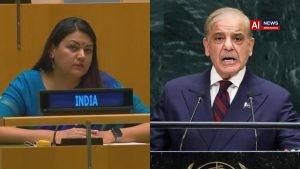
  India criticises Pakistan’s remarks at UN.
  A Tetris-Like Maze Blocks Protests in Pakistan’s Capital
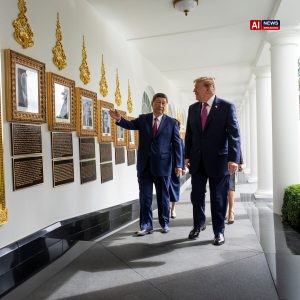
 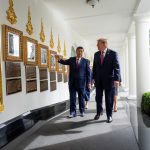 At Summit, Xi Sought to Tilt Trump’s Stance on America’s Place in Asia
  Trump Rejects Iran’s 7-Day Hormuz Plan: Strait Reopening Deal Hits Roadblock Amid US-Iran Tensions
 India criticises Pakistan’s remarks at UN.
**
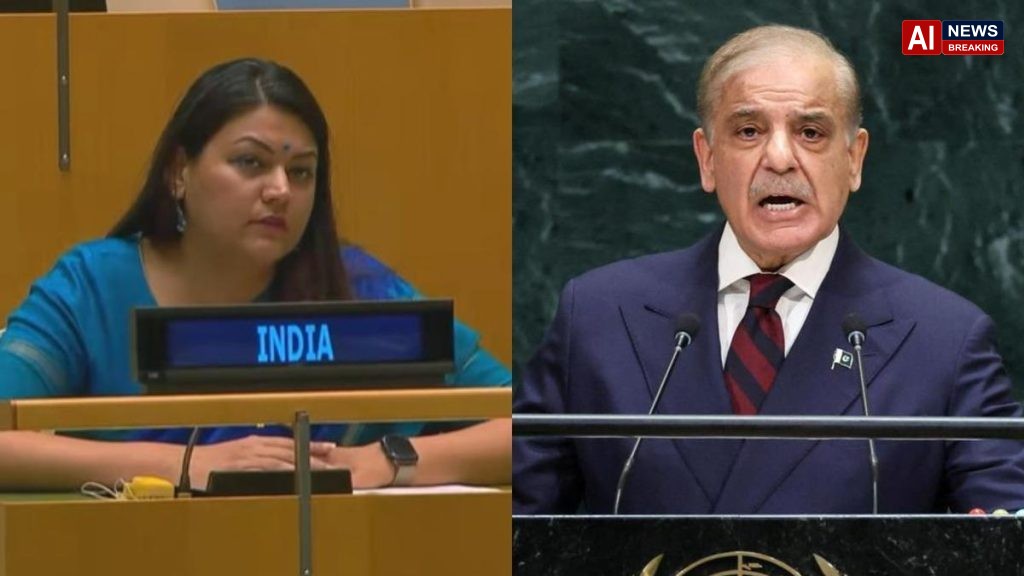
India criticises Pakistan’s ‘falsehoods’ and ‘deceit’ at UN; warns terrorism will have consequences - AI News Breaking
india criticises pakistans remarks:
India criticises Pakistan’s ‘falsehoods’ and ‘deceit’ at UN; warns terrorism will have consequences India lodged a formal Right of Reply at the United Nations following remarks by Pakistan’s prime minister, Shehbaz Sharif, who praised former US President Donald Trump for what he described as a “timely intervention” in the 2025 conflict that erupted along the Line of Control. In his address, Sharif also invoked the Kashmir issue, alleging that India had ignored the aspirations of the Kashmiri people. New Delhi responded by labeling the statements as “falsehoods” and “deceit”, demanding that the international body refrain from being used as a platform for political grandstanding..
In a brief but pointed statement, India’s deputy permanent representative, Ramesh Kumar, asserted that the 2025 hostilities were a direct consequence of Pakistan’s own provocations and support for cross‑border terrorism. He reminded the assembly that the United Nations Security Council had previously condemned terrorist acts emanating from Pakistani territory and called for the “full implementation of all relevant resolutions”. The Indian delegation warned that any further attempts to manipulate the UN agenda would be met with “decisive diplomatic action”..
The United Nations’ agenda for the day also included a scheduled debate on the Sustainable Development Goals, but the focus of the General Assembly shifted quickly to the South Asian dispute after Sharif’s remarks. Several member states expressed concern over the use of the UN platform to air bilateral grievances, emphasizing that the forum should remain centered on global peace and development. Nonetheless, the exchange highlighted lingering tensions between the two nuclear‑armed neighbours and underscored the challenges of maintaining a neutral diplomatic space..
Pakistan, for its part, has maintained that the 2025 conflict was sparked by India’s “unilateral aggression” in the contested region. Sharif’s reference to President Trump was framed as an acknowledgement of international support for Pakistan’s position, a narrative that New Delhi dismissed as “misleading”. Analysts note that the former US president’s administration had indeed issued statements urging restraint, but there is little evidence of direct involvement that would substantiate the claim of a “timely intervention”..
Kashmir, long a flashpoint in Indo‑Pak relations, re‑entered the conversation as Sharif highlighted the “right of self‑determination” for the people of Jammu and Kashmir. India’s response reiterated its constitutional claim over the entire region and pointed to the revocation of Article 370 in 2019 as a step toward greater integration and development. The Indian delegation warned that any external attempts to influence the status of Kashmir would be viewed as an infringement on its sovereignty and could “have serious consequences”..
Human rights organisations have repeatedly called for an independent investigation into alleged violations on both sides of the Line of Control. In its reply, India pledged to cooperate with any UN‑mandated inquiry, provided it adheres to the principles of impartiality and respects the security concerns of both nations. The statement also urged Pakistan to cease its support for militant groups that have historically targeted Indian civilians and security forces..
The diplomatic row comes at a time when both countries are navigating complex internal and external pressures. India is preparing for upcoming national elections, while Pakistan faces economic challenges exacerbated by international debt obligations. Both governments have sought to project an image of strength on the world stage, and the UN episode offers a glimpse into how each seeks to shape global perception of its policies..
Regional experts suggest that the exchange may have broader implications for South Asian security architecture. The South Asian Association for Regional Cooperation (SAARC) has struggled to maintain relevance amid persistent bilateral disputes, and the UN confrontation could further marginalise the organization’s role. Some observers argue that a renewed focus on multilateral mechanisms, such as the Shanghai Cooperation Organisation, might provide alternative avenues for dialogue..
China, a longstanding ally of Pakistan, issued a brief statement urging “peaceful resolution” of the Kashmir issue and called for “mutual respect of sovereignty”. While not directly commenting on India’s Right of Reply, Beijing’s language reflects its strategic interest in maintaining stability along its western border. The United States, meanwhile, has refrained from intervening in the debate, opting for a diplomatic posture that emphasizes de‑escalation..
The United Nations ariat has not indicated any intention to convene a special session on the matter, but the incident may prompt member states to revisit the rules governing Right of Reply procedures. Historically, such exchanges have been used to counter accusations of human rights abuses or territorial claims, yet the increasing frequency of politically charged interventions about the efficacy of the forum in fostering constructive dialogue. As the General Assembly continues its proceedings, the focus is likely to shift back to global issues such as climate change, pandemics and economic recovery..
Nevertheless, the episode serves as a reminder that regional conflicts can quickly permeate international institutions, challenging the UN’s capacity to remain an impartial arbiter. For India and Pakistan, the exchange underscores the enduring volatility of their relationship and the high stakes involved in any diplomatic misstep. The episode concludes with India’s clear warning that “terrorism will have consequences”, a phrase that signals a readiness to pursue both diplomatic and, if necessary, strategic measures to counter what it perceives as existential threats..
Whether this stance will translate into concrete actions or remain rhetorical remains to be seen, but the international community will be watching closely as both nations navigate the delicate balance between confrontation and cooperation..
Updated: September 26, 2026
India’s retort signals a shift from diplomatic posturing to a threat‑laden deterrence rhetoric, suggesting it may soon couple UN condemnations with real‑world counter‑terrorism actions. This move risks further eroding the UN’s neutrality, while simultaneously nudging Pakistan into a corner where any diplomatic misstep could trigger decisive, potentially forceful, retaliation.