 Kerala police bar journalists from questioning chief minister.
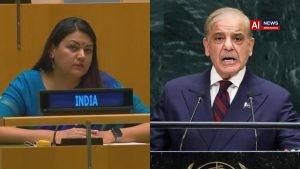
  India criticises Pakistan’s remarks at UN.
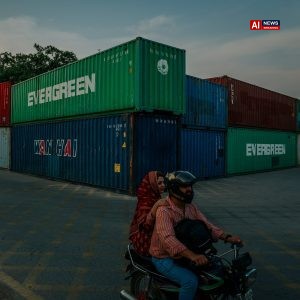
  A Tetris-Like Maze Blocks Protests in Pakistan’s Capital
  At Summit, Xi Sought to Tilt Trump’s Stance on America’s Place in Asia
  Trump Rejects Iran’s 7-Day Hormuz Plan: Strait Reopening Deal Hits Roadblock Amid US-Iran Tensions
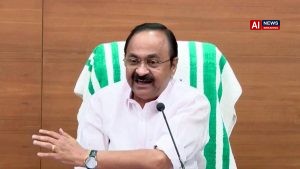
 Kerala police bar journalists from questioning chief minister.
** Police in Kerala told journalists they cannot approach Chief Minister Pinarayi Vijayan for interviews without clearance, invoking his Z Plus security rating. The directive has ignited controversy over press freedom, legal safeguards and the balance between safety and democratic accountability.
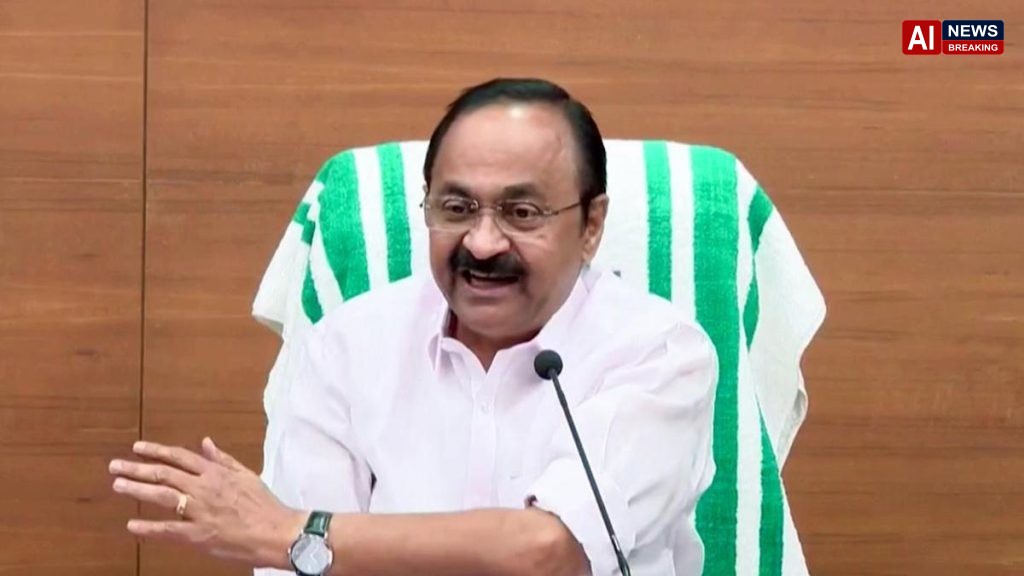
Kerala police bar journalists from questioning chief minister. - AI News Breaking
kerala police journalists questioning:
Police in Kerala have barred journalists from questioning the state’s chief minister, Pinarayi Vijayan, a move that has sparked a debate over press freedom and security protocols. The incident unfolded in Kochi on Tuesday when a senior police officer, identified as an assistant commissioner of police (ACP), addressed a gathering of reporters and informed them that the chief minister, who holds a Z Plus security rating, could not be approached for interviews without prior clearance. The officer’s remarks, captured on video and subsequently broadcast by several news channels, cited “security considerations” as the primary reason for the restriction.The Z Plus category, the highest level of protection afforded to individuals in India, entails a comprehensive security detail comprising around 55 personnel, advanced surveillance equipment and stringent movement controls..
Individuals under this classification are typically senior political leaders, high‑ranking officials and persons deemed vulnerable to terrorist threats. According to the Ministry of Home Affairs, the designation is intended to mitigate risks arising from credible intelligence inputs and to ensure the safety of those who might be targeted by hostile actors. The chief minister’s inclusion in this tier, officials said, reflects the volatile security environment in the region, particularly given recent incidents involving extremist groups and cross‑border tensions.The police statement, delivered in a brief press conference, emphasized that the decision was not intended to stifle the media but to safeguard both the chief minister and the journalists themselves..
“Any interaction with a Z Plus‑protected individual must be coordinated through the security apparatus to avoid inadvertent exposure to danger,” the ACP said. He added that the police were “committed to maintaining an open line of communication with the press, but that must be balanced against the imperatives of national security.” The officer’s comments were met with a mixture of acknowledgement and criticism from the assembled journalists, some of whom questioned whether the restriction was proportionate or necessary.Media organisations reacted swiftly. The Kerala Union of Working Journalists (KUWJ) issued a statement condemning what it described as “an unprecedented curtailment of press freedom.” The union argued that journalists have a constitutional right to seek information from elected officials and that the police’s directive could set a troubling precedent..
“While we recognise the need for security, it must not become a blanket excuse to silence legitimate enquiry,” the statement read. The Indian Newspaper Society (INS) echoed similar concerns, urging the authorities to clarify the procedural framework for media access and to ensure that any limitations are narrowly tailored and time‑bound.Legal experts have weighed in on the constitutional dimensions of the episode. Arvind Kumar, a professor of constitutional law at the National Law School, “the right to freedom of speech and expression, enshrined in Article 19(1)(a) of the Constitution, includes the freedom of the press to ask questions of public officials..
Any restriction must satisfy the test of reasonable restriction under Article 19(2), which demands that it be in the interests of sovereignty, security, public order, decency, or morality, and must be proportionate.” He warned that an over‑broad interpretation of “security” could erode democratic accountability. However, he also noted that courts have historically upheld certain limitations when credible threats are demonstrated, pointing to past judgments where the judiciary balanced individual rights against collective safety.The chief minister’s office has not directly addressed the police’s directive, but a spokesperson for the government issued a brief comment indicating that “the administration remains committed to transparency while also ensuring the safety of its leaders and citizens.” The spokesperson declined to elaborate on the specifics of the chief minister’s security arrangement, citing confidentiality concerns. This measured response has done little to quell speculation, with opposition parties demanding more clarity on the criteria used to assign the Z Plus status and whether political considerations played a role.Political analysts suggest that the episode may reflect broader trends in Indian politics, where heightened security alerts have increasingly intersected with media operations..
“In the past decade, we have seen a rise in the number of officials being placed under higher security categories, often in response to intelligence inputs that are not publicly disclosed,” said Priya Menon, a senior fellow at the Centre for Policy Research. “While the intent is to protect, the lack of transparency can fuel distrust, especially when the media feels excluded from the decision‑making process.” She added that a more collaborative approach, involving regular briefings between security agencies and press bodies, could mitigate tensions.The incident also about the operational protocols governing interactions between the police and the press. In India, there is no uniform statutory framework that dictates how journalists may seek access to high‑profile officials, leaving much to administrative discretion..
The Press Council of India, a quasi‑judicial body, has previously recommended that law‑enforcement agencies establish clear guidelines to prevent arbitrary restrictions. However, compliance remains inconsistent across states, and critics argue that the lack of a binding code leaves journalists vulnerable to ad‑hoc decisions.Public reaction, as reflected on social media platforms, has been mixed. Some users expressed support for the police’s precautionary stance, citing recent bombings in the neighboring state of Tamil Nadu as evidence of an escalating threat landscape..
Others, particularly those aligned with civil‑society groups, decried the move as an “attempt to muzzle dissent” and called for a “transparent review” of the security measures. Hashtags such as #PressFreedom and #SecurityVsTransparency trended on Twitter in the hours following the broadcast, indicating a lively debate among netizens.As the story develops, the focus now shifts to whether the police will issue a formal protocol outlining the process for media inquiries involving Z Plus‑protected officials. Observers note that such a protocol could balance the dual imperatives of security and accountability, providing journalists with a clear pathway to request interviews while ensuring that any engagement is vetted for risk..
Until then, the standoff serves as a reminder of the delicate equilibrium that democratic societies must maintain between safeguarding leaders and preserving an unfettered press, a balance that, according to constitutional scholars, lies at the heart of India’s democratic ethos..
Updated: September 26, 2026
Kerala police have told journalists they must obtain clearance before questioning Chief Minister Pinarayi Vijayan, citing his Z Plus security rating, prompting media bodies to warn of an unprecedented clamp‑down on press freedom. Legal experts and opposition parties are urging a transparent, proportionate protocol to balance security concerns with constitutional rights to information.