Europe warns of Russia’s hybrid attacks but struggles to counter them
  Former chief election commissioner calls SIR scheme illegal.
  A Corruption Scandal Is Reshaping Brazil’s Presidential Election
  US citizen injured in Illinois after ICE agents mistook him for fugitive, tried to arrest him
  At 10 years old, Smithsonian’s Black museum is undaunted amid pressure from Trump administration
 South Africa Water Crisis Deepens as Residents Accuse Criminal Gangs of Exploiting Shortages
South Africans are accusing criminal gangs of taking advantage of the country’s worsening water crisis, turning a basic public service failure into an opportunity for exploitation and profit, as weak infrastructure, municipal breakdowns, and poor governance exacerbate the problem.
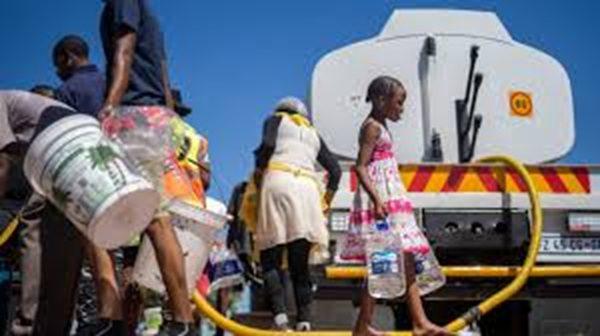
South Africans are increasingly alleging that criminal gangs are taking advantage of the country’s worsening water crisis, turning a basic public service failure into an opportunity for extortion, theft and illegal profiteering. As prolonged shortages disrupt daily life in several communities, residents say organised groups are stepping into the vacuum left by weak infrastructure, municipal breakdowns and poor water governance.
The growing anger reflects a wider national concern: when essential services fail, criminal networks often find ways to monetise the chaos. In water-stressed neighbourhoods, that can mean illegal control over tanker supply, theft from pipelines, sabotage of infrastructure, or forcing desperate residents and businesses to pay inflated prices for access to clean water.
Across parts of South Africa, water shortages have become a routine struggle rather than a temporary emergency. Ageing infrastructure, leaking systems, power cuts, drought pressure, poor maintenance and financial distress at local government level have all contributed to repeated disruptions. In that environment, residents say criminal elements are increasingly exploiting scarcity in ways that deepen hardship for ordinary households.
One of the biggest fears among affected communities is that water tanker systems are becoming vulnerable to manipulation. Where piped water supply becomes unreliable, emergency tankers often serve as a lifeline. But residents and activists have long warned that tanker contracts and delivery systems can become opaque, politicised, or vulnerable to criminal capture. In such situations, accusations often arise that some groups profit from keeping communities dependent on emergency supply rather than permanent infrastructure repair.
There are also claims that gangs and illicit operators are involved in vandalism and theft linked to water systems. Copper cables, pumps, valves and other infrastructure components can be stolen or damaged, delaying restoration and increasing costs. In some areas, residents suspect that repeated disruptions are not always accidental, but tied to criminal incentives in places where scarcity itself becomes profitable.
The water crisis has therefore evolved beyond a question of engineering and public administration. For many South Africans, it is also becoming a law-and-order issue. When taps run dry for days and weeks, communities become more vulnerable to coercion. People may be forced to queue for hours, pay private suppliers, or depend on informal arrangements that can easily be abused. In poorer areas, the burden is especially severe because families have fewer alternatives for storage, transport or private purchase.
This perceived criminal exploitation also fuels public distrust toward local authorities. Many residents believe the state has failed not only to provide consistent water access, but also to protect critical infrastructure and prevent opportunistic networks from thriving around the crisis. Each fresh breakdown strengthens the impression that institutions are losing control over essential systems.
At the heart of the crisis is the uneven condition of South Africa’s municipal water infrastructure. In many places, pipes are old, maintenance backlogs are severe, and non-revenue water losses are extremely high. Large volumes of treated water are lost before reaching homes because of leaks, bursts, illegal connections and poor asset management. That weakens pressure across systems and makes outages more frequent, especially during peak demand or electricity disruptions.
Load shedding and other power-related interruptions have also made water supply more fragile. Pump stations and treatment facilities depend heavily on reliable electricity. When power cuts strike, supply chains can be interrupted, reservoirs may not refill properly, and already strained systems come under additional stress. That creates a cascading effect in cities and townships where resilience is limited.
Climate stress compounds these structural failures. South Africa is a water-scarce country, and rainfall variability makes urban and rural supply more difficult to manage. Droughts, delayed rains and rising temperatures increase pressure on dams, catchments and municipal systems. But many experts argue that while climate conditions matter, the immediate crisis is also rooted in governance failures that have left infrastructure unable to cope with predictable stress.
In many communities, residents now describe water insecurity as part of everyday life. People wake early to collect water, store it in buckets and tanks, and constantly monitor supply schedules. Schools, clinics, restaurants and small businesses face repeated disruption. Hygiene becomes harder to maintain, household routines break down, and economic activity suffers. When criminality enters that picture, the sense of vulnerability becomes even sharper.
Reports and public complaints suggesting gang involvement highlight a broader pattern seen in service-delivery crises worldwide: whenever a state system weakens, informal and criminal intermediaries can emerge. These actors may present themselves as problem-solvers, but they often operate through intimidation, inflated pricing or collusion. Over time, crisis management itself can become a source of illicit revenue.
That is why many South Africans are demanding not just emergency relief but long-term structural reform. Residents want stronger policing around strategic water assets, transparent management of tanker contracts, quicker repair of damaged infrastructure, and tougher action against vandalism, theft and corruption. They also want municipalities to restore public trust by communicating clearly about outages, repairs and contingency plans.
The issue has political as well as social consequences. Water shortages have become one of the clearest symbols of state weakness in some areas, feeding public frustration over governance, inequality and failing local services. Allegations that gangs are exploiting the crisis make the situation even more explosive, because they suggest that the state is not merely underperforming but ceding ground to criminal power.
For households living through recurring shortages, the debate is no longer abstract. It is about whether clean water arrives, whether children can bathe before school, whether toilets can flush, whether food businesses can stay open, and whether vulnerable residents can avoid paying predatory prices. In that context, every disruption carries both a human cost and a security risk.
South Africa’s water crisis is therefore becoming a test of institutional credibility. Fixing pipes and pumps is essential, but so is preventing scarcity from being captured by criminal opportunists. Unless authorities can secure infrastructure, improve municipal management and restore reliable supply, residents fear that gangs and informal rackets will continue to thrive in the gaps left by a failing system.
The warning from affected communities is stark: when water becomes scarce, power shifts toward whoever controls access. And when that control slips away from accountable public institutions, the crisis extends far beyond dry taps.