Europe warns of Russia’s hybrid attacks but struggles to counter them
  Former chief election commissioner calls SIR scheme illegal.
  A Corruption Scandal Is Reshaping Brazil’s Presidential Election
  US citizen injured in Illinois after ICE agents mistook him for fugitive, tried to arrest him
  At 10 years old, Smithsonian’s Black museum is undaunted amid pressure from Trump administration
 US Targets 60 Countries With New Tariffs Over Forced Labor Concerns, Sparking Global Trade Tensions
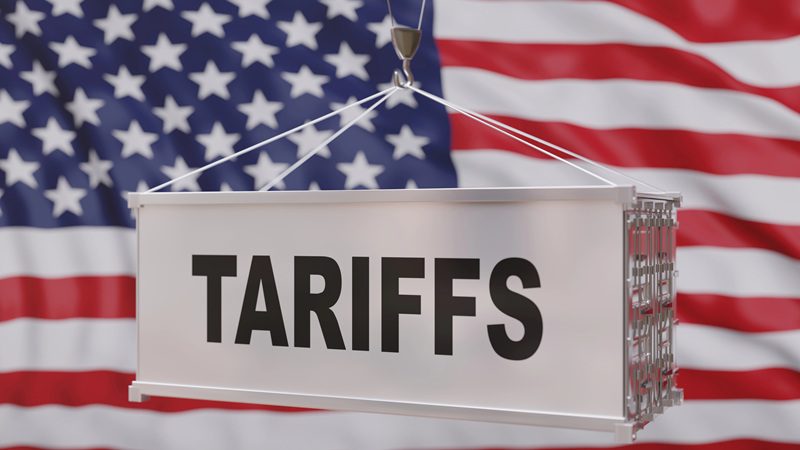
US imposes tariffs - AI News Breaking
targets countries tariffs forced:
The Trump administration has unveiled a sweeping proposal to impose new tariffs on imports from 60 economies, including key allies such as the United Kingdom, Canada, and the European Union, citing failures to adequately prevent goods made with forced labor from entering global supply chains. The move threatens to reignite international trade disputes and could reshape economic relations between the United States and some of its largest trading partners.
US Proposes Broad New Tariff Regime Amid Forced Labor Crackdown
WASHINGTON — The Trump administration has launched a fresh front in its global trade agenda, proposing additional tariffs of up to 12.5% on imports from 60 economies after a government investigation concluded that many countries have failed to effectively combat the trade of goods produced with forced labor. The proposal, announced by the Office of the United States Trade Representative (USTR), marks one of the most ambitious trade enforcement actions of President Donald Trump’s second term and could significantly impact global supply chains.
Under the plan, imports from countries deemed to have taken partial action against forced labor would face a 10% tariff, while nations judged to have weaker legal frameworks or enforcement mechanisms would be subject to a higher 12.5% duty. The proposal covers a broad spectrum of U.S. trading partners, including the United Kingdom, Canada, Mexico, Taiwan, the European Union, China, India, Japan, South Korea, Brazil, and Switzerland.
The administration argues that the widespread failure of countries to prevent the import and export of goods linked to forced labor creates unfair competition for American businesses and workers.
“The failure of our most important trading partners to address the importation of goods made with forced labor is unacceptable,” U.S. Trade Representative Jamieson Greer said in a statement accompanying the report. “This creates a dynamic where American workers are forced to compete globally on an unlevel playing field.”
Investigation Forms Basis for New Trade Measures
The tariff proposal stems from a series of investigations launched earlier this year under Section 301 of the Trade Act of 1974, a legal mechanism that allows the United States to respond to unfair foreign trade practices. The USTR examined whether governments around the world had enacted and enforced sufficient measures to prohibit the importation of goods produced through forced labor.
Officials concluded that all 60 economies investigated had shortcomings in their efforts to eliminate forced labor-linked products from international commerce. While some countries had enacted laws addressing the issue, U.S. authorities argued that enforcement remained inconsistent or inadequate.
The administration’s latest move also serves another purpose. Following a Supreme Court decision earlier this year that invalidated parts of Trump’s previous emergency tariff framework, the White House has been seeking alternative legal pathways to preserve its trade strategy. Section 301 investigations offer one such route, providing a stronger legal foundation for new import duties.
United Kingdom Among Allies Caught in Tariff Net
Perhaps the most politically sensitive aspect of the proposal is the inclusion of several close U.S. allies, including the United Kingdom. Britain has long promoted itself as a global leader in combating modern slavery through legislation such as the Modern Slavery Act. Nevertheless, U.S. officials contend that existing British regulations do not go far enough in preventing products linked to forced labor from entering supply chains.
The UK would face a 10% additional tariff under the proposal, placing it in the same category as Canada, Mexico, Taiwan, and several European partners. The move has generated concern among policymakers and business groups who fear it could undermine transatlantic trade relations at a time of growing economic uncertainty.
European officials reacted swiftly. Bernd Lange, chair of the European Parliament’s Committee on International Trade, criticized the proposal and argued that the European Union has already implemented some of the strictest anti-forced-labor regulations in the world. He warned that additional tariffs would violate existing trade understandings between Washington and Brussels.
China, India and Major Asian Economies Face Higher Duties
While traditional U.S. allies would generally face a 10% tariff, a higher 12.5% rate has been proposed for countries including China, India, Japan, South Korea, Brazil, and Switzerland. U.S. officials argue that these nations either lack comprehensive prohibitions on forced labor imports or have not demonstrated sufficient enforcement efforts.
India’s inclusion is particularly notable given ongoing efforts by New Delhi and Washington to finalize a broader trade framework agreement. Indian officials have acknowledged engagement with the United States regarding the Section 301 investigation while simultaneously pursuing negotiations aimed at strengthening bilateral trade ties.
China, which has frequently been at the center of Western concerns over alleged forced labor practices, particularly in Xinjiang, is also among the countries facing the higher tariff category. Beijing has consistently denied such allegations and accused Washington of using labor concerns as a pretext for economic pressure.
Industries and Supply Chains Could Feel the Impact
If implemented, the tariffs would affect a wide range of products imported into the United States. However, the administration has proposed exemptions for several sectors considered strategically important or difficult to replace, including energy products, pharmaceuticals, aircraft components, and certain agricultural goods.
The USTR has also proposed a separate mechanism for apparel and textile imports, potentially allowing certain products to enter the U.S. market under reduced tariff rates. Industry groups are closely monitoring these provisions, as textiles remain among the sectors most vulnerable to disruptions stemming from labor-related trade restrictions.
Economists warn that additional tariffs could increase costs for manufacturers and consumers alike. Companies dependent on global supply chains may face higher import expenses, which could eventually be passed on to households through higher prices for consumer goods. At the same time, domestic industries competing with imports may receive additional protection.
International Backlash Begins to Build
The proposal has already triggered strong reactions from several governments. European officials have described the findings as unjustified, while trade representatives from multiple countries argue that they have already implemented measures designed to identify and block goods produced through forced labor.
Critics also question the methodology used in the USTR investigation. Some policymakers and trade experts argue that grouping advanced economies such as the United Kingdom, Canada, Australia, and Japan alongside countries facing more serious labor-rights concerns could undermine the credibility of the initiative.
Business groups have warned that the tariffs could create fresh uncertainty for global markets at a time when many economies are already grappling with slowing growth, inflation pressures, and geopolitical instability.
Public Review Process Still Ahead
Despite the sweeping nature of the proposal, the tariffs are not yet final. The USTR has opened a public comment period that will run until July 6, followed by formal hearings beginning July 7. During this process, governments, businesses, labor organizations, and other stakeholders will have an opportunity to present evidence and challenge the findings.
The administration could modify, narrow, or expand the tariff structure based on feedback received during the review process. Nevertheless, the proposal sends a clear signal that Washington intends to place labor standards at the center of its evolving trade policy.
A New Phase in Trump’s Trade Strategy
The proposed tariffs represent the latest chapter in President Trump’s effort to reshape global trade relationships through aggressive enforcement measures. Unlike earlier tariff campaigns focused primarily on trade deficits and industrial competition, the new initiative is framed around labor rights and ethical sourcing standards.
Whether the strategy ultimately succeeds remains uncertain. Supporters argue that stronger economic penalties are necessary to eliminate forced labor from global supply chains and protect American workers. Critics counter that the tariffs risk becoming another source of international friction while raising costs for businesses and consumers.
For now, governments around the world are assessing the implications of a proposal that could alter billions of dollars in trade flows and test the resilience of economic relationships that have long underpinned the global trading system.
The Trump administration’s latest tariff proposal highlights a growing trend in global trade: the integration of labor rights, sustainability, and ethical sourcing into economic policy. While concerns about forced labor are increasingly shared across advanced economies, using broad tariffs as an enforcement tool risks creating diplomatic friction with allies as well as rivals. The outcome of this initiative may set an important precedent for how future governments use trade policy to influence labor standards beyond their borders. If implemented, the measures could accelerate corporate efforts to audit supply chains and diversify sourcing, but they may also contribute to higher costs and greater fragmentation in international commerce.