Europe warns of Russia’s hybrid attacks but struggles to counter them
  Former chief election commissioner calls SIR scheme illegal.
  A Corruption Scandal Is Reshaping Brazil’s Presidential Election
  US citizen injured in Illinois after ICE agents mistook him for fugitive, tried to arrest him
  At 10 years old, Smithsonian’s Black museum is undaunted amid pressure from Trump administration
 Defense Summit: Funding Takes Center Stage as Europe Weighs Its Role in a NATO Without the US
defense summit funding takes:
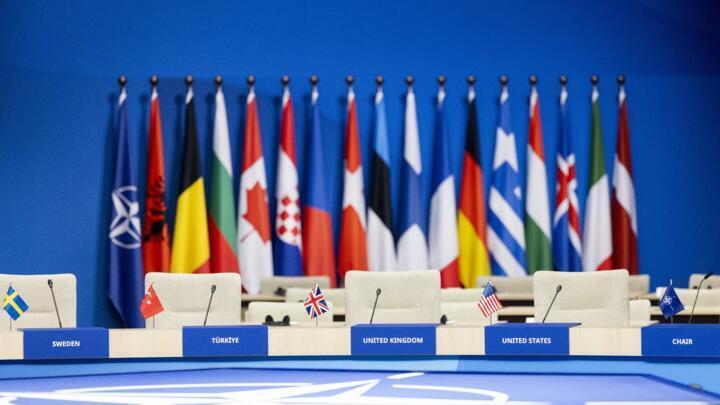
Europe’s defense debate is entering a more consequential phase, with funding now emerging as the central issue at high-level security discussions and policymakers increasingly confronting a once-unthinkable question: what would NATO look like if the United States stepped back? The latest Table.Briefings coverage frames that dilemma around two linked themes — how to pay for Europe’s military buildup and how far Europe can go in assuming a larger strategic role inside, or beyond, the Atlantic alliance.
The funding question has moved to the forefront because Europe’s security ambitions are expanding faster than its financial architecture. Across recent NATO and EU discussions, officials have pushed for major increases in defense spending, stronger procurement commitments, more investment in industrial capacity, and better mechanisms to finance both established defense giants and newer entrants such as startups and scale-ups. Table.Briefings reports that financing for new defense players has become a major summit theme, reflecting a broader recognition that military readiness is no longer only about troop numbers or weapons stockpiles, but also about capital access, manufacturing depth, and technological scaling.
This shift is important because Europe’s defense-industrial challenge is not simply one of ambition, but of execution. Governments may announce higher spending targets, but unless money reaches production lines, research programs, logistics networks, and innovation ecosystems, headline commitments will not translate into real capability. That is why summit discussions increasingly revolve around who funds expansion, how quickly private capital can be mobilized, and what role public institutions should play in de-risking defense investment. The issue is not just spending more, but building a system capable of sustaining long-term rearmament.
The broader NATO context makes this funding debate more urgent. Recent alliance discussions have included pressure for members to devote a larger share of GDP to defense, with one reported framework calling for 3.5 percent for core defense spending and additional broader security-related outlays. That kind of target would require a major fiscal and political shift across Europe, especially in countries already managing debt burdens, sluggish growth, or domestic resistance to military expenditure. Even where political will exists, converting national budgets into deployable capability remains a complicated process involving procurement reform, industrial coordination, and long-term planning.
At the same time, the debate over Europe’s place in a NATO without the US reflects mounting concern about strategic dependency. Table.Briefings and related analysis point to a growing discussion in Europe over whether the continent can continue to rely on American military power as the ultimate backstop for its security. In one cited briefing, Chancellor Friedrich Merz is quoted emphasizing that “the European Union, the European part of NATO, must be able to defend itself,” underscoring how mainstream the language of greater European self-reliance has become.
That does not necessarily mean an imminent US withdrawal from NATO. In fact, analyses linked through Table.Media suggest that many European governments still expect the United States to remain a key security actor, even as they worry about a gradual recalibration or reduction of the US military presence in Europe. The concern is less about a sudden formal exit and more about a steady erosion of American willingness to bear the principal burden for European security. That possibility has pushed European capitals to think more seriously about defense autonomy, burden-sharing, and alternative alliance structures.
The procurement dimension adds another layer of complexity. Europe wants to spend more on defense, but a significant share of that money has historically flowed to US manufacturers. One recent policy analysis hosted by Table.Media notes that European leaders and institutions are debating how much of the continent’s enlarged defense budget should benefit domestic industry versus American firms. The issue is politically sensitive because buying US systems may strengthen short-term military readiness, but it can also deepen long-term dependence on foreign technology, supply chains, maintenance ecosystems, and software support.
That tension lies at the heart of Europe’s strategic dilemma. On one side, US-made systems are often battle-tested, available at scale, and integrated into NATO structures. On the other, overreliance on them can leave Europe vulnerable if Washington’s priorities change. The Table.Media-hosted analysis highlights concerns over operational dependencies in advanced systems and the broader political debate around “strategic autonomy.” Even when some of the most dramatic fears are dismissed, the underlying issue remains real: capability without sovereign control can become a strategic weakness.
This is why the current defense summit conversation is not just about how much Europe spends, but where that money goes. Funding defense startups, supporting prime contractors, and building industrial partnerships inside Europe are all part of an effort to avoid a future in which Europe pays more for defense but still lacks independent capacity. The prominence of venture capital and scale-up financing in summit discussions suggests that European policymakers increasingly see defense as an ecosystem challenge, not merely a government purchasing problem.
The role of institutions such as the European Investment Bank also matters. Recent Table.Briefings coverage has pointed to expectations that the EIB could play a key role in unlocking defense-related funding. That would mark a notable evolution in Europe’s financial toolkit, because defense has historically been treated differently from other strategic industries when it comes to public finance norms. If European institutions become more active in underwriting security-related investment, it could help bridge the gap between political rhetoric and industrial delivery.
A NATO without the US, whether literal or partial, would force Europe to answer at least three hard questions. First, can it generate enough money to fund deterrence at scale? Second, can it coordinate procurement efficiently enough to avoid waste, duplication, and national fragmentation? Third, can it build the command, logistics, intelligence, and industrial backbone required for a more autonomous defense posture? Current summit discussions suggest that Europe is beginning to engage with all three, but funding remains the enabling variable. Without sustainable financing, the rest remains aspirational.
The politics of this transition are also delicate. European leaders must persuade voters that higher defense spending is necessary at a time when citizens are also concerned about inflation, social welfare, migration, energy costs, and economic competitiveness. Defense budgets do not rise in a political vacuum. To sustain support, governments will likely need to frame military investment not just as a response to security threats, but as an industrial policy that creates jobs, advances technology, and strengthens resilience. That framing is already visible in the growing focus on defense manufacturing, innovation financing, and public-private cooperation.
Another challenge is timing. Building real military capacity takes years, while geopolitical shocks unfold quickly. Even if Europe agrees on larger budgets today, factories must expand, supply chains must adapt, skilled labor must be trained, and procurement bottlenecks must be resolved. Startups may bring agility and innovation, but they still need patient capital, reliable contracts, and pathways into military acquisition systems traditionally dominated by incumbents. Making the defense ecosystem more dynamic therefore requires structural reform alongside fresh funding.
The summit focus on funding also reflects a wider transformation in how Europe thinks about security. Defense is no longer treated as a narrowly military matter. It now overlaps with industrial strategy, technological sovereignty, energy resilience, critical infrastructure protection, and supply-chain security. In that sense, the question of Europe’s role in a NATO without the US is not only about soldiers and tanks. It is about whether Europe can build the economic and technological foundations of strategic power.
Recent developments have made this conversation more concrete. Table.Briefings has tracked debates on armament targets, defense industry scaling, the role of new entrants, and Europe’s need to strengthen its own capacity within the alliance. The cumulative picture is of a continent moving from theoretical discussions of burden-sharing to much more practical questions of money, manufacturing, and institutional readiness. Funding takes center stage because it is the bridge between Europe’s strategic anxiety and its ability to act on that anxiety.
In strategic terms, Europe’s challenge is to build enough autonomy to remain secure even if US support becomes less predictable, while preserving enough transatlantic cohesion to avoid weakening NATO in the process. That balancing act is difficult. Too much dependence leaves Europe exposed; too much decoupling could undermine alliance unity and duplicate existing strengths. The emerging consensus appears to be that Europe must become stronger inside NATO first, so that any future reduction in US engagement does not translate directly into a security vacuum.
That is why the phrase “a NATO without the US” should be understood as both a warning and a planning scenario. It is not merely speculation about alliance collapse. It is a stress test for Europe’s preparedness. If the continent cannot finance a credible defense posture under that scenario, then its current security model remains overly fragile. If it can, then even a continued US role becomes more sustainable because burden-sharing becomes more balanced.
Ultimately, the latest defense summit debate shows that Europe is entering a decisive period in security policy. The centrality of funding is not accidental. Money determines procurement, production, innovation, readiness, and resilience. And those, in turn, determine whether Europe can play a serious strategic role in a more uncertain transatlantic future. As the Table.Briefings framing suggests, the real issue is no longer whether Europe should do more. It is whether Europe can finance, organize, and industrialize that effort fast enough to matter.