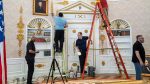
 A replica Oval Office near the White House just got a new Trump makeover. Gold flourishes abound
  Process disenfranchising millions, turning them to second class citizens is arbitrary, says Justice Bhuyan
  Iran’s Top Security Official Warns of Dire Economic Crisis
  After Mangaluru bades farewell to Southern Railway, forum recalls decades’ long association of coastal city with the Zone
 Scotlandville split
**
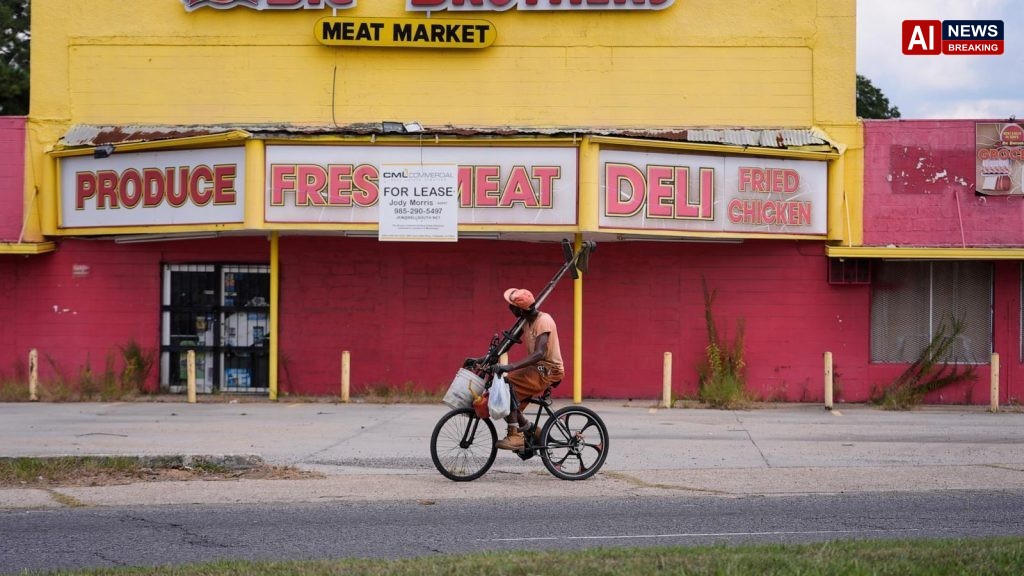
A Black community in Louisiana faces a future without a champion in Congress after redistricting - AI News Breaking
A Black community in Louisiana faces a future without a champion in Congress after redistricting Scotlandville, a historically Black neighbourhood on the west bank of the Mississippi River in Baton Rouge, has long been a focal point of civil‑rights activism and a reliable source of votes for Democratic candidates. The community, home to roughly 12,000 residents, has seen its political clout eroded by the latest round of congressional redistricting, which could leave it without a dedicated representative in the U.S. House for the first time since the 1970s..
Local leaders warn that the new map fragments the area across three districts, diluting its influence and threatening the progress made on issues ranging from education funding to criminal‑justice reform. The redrawing of Louisiana’s congressional lines, mandated after the 2020 census, was overseen by a state‑appointed commission dominated by Republicans. While the commission claims the new boundaries meet legal requirements and reflect population shifts, critics argue the process was opaque and partisan..
By splitting Scotlandville among the 1st, 2nd and 6th districts, the map reduces the community’s ability to elect a single member of Congress who understands its unique challenges, a concern echoed by civil‑rights groups and former representatives who have served the area. For decades, Scotlandville has been represented by a succession of Black congresspeople who championed federal investments in the neighbourhood’s schools, health clinics and infrastructure. Representative Cedric Richmond, who held the seat from 2011 to 2021 before moving to the White House, secured millions in funding for local road improvements and advocated for the expansion of Medicaid in Louisiana..
His successor, Troy Carter, continued that work, focusing on broadband access and criminal‑justice reform. Both lawmakers have highlighted the importance of a single, cohesive district that mirrors the community’s demographic makeup. The new district configuration could force Scotlandville’s voters to choose between candidates whose platforms do not prioritize the neighbourhood’s needs..
In the 1st district, the incumbent is a Republican with a voting record that includes opposition to Medicaid expansion and limited support for public‑school funding. The 2nd district is represented by a Democrat whose base lies in New Orleans, while the 6th district’s incumbent has a mixed record on civil‑rights legislation. This division may compel Scotlandville residents to split their votes, diminishing their collective bargaining power at the federal level..
Community activists have mobilized quickly in response, organizing town halls and forming a coalition called “One Scotlandville, One Voice.” The group’s leaders argue that the redistricting plan not only fragments their political voice but also contravenes the Voting Rights Act, which aims to protect minority voting strength. They have filed a legal challenge, seeking a preliminary injunction to halt the implementation of the new map before the 2024 elections, citing concerns that the split will dilute Black voting power in violation of federal law. Legal scholars note that the case adds to a growing number of challenges across the country where minority‑majority districts are being altered or eliminated..
While the Supreme Court’s recent decisions have narrowed the scope of the Voting Rights Act, lower courts continue to hear cases that question whether partisan gerrymandering disproportionately harms minority voters. The outcome of Scotlandville’s lawsuit could set a precedent for other Southern states where similar redistricting battles are unfolding. In the meantime, local officials are grappling with the practical implications of the new boundaries..
Baton Rouge’s mayor, Sharon Weston‑Browne, warned that the split could complicate efforts to secure federal grants for community projects, as coordination would now require navigating three separate congressional offices. She urged residents to stay engaged, emphasizing that voter turnout will be crucial in determining who ultimately represents their interests, even if the district lines remain unchanged. The stakes are heightened by the broader political climate in Louisiana, where the Republican supermajority in the state legislature has pursued an aggressive agenda to reshape electoral maps in its favor..
Critics contend that the redistricting is part of a systematic effort to marginalize Black voters and consolidate partisan power. Proponents argue that the new map reflects demographic realities and ensures equal representation for all citizens, irrespective of race. Polling data released by the Louisiana Public Policy Institute indicates that a majority of Scotlandville residents feel “disconnected” from their prospective representatives under the new plan..
Over 68 per cent expressed concern that their specific needs—such as flood mitigation, school improvement and job creation—might be overlooked. The sentiment underscores the broader anxiety about losing a dedicated advocate in Congress who can navigate federal bureaucracy and champion targeted legislation. If the legal challenge fails and the new districts are upheld, Scotlandville may have to adapt its political strategy, focusing on coalition‑building across district lines..
Experts suggest that community leaders could seek to influence multiple congressional offices simultaneously, leveraging the community’s voting bloc in each district to negotiate favorable outcomes. However, such an approach requires significant resources and coordination, which may strain already limited local capacities. The situation in Scotlandville reflects a larger national conversation about how redistricting can reshape the political landscape for minority communities..
As the 2024 elections approach, the outcome of both the legal battle and the subsequent electoral contests will determine whether the neighbourhood retains a singular, powerful voice in Washington or must navigate a fragmented representation. Regardless of the result, the community’s determination to protect its political agency remains a testament to its enduring resilience and commitment to civic engagement..
Updated: October 4, 2026
Insight: Fragmenting Scotlandville into three districts turns its once‑solid Black voting bloc into a bargaining chip, forcing the community to trade a single, trusted champion for a fragmented “vote‑for‑everything” strategy. If the legal fight stalls, the neighborhood’s ability to secure federal resources will hinge less on representation and