 Iran’s Top Security Official Warns of Dire Economic Crisis
  After Mangaluru bades farewell to Southern Railway, forum recalls decades’ long association of coastal city with the Zone
  Scotlandville split
  Punjab teachers protest for salary revisions.
 Israeli Authorities Trade Blame for Failure to Flag FlyDubai Co-Pilot
**
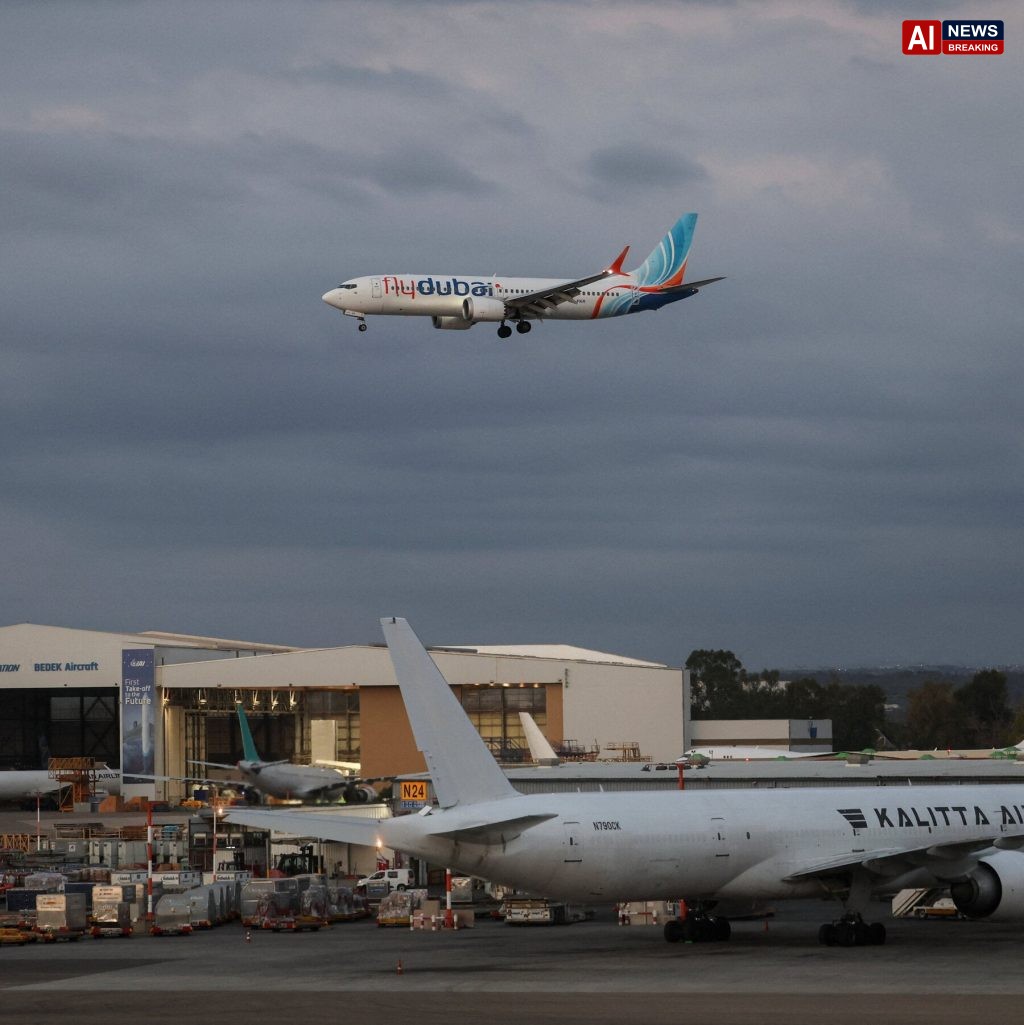
Israeli Authorities Trade Blame for Failure to Flag FlyDubai Co-Pilot - AI News Breaking
Israeli Authorities Trade Blame for Failure to Flag FlyDubai Co‑Pilot The tragic crash of a FlyDubai aircraft on Thursday has reignited scrutiny over international aviation security protocols, as Israeli officials and their Omani counterparts exchange accusations over a co‑pilot’s extremist affiliations. The 27‑year‑old Omani citizen, identified as a co‑pilot on the ill‑fated flight, is alleged to have attempted to deliberately bring down the plane after expressing radical Islamist views. While the Israeli Ministry of Transport maintains that the pilot’s actions were not intercepted in time, Omani authorities contend that the Israeli security services failed to flag the individual despite prior intelligence warnings..
According to a statement released by Israel’s Civil Aviation Authority, the co‑pilot’s attempt to deviate from the flight plan was detected only moments before the aircraft entered restricted airspace over the Red Sea. The authority claims that standard monitoring procedures identified an abrupt change in altitude and heading, prompting an immediate emergency response. However, it also admitted that the co‑pilot’s background, which includes documented links to extremist networks, was not highlighted in any pre‑flight security briefings supplied by foreign aviation regulators..
Omani officials, speaking to local media, argued that they had alerted Israeli security agencies several weeks earlier about the co‑pilot’s radicalization. They cited internal investigations that uncovered his participation in online forums praising violent jihad and his alleged attendance at clandestine training camps in the region. The Omani Ministry of Transport asserted that they had forwarded a detailed dossier to Israel through established diplomatic channels, but that the information was either misplaced or dismissed by Israeli officials..
The exchange of blame has prompted calls for a thorough joint inquiry, with both governments emphasizing the need for transparent cooperation. Israeli Prime Minister Benjamin Netanyahu’s office announced the formation of a special committee comprising aviation experts, intelligence officers, and legal advisers to examine the chain of events leading up to the crash. Simultaneously, Omani Foreign Minister Badr al‑Saadi pledged full cooperation with any investigative body and urged the international community to reinforce mechanisms that prevent the movement of extremist elements across borders..
A preliminary report from the International Civil Aviation Organization (ICAO) highlights systemic gaps in the sharing of passenger and crew security data among member states. The report notes that while the ICAO’s Universal Security Audit Programme mandates the exchange of information on individuals deemed security risks, compliance varies widely. It recommends the adoption of a real‑time, encrypted database that would enable rapid cross‑checking of crew credentials against global watchlists, a suggestion that both Israel and Oman have said they will consider..
Family members of the victims, numbering over thirty, have expressed profound grief and frustration at the perceived bureaucratic failures that may have contributed to the disaster. In a candlelit vigil held in Dubai, relatives of the deceased called for accountability, demanding that governments prioritize passenger safety over diplomatic sensitivities. Human rights organisations have also weighed in, urging that any investigation remain independent and free from political interference to ensure that the truth is uncovered without prejudice..
The crash has broader implications for the aviation industry, which has been grappling with heightened security concerns amid a surge in extremist recruitment across the Middle East. Airlines worldwide have intensified background checks, yet critics argue that the reliance on national intelligence agencies creates uneven standards. An aviation analyst from London’s Flight Safety Foundation warned that without a unified global framework, isolated lapses such as this could become more frequent, eroding public confidence in air travel..
In response to the incident, the Israeli Defense Forces’ intelligence branch disclosed that it had intercepted communications suggesting the co‑pilot’s intent to sabotage the flight. However, the branch declined to provide further specifics, citing operational security. The admission has fueled speculation that the co‑pilot may have acted independently, motivated by personal ideological convictions rather than directives from any organized terrorist group..
This nuance adds complexity to the ongoing debate over whether the failure was a procedural oversight or a deeper intelligence breach. Meanwhile, the Omani government has taken steps to review its own vetting procedures for aviation personnel. A senior official from the Omani Civil Aviation Authority confirmed that all crew members undergo periodic security assessments, but acknowledged that the existing framework may not have been sufficient to detect radicalisation in real time..
The ministry announced plans to integrate psychological profiling and enhanced monitoring of digital footprints into its standard protocols, aligning with recommendations from the ICAO report. The incident also about the role of regional cooperation in counter‑terrorism efforts. Israel and Oman, having normalised diplomatic ties only in recent years, have yet to fully synchronise their security infrastructures..
Experts suggest that building trust through joint training exercises and shared intelligence platforms could mitigate future risks. Nevertheless, geopolitical tensions in the region, coupled with differing legal standards on data privacy, present obstacles to seamless collaboration. As the investigation proceeds, international aviation regulators are urging airlines to adopt a “zero‑tolerance” stance on extremist affiliations among crew members..
The European Union Aviation Safety Agency has issued a directive encouraging member states to share detailed crew background information within a secure, multilateral system. If adopted, such measures could close the loopholes that allowed the FlyDubai co‑pilot’s radical views to go unchecked, potentially preventing similar tragedies. In the weeks ahead, families of the victims, policymakers, and aviation stakeholders will watch closely how the joint Israeli‑Omani inquiry unfolds..
The outcome will not only determine accountability for this specific crash but may also set a precedent for how nations manage the delicate balance between security intelligence and civil aviation operations..
Updated: October 4, 2026
Summary: The FlyDubai crash has sparked a diplomatic clash as Israel blames its own security lapses while Oman claims it warned Israeli officials about the Omani co‑pilot’s extremist ties weeks earlier. Both countries now face pressure to overhaul crew‑screening and data‑sharing protocols to prevent similar sabotage attempts.
The blame‑game between Israel and Oman exposes a deeper flaw: security intelligence is still siloed, letting extremist talent slip through the cracks of global aviation checks. If a single, encrypted watch‑list were adopted, the industry could shift from reactive post‑crash fixes to proactive prevention, restoring public trust