 Drone collision damages RAF Apache at Yeovilton
  19,000 West Bengal voters to miss bypolls as appeals remain pending in tribunals
  Brazil Election Could Give Bolsonaro a Key Role in Trump’s Latin America Map
 19,000 West Bengal voters to miss bypolls as appeals remain pending in tribunals
**
19,000 West Bengal voters to miss bypolls as appeals remain pending in tribunals - AI News Breaking
19000 west bengal voters:
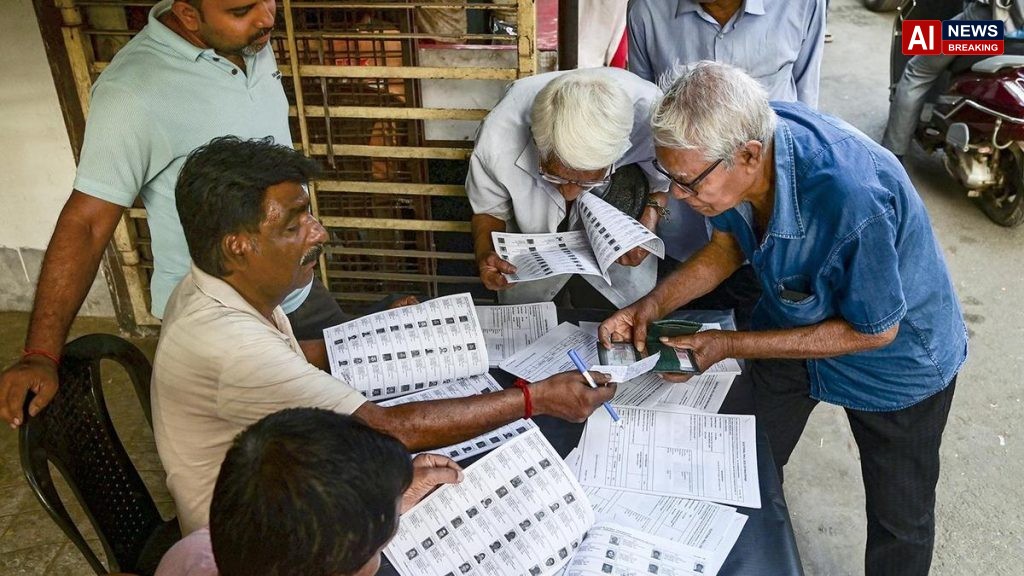
The Election Commission’s decision to set up nineteen appellate tribunals in March to adjudicate disputes arising from the recent West Bengal by‑elections has now left a significant number of voters disenfranchised, as the legal process remains unresolved for many. According to the commission’s latest figures, roughly 19,000 registered electors in the state will be unable to cast their ballots in the upcoming bypolls because appeals filed against their original voting registrations are still pending in the tribunals. The delay has sparked concern among civil‑society groups, who warn that the procedural backlog could undermine confidence in the electoral system at a time when the state is already navigating heightened political tension.The tribunals were created in response to a surge in petitions challenging voter lists, nomination papers and alleged procedural irregularities across several constituencies..
Each panel was intended to comprise a retired judge, a senior civil servant and a representative of the state election machinery, with the aim of delivering swift, impartial rulings. In practice, however, the tribunals have struggled to meet their own timelines. Of the nineteen bodies established, only sixteen continue to function..
Three judges – Justice T.S. Sivagnanam, Justice Ranjit Bag and Justice Indrajit Chatterjee – have stepped down, citing “functional issues” that range from inadequate administrative support to insufficient staffing to handle the volume of cases. Their resignations have left the three panels without a presiding judge, and the vacancies have yet to be filled.Election officials attribute the slowdown to a combination of factors..
The sheer number of petitions filed after the February general elections was unprecedented; many of the disputes involve intricate questions of domicile, age verification and the eligibility of migrant voters. Additionally, the tribunals operate under a statutory deadline of sixty days to deliver judgments, a period that critics say is unrealistic given the complexity of some cases and the limited resources allocated to the panels. The commission has argued that it is working to recruit qualified judges to fill the vacant seats, but no definitive timetable has been announced.Legal experts note that the situation is not entirely new..
“India’s electoral adjudication mechanisms have historically been stretched when there is a sudden influx of challenges,” said Dr. Ananya Mukherjee, a professor of constitutional law at Calcutta University. “What is concerning now is the cumulative effect of multiple vacancies on the capacity of the system to resolve disputes before the next round of voting.” She added that the pending appeals could set a precedent for future elections if the backlog is not cleared promptly, potentially prompting the Election Commission to revisit its approach to tribunal composition and resourcing.The impact on the electorate is already being felt on the ground..
In districts such as Murshidabad, Purulia and Hooghly, local activists have reported that voters whose names are under review are unable to obtain provisional certificates, a prerequisite for casting a ballot when the final list is not yet published. “We have families who have lived here for generations, yet they are told to wait because a paper is stuck in a court that has no judge,” said Ramesh Kumar, a community organizer in Hooghly. “If we do not address this now, many more will be excluded in the next election cycle.”Political parties have also weighed in, each framing the issue in a way that aligns with their broader narratives..
The ruling All India Trinamool Congress (AITC) has cautioned that the delays could be exploited by opposition forces to sow doubt about the fairness of the electoral process. “We must ensure that no voter is denied their constitutional right because of bureaucratic inertia,” said a senior AITC spokesperson. The Bharatiya Janata Party (BJP), meanwhile, has called for an independent review of the tribunals, arguing that the resignations point to systemic flaws that need urgent correction..
“A transparent and efficient mechanism is essential for the credibility of any democracy,” a BJP official said in a press briefing.The Election Commission, for its part, maintains that it remains committed to upholding the integrity of the electoral roll. In a statement released on Tuesday, the commission said it had already identified potential candidates to replace the three retired judges and that interim arrangements were being made to ensure that the pending cases receive attention. “We understand the concerns of the electorate and are taking all necessary steps to expedite the resolution of pending appeals,” the statement read..
It also indicated that additional support staff would be deployed to the functioning tribunals to alleviate the workload.Civil‑rights organisations have called for a broader assessment of the tribunal system, urging the commission to consider alternative dispute‑resolution mechanisms that could operate more swiftly. The Centre for Democratic Governance, a Delhi‑based think‑tank, suggested that a hybrid model combining judicial oversight with administrative review could reduce bottlenecks. “A flexible framework would allow for faster adjudication without compromising legal rigor,” its report argued..
The think‑tank also recommended that the commission publish a detailed timeline for filling the vacancies, to provide transparency and restore public trust.As the deadline for the next set of by‑elections approaches, the stakes are high for both the administration and the electorate. If the pending appeals are not resolved, the 19,000 voters currently unable to participate may find themselves disenfranchised once more, potentially altering the outcome in tightly contested constituencies. Observers warn that repeated instances of voter exclusion could erode the perceived legitimacy of elected representatives, especially in a state where political competition is intense and margins of victory are often narrow..
The situation underscores the delicate balance between legal due process and the practical need to ensure that every eligible citizen can exercise their franchise.In the coming weeks, the Election Commission’s actions will be closely scrutinised by political parties, advocacy groups and the media. The resolution of the tribunal vacancies and the clearance of the pending appeals will not only determine whether the 19,000 West Bengal voters can cast their ballots, but also serve as a barometer for the robustness of India’s electoral adjudication framework. As the nation watches, the outcome may shape how future elections are administered, potentially prompting reforms that aim to prevent similar bottlenecks and safeguard the democratic right to vote..
Updated: October 5, 2026
West Bengal’s nineteen appellate tribunals, set up to resolve post‑bypass election disputes, have stalled, leaving around 19,000 voters unable to cast ballots as appeals linger. The commission is scrambling to fill three judge vacancies and boost staffing, while civil‑society groups warn the backlog could erode confidence in the electoral process.