 Drone collision damages RAF Apache at Yeovilton
  19,000 West Bengal voters to miss bypolls as appeals remain pending in tribunals
  Brazil Election Could Give Bolsonaro a Key Role in Trump’s Latin America Map
 19,000 West Bengal voters to miss bypolls as appeals remain pending in tribunals
**
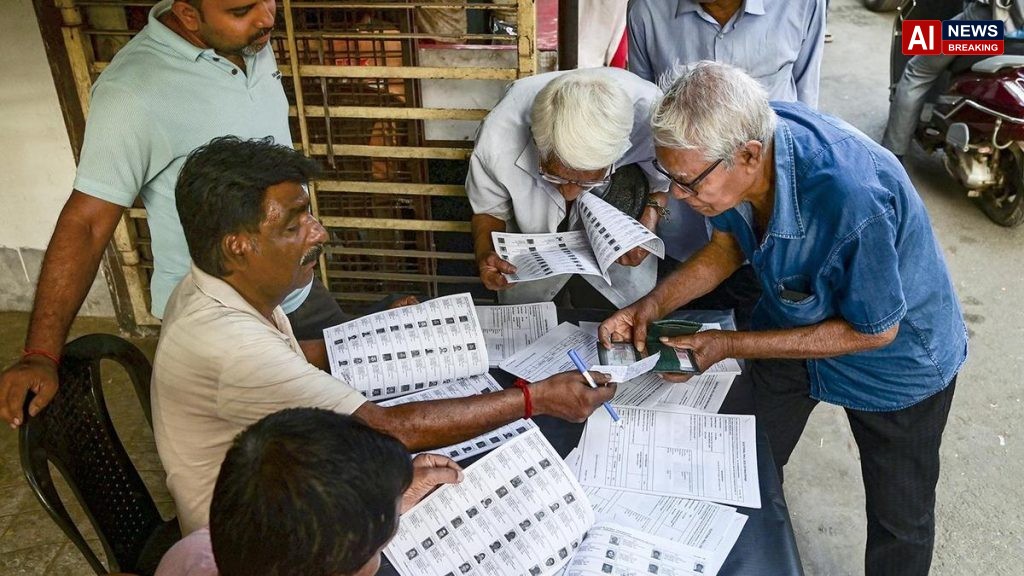
19,000 West Bengal voters to miss bypolls as appeals remain pending in tribunals - AI News Breaking
19000 west bengal voters:
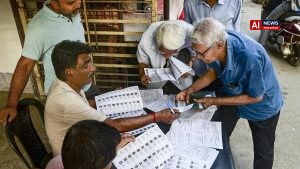
19,000 West Bengal voters to miss bypolls as appeals remain pending in tribunals The Election Commission of India, which has been under pressure to ensure smooth conduct of the West Bengal by‑elections, faces a new challenge as roughly 19,000 registered voters are now likely to be disenfranchised. The disenfranchisement stems from a backlog of election‑related appeals that remain unresolved in the appellate tribunals set up to hear disputes. With the filing deadline for objections already passed, the commission has warned that any voter whose case is still pending will be omitted from the final electoral roll, effectively barring them from casting a ballot on 2 October..
The tribunals in question were established in March as part of a broader reform aimed at expediting the resolution of electoral grievances. Nineteen such bodies were created across the state, each presided over by a retired judge appointed by the commission. Their mandate was to hear petitions ranging from allegations of voter‑list tampering to complaints about the eligibility of candidates, with an explicit deadline to deliver judgments before the by‑polls began..
However, only sixteen of the original nineteen tribunals remain operational, raising concerns about the capacity of the system to handle the volume of pending cases. Three judges—Justice T.S. Sivagnanam, Justice Ranjit Bag and Justice Indrajit Chatterjee—resigned from their posts earlier this month, citing “functional issues” that hampered the effective administration of justice..
Their departures have left three tribunals without a presiding judge, and the vacancies have yet to be filled. Election officials say that the commission is in the process of identifying suitable replacements, but no definitive timeline has been provided, intensifying anxiety among voters whose appeals are awaiting adjudication. The pending appeals primarily involve disputes over the inclusion or exclusion of names from the electoral roll, as well as challenges to the eligibility of certain candidates on grounds of criminal convictions or alleged financial improprieties..
Legal experts note that the backlog is not merely a clerical inconvenience; it has tangible implications for the democratic process. “When the law is not applied uniformly, the legitimacy of the election itself can be called into question,” said Dr Anita Mukherjee, a constitutional scholar at Calcutta University. The commission’s decision to proceed with the by‑polls despite the incomplete tribunal work has drawn criticism from opposition parties and civil‑society groups..
The Trinamool Congress, which currently governs West Bengal, argued that the electoral schedule must be maintained to avoid further political instability. In contrast, the Bharatiya Janata Party demanded a postponement until all appeals were heard, warning that the exclusion of thousands of voters could tilt the outcome in closely contested constituencies. Local media reports indicate that the 19,000 affected voters are spread across several districts, with a concentration in the northern and eastern parts of the state..
Many of these individuals have previously lodged petitions alleging errors in the digitisation of voter data, a process that was accelerated in the wake of the 2023 national voter‑ID rollout. The lack of a final adjudication leaves these citizens in limbo, uncertain whether they will be allowed to exercise their franchise. In response to the growing outcry, the Election Commission released a statement affirming its commitment to “uphold the integrity of the electoral process while adhering to the statutory timelines set by law.” The statement also indicated that a provisional list of eligible voters will be published on 28 September, after which any further changes will not be accommodated..
This move, officials say, is intended to provide clarity for election officials and political parties ahead of the vote. Human‑rights organisations have warned that the exclusion of voters, even if inadvertent, could violate provisions of the Indian Constitution guaranteeing the right to vote. Amnesty International’s South Asia director, Rohan Singh, remarked that “any systematic barrier to participation, particularly one rooted in administrative delay, warrants urgent remedial action.” The organisation has called for an independent review of the tribunal appointments and for expedited hearings to mitigate the disenfranchisement..
The legal community is also weighing in on possible recourse for the affected voters. A coalition of senior advocates has filed a petition in the Calcutta High Court seeking a temporary injunction that would allow the tribunals to operate on an emergency basis, even without a presiding judge, until all pending appeals are resolved. The court’s response could set a precedent for how electoral disputes are managed in future elections across the country..
Meanwhile, political analysts suggest that the impact of the 19,000 missing votes may be limited in absolute terms but could prove decisive in marginal constituencies where the victory margin has historically been narrow. “In a tightly contested race, every vote counts,” said Sunil Das, a senior fellow at the Centre for Policy Research. “If the swing is even a few hundred votes, the exclusion of a sizable block of voters could alter the balance of power in the state assembly.” The Election Commission has signalled that it will monitor the situation closely on polling day, deploying additional staff at polling stations to verify voter identities and prevent any inadvertent errors..
However, the logistical challenges of managing a large electorate under the shadow of pending legal disputes remain daunting. Observers note that the commission’s capacity to address grievances on the ground may be stretched thin, especially in rural areas with limited infrastructure. As the by‑polls approach, the convergence of administrative bottlenecks, judicial resignations and political pressures underscores the complex interplay between law and democracy in India’s largest state..
The unfolding scenario will not only determine the immediate representation of West Bengal’s constituencies but also test the robustness of electoral reforms introduced in recent years. Whether the commission can reconcile.
Updated: October 5, 2026
Insight: The commission’s rush to finish the roll before the vote, even with 19,000 appeals unresolved, risks eroding trust in an already fragile electoral system. This gap may turn the outcome of close contests into a question of administrative failure rather than democratic will.