 OpenAI is adding text watermarking in ChatGPT and Codex
  Cornell building sprayed with graffiti.
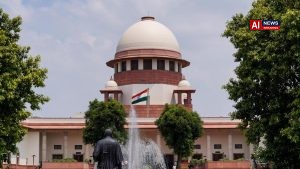
  Supreme Court to hear petition on state ward boundary freeze rules
  BA Flight to Chicago drops 27,000 feet, returns to London
  Telangana Congress calls for SIT to probe Hyderabad voter roll purge allegations
 Supreme Court to hear petition on state ward boundary freeze rules
**
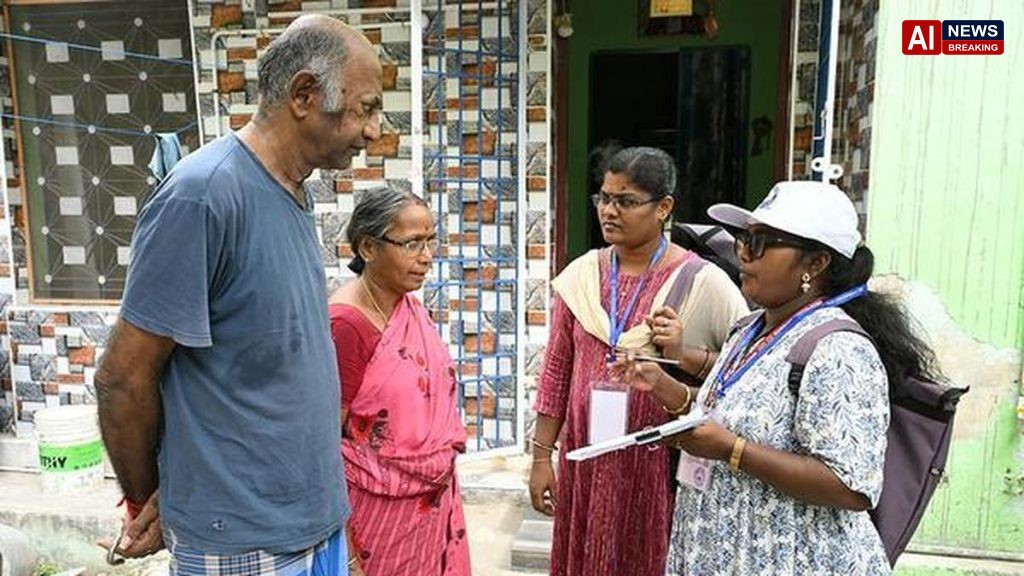
Can States change ward boundaries during Census freeze? SC to hear plea - AI News Breaking
supreme court hear petition:
The Supreme Court will hear a petition this week that asks whether state governments can alter the boundaries of wards and other administrative units during the period that the Census Commissioner has declared a freeze on such changes. The matter centres on Rule 8(iv) of the Census Rules 1990, which obliges states to “freeze the administrative boundaries of districts, tehsils, towns, etc.” from the date intimated by the Census Commissioner. The petitioners argue that the rule should be read narrowly, allowing modifications that are not part of a comprehensive re‑organisation, while the government maintains that any alteration, however minor, contravenes the statutory freeze and risks compromising the integrity of the forthcoming 2021 Census data.The plea was filed by a coalition of urban local bodies and civic groups from several states, most notably Karnataka and Uttar Pradesh, where rapid urbanisation has created a mismatch between the existing ward map and the ground reality..
They contend that the freeze, announced in 2018, has frozen in place boundaries that no longer reflect population shifts, leading to disparities in representation, resource allocation and service delivery. The petitioners point to specific cases where wards have become over‑populated while neighbouring wards have seen a decline, thereby distorting the principle of “one person, one vote” that underpins democratic local governance.In response, the Union Ministry of Home Affairs, which oversees the census, has submitted an affidavit stating that the freeze is absolute and that any change, even a minor one, would undermine the comparability of data across census cycles. The Ministry’s counsel warned that permitting ad‑hoc alterations could open the floodgates for politically motivated redrawing of boundaries, a concern that echoes past controversies surrounding delimitation of parliamentary constituencies..
The counsel further highlighted that the Census Rules 1990 were drafted to ensure a uniform statistical base, and that any deviation would require a formal amendment to the rules, not a case‑by‑case concession.Legal experts note that the issue touches on a broader tension between statutory rigidity and administrative flexibility. Professor Ranjit Singh of Delhi University’s Law Faculty observes that “the freeze is designed to lock in a snapshot of the nation’s administrative geography, but it cannot be expected to accommodate the dynamism of urban growth without some mechanism for adjustment.” He adds that the Supreme Court’s earlier pronouncements on delimitation have stressed the importance of maintaining a clear demarcation process, yet have also recognized the need for periodic revisions to reflect demographic changes.The petition also about the interplay between state and central powers. While the census is a central function, the creation and alteration of local administrative units fall within the domain of state governments under the Constitution’s Seventh Schedule..
The petitioners argue that the freeze, though issued by the Census Commissioner, should not override a state’s legislative competence to restructure its own local bodies, especially when such restructuring is mandated by state legislation or judicial orders. The Union government, however, insists that the freeze is a procedural safeguard, not a usurpation of state authority, and that states can still propose changes, provided they seek the Commissioner’s prior approval—a step that the petitioners say is impractical given the time‑sensitive nature of local elections.Observers point out that the timing of the case is crucial. The 2021 Census, delayed by the COVID‑19 pandemic, is now slated for completion in 2023, and the next round of local body elections in many states is due within the next two years..
If the Court permits limited modifications, states could realign wards before elections, potentially affecting electoral outcomes. Conversely, a strict adherence to the freeze could compel states to conduct elections on maps that no longer mirror demographic realities, raising concerns about fairness and administrative efficiency.The Supreme Court’s bench, comprising Justice R. Subhash Reddy and Justice Hima Kohli, has asked the parties to submit detailed data on the impact of the freeze on specific wards, including population figures, service delivery metrics and any pending legal orders concerning boundary changes..
The Court has also sought the opinion of the Census Commissioner on whether the freeze can be partially relaxed without jeopardising the overall integrity of the census data set. These procedural steps indicate that the judges are likely to adopt a nuanced approach rather than a binary verdict.If the Court rules in favour of the petitioners, it could set a precedent for a more flexible interpretation of the freeze, allowing states to make adjustments through a stipulated process that balances statistical consistency with local governance needs. Such a ruling would likely prompt the Census Commission to issue guidelines outlining permissible changes, timelines for submissions and criteria for approval..
On the other hand, a decision upholding the absolute freeze would reinforce the primacy of the census framework, compelling states to wait until the next census cycle to undertake comprehensive boundary revisions.Civil society groups have welcomed the hearing, noting that the issue touches on the broader principle of accountable governance. “Ward boundaries should reflect the people they serve,” said Ananya Mehta, director of the Urban Justice Initiative. “When boundaries lag behind reality, it erodes public trust and hampers effective service delivery..
A balanced solution is essential.” Political analysts, meanwhile, caution that any judgment will be closely watched by parties seeking electoral advantage, as redistricting has historically been a tool for gerrymandering in both state and national contexts.The outcome of the hearing is expected to be delivered in the coming weeks, with the Court indicating that it may issue an interim order to maintain the status quo until a final decision is reached. As the nation prepares for the final phases of the 2021 Census and upcoming local elections, the case underscores the delicate interplay between statistical rigour, constitutional mandates and the practicalities of governing a rapidly changing population..
The Supreme Court will hear a petition challenging the census‑mandated freeze on ward and administrative boundary changes, arguing that the rule hampers states’ ability to reflect rapid urban shifts before upcoming local elections. The government maintains the freeze is essential for data integrity, while petitioners seek a narrowly tailored exception that balances statistical consistency with fair representation.
If the Court loosens the freeze, it will grant states a legal lever to reshape urban wards on the eve of elections, potentially recalibrating representation and curbing gerrymandering—yet it risks eroding the uniformity that makes successive censuses comparable. A rigid decision, on the other hand, forces states to wrestle with outdated maps that threaten democratic equity, compelling a future wave of costly redistricting only when the next census rolls around.