Use of Chief Minister C. Joseph Vijay’s deep fake videos to collect money: Rajasthan youth moves Madras High Court seeking bail
 Florida officer took possession of man’s home after finding him dead 4 years ago, police say
 Jury weighs fate of US woman who says father forced her into Syria’s war zone when she was a teen
 France bans certain protests to restore public
Why is the Price of Rice Rising Across India? Key Factors Behind the Increase | Editorial Analysis
Rice prices are rising across parts of India despite government foodgrain stocks and expectations of adequate production. From a weaker monsoon and lower paddy acreage to higher MSP, procurement pressures, export demand and storage bottlenecks, several factors are influencing the price of rice.
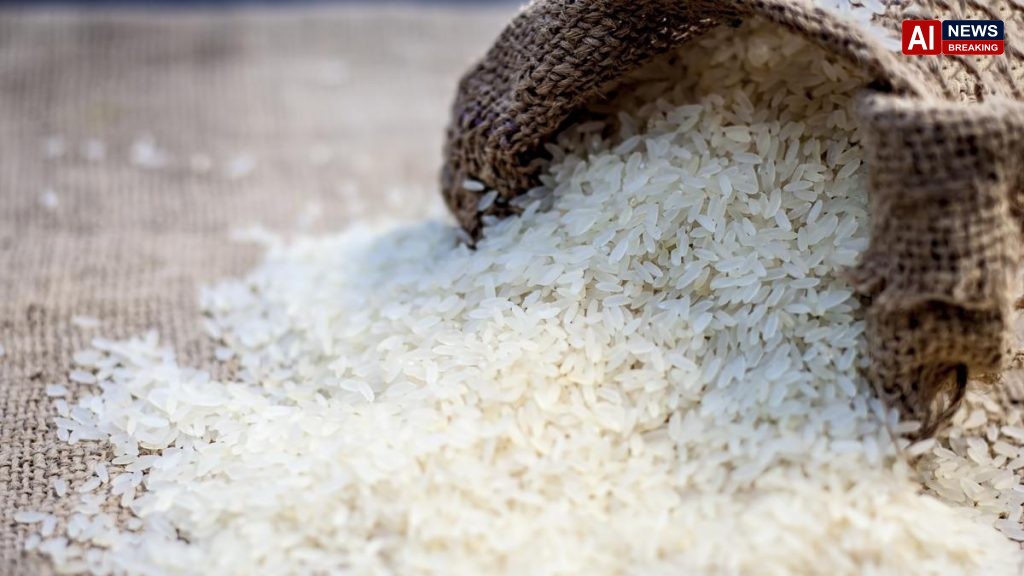
Why is the price of rice rising across the country? | Explained - AI News Breaking
price rice rising across:
Rice is becoming more expensive — but why?
Rice is one of the most important staples in India, making even a moderate increase in its price economically and politically significant. The recent rise in rice prices is therefore attracting attention not only from consumers and traders but also from policymakers, farmers, millers and exporters.
The latest government price-monitoring data shows that the all-India average retail price of rice was ₹46.73 per kg on October 6, 2026. At the wholesale level, the average price reached ₹4,217.72 per 100 kg on October 7, compared with ₹3,864.44 a year earlier — an increase of about 9.14%.
The increase does not mean that every variety of rice has become more expensive by the same amount, nor that prices are rising uniformly in every state. Rice prices vary considerably according to variety, quality, region, procurement arrangements, transportation costs and local supply.
But the broader trend points to a combination of supply concerns, higher farm-gate costs, weather uncertainty, export-market demand and logistical constraints.
5 Key Reasons Behind Rising Rice Prices

1. Weak monsoon: India ended the 2026 southwest monsoon with a rainfall deficit of around 12.5%, raising concerns about agricultural output and water availability.
2. Lower paddy acreage: Paddy cultivation has declined in the current kharif season, increasing sensitivity to any production shortfall.
3. Higher MSP: The 2026-27 MSP for common-grade paddy was raised to ₹2,585 per quintal from ₹2,369 in 2025-26.
4. Export and industrial demand: International demand and domestic industrial uses, including ethanol-related demand for broken rice, are supporting prices for some varieties.
5. Storage and logistics: Large stocks from earlier procurement cycles and limited storage capacity are creating bottlenecks, particularly in major rice-producing states such as Punjab.
1. The monsoon problem is one of the biggest concerns
Rice cultivation in India remains heavily influenced by the southwest monsoon, particularly in areas where irrigation infrastructure is limited.
The 2026 southwest monsoon ended with rainfall around 12.5% below normal, worse than the earlier expectation of a roughly 10% deficit. The rainfall shortage has also contributed to concerns over reservoir levels and water availability for subsequent agricultural operations.
This does not automatically mean India will face a rice shortage.
In fact, Agriculture Minister Shivraj Singh Chouhan has said that the country is unlikely to experience a significant decline in overall kharif foodgrain production despite weather-related challenges.
That distinction is important.
Rice prices can rise even without an outright shortage.
If traders, millers or wholesalers believe that the next harvest may be smaller or that supplies could become tighter later in the season, they may begin adjusting prices before the actual shortage appears.
That is how agricultural markets frequently respond to weather uncertainty.
2. Paddy acreage has declined
Another important factor is the area under paddy cultivation.
Reports on the 2026 kharif season indicate that paddy acreage has fallen, even though overall foodgrain production may remain relatively resilient because farmers have shifted some land towards pulses and coarse cereals.
This matters because rice prices ultimately depend on the balance between:
production + government stocks + imports + exports + consumption.
If production expectations decline while demand remains stable, prices can strengthen.
The situation becomes particularly sensitive during the period between the old crop and the arrival of substantial new supplies.
3. MSP has increased the underlying cost of paddy
The government’s Minimum Support Price is another structural factor.
For the 2026-27 marketing season, the MSP for common paddy has been fixed at ₹2,585 per quintal, compared with ₹2,369 in 2025-26. Grade-A paddy MSP has risen to ₹2,610 per quintal from ₹2,389.
The MSP does not directly determine the retail price of rice.
However, it influences the economics of the entire rice supply chain.
Farmers receive higher returns for paddy, while rice millers, wholesalers and retailers have to account for the higher cost of procuring the raw material.
Additional expenses such as:
- labour,
- electricity,
- diesel,
- transportation,
- milling,
- packaging,
- warehousing and
- financing
can further increase the cost between the farm and the consumer.
Therefore, a higher paddy procurement price can gradually feed into rice prices, particularly when other supply-chain costs are also elevated.
4. India’s rice export market is also influencing prices
India is one of the world’s major rice exporters, meaning domestic prices are connected to international markets.
Export demand can influence the availability of particular varieties inside India.
Recent trade data shows that Indian broken-rice prices have strengthened amid limited availability and firm demand from Africa and the domestic ethanol industry. S&P Global reported that Indian 100% broken rice prices had risen to around $320 per tonne FOB by October 2, 2026, up substantially from March levels.
India’s rice export policy has also undergone major changes over the past few years.
The lifting of restrictions on certain categories of rice has allowed international trade to recover, while global buyers have continued to monitor Indian supplies closely.
For consumers, this creates an important market connection:
When international buyers are willing to pay more for certain rice varieties, domestic traders have an incentive to retain or redirect supplies towards export markets.
That does not necessarily cause a nationwide shortage, but it can increase prices in specific segments.
5. Storage problems are becoming a serious supply-chain issue
One of the less visible factors behind food prices is storage.
Punjab, one of India’s largest paddy-producing states, is currently facing a storage challenge as the new 2026-27 procurement season gets underway.
Recent reports indicate that around 6 lakh tonnes of earlier rice remain to be delivered, while about 17 lakh tonnes of wheat are occupying rice mills and mandi yards. Punjab’s covered grain storage capacity is around 175 lakh tonnes, alongside additional open-plinth capacity that is less suitable for rice.
The problem has been intensified by an overlap between old and new procurement cycles.
The Centre extended the deadline for delivery of Custom Milled Rice from the previous season to November 30, meaning old stocks are still moving through mills at the same time that fresh paddy is arriving.
This creates an unusual situation.
India may have large quantities of foodgrain, but that does not mean every part of the supply chain can move that grain efficiently.
In agricultural markets, availability is not only about how much grain exists; it is also about where it is, who controls it and how quickly it can reach consumers.
6. Transportation and energy costs add to the final price
Rice passes through several stages before reaching a consumer.
The journey can involve:
farmer → mandi → procurement agency/trader → rice mill → wholesaler → distributor → retailer → consumer.
Every stage has costs.
Diesel prices, electricity costs, labour expenses, packaging charges, warehousing costs and freight rates can influence the final price.
The broader inflation environment also matters.
The Finance Ministry’s September 2026 economic review warned that geopolitical tensions and elevated crude oil prices could increase imported inflationary pressures. The report also highlighted supply disruptions and higher input costs as risks to the inflation outlook.
Therefore, even if rice production remains reasonably comfortable, higher logistics and processing costs can prevent retail prices from falling quickly.
7. Why isn’t government buffer stock immediately bringing prices down?
This is an important question.
India maintains substantial foodgrain stocks through government procurement and the public distribution system.
The Centre has also maintained a paddy procurement target of 71.95 million tonnes for the 2026-27 kharif marketing season, despite lower acreage and uneven rainfall. The decision indicates that the government expects rice availability to remain broadly adequate.
But government stocks are not the same as unlimited commercial supply.
Foodgrain stocks are held for multiple purposes, including:
- food security,
- welfare programmes,
- public distribution,
- strategic reserves,
- market intervention and
- emergency requirements.
Releasing stocks into the open market can help moderate prices, but excessive intervention can also affect procurement economics and farmer incentives.
The government therefore has to balance consumer affordability with farmer returns and food security.
8. Is India actually facing a rice shortage?
At present, the evidence does not point to an immediate nationwide rice shortage.
That is an important distinction.
The government expects overall foodgrain production to remain relatively resilient, while procurement plans and existing stocks provide a substantial buffer.
The current price movement is better understood as a market tightening story rather than a simple shortage story.
Prices are being influenced by expectations about future supply, weather uncertainty, higher procurement costs, export demand, logistics and regional differences.
Some varieties and regions may experience significantly greater price pressure than others.
What could happen to rice prices next?
The next few months will be important.
The arrival of the new paddy crop should normally increase physical availability and potentially ease some market pressure.
However, three variables will determine whether prices actually cool:
1. Size of the new harvest
If production remains close to government expectations, supply concerns should gradually diminish.
2. Government procurement and stock movement
Efficient evacuation of old stocks and timely procurement of the new crop could prevent localized supply bottlenecks.
3. Export demand
If overseas demand remains strong, export prices could continue supporting domestic prices for commercially traded varieties.
Weather will remain another major wildcard.
The 2026 monsoon deficit has already increased concerns about water availability. Reservoir levels and winter crop conditions could influence the broader food-inflation picture going into 2027.
The bigger economic question: Who bears the higher rice price?
A rise in rice prices has consequences far beyond the grocery bill.
For farmers, higher prices can improve income and make paddy cultivation more attractive.
For millers, however, higher paddy procurement costs can squeeze margins if wholesale and retail prices do not increase proportionately.
For retailers, logistics and inventory costs become important.
For consumers, particularly lower-income households, rice inflation directly affects the monthly food budget.
And for the government, the challenge is more complicated: it must simultaneously protect food security, maintain farmer incentives and prevent excessive food inflation.
This is why rice is not just another commodity.
It sits at the intersection of agriculture, inflation, rural income, food security, trade policy and political economy.
AI News Breaking Editorial Analysis
The current increase in rice prices should not be reduced to a single explanation.
It is tempting to blame the rise entirely on the monsoon, exports or higher MSP. The reality is more complicated.
India appears to have enough overall grain stocks to prevent an immediate nationwide supply crisis. Yet the market is experiencing pressure because the cost and availability of rice at different points in the supply chain are changing simultaneously.
The 2026 rainfall deficit has created uncertainty around production. Lower paddy acreage has added to that concern. The higher MSP has raised the underlying procurement cost. Export demand is supporting prices for some varieties. And storage and transportation bottlenecks can prevent surplus grain from moving efficiently to deficit regions.
The most important lesson is therefore that food inflation is often a supply-chain problem as much as a production problem.
India can have adequate grain in warehouses and still experience higher retail prices if procurement, milling, transportation, storage and distribution do not operate smoothly.
The government’s immediate challenge is to ensure that the transition between the old and new procurement seasons does not create artificial scarcity.
If new-crop arrivals are strong, government stocks move efficiently and export demand remains manageable, rice-price pressures could moderate.
But if weather concerns deepen, reservoir levels deteriorate or logistics remain constrained, consumers could continue to face elevated prices even without a formal shortage.
For India’s policymakers, the objective is therefore not simply to produce more rice.
It is to build a food system in which farmers receive remunerative prices, stocks move efficiently, exporters remain competitive and consumers can buy a basic staple at a reasonable cost.
That balance will determine whether the current rice-price increase remains a temporary market adjustment — or becomes a broader food-inflation problem.
Rice prices are rising in India because several pressures are converging at the same time: weaker monsoon rainfall, lower paddy acreage, higher MSP and input costs, firm export and industrial demand, and storage and logistics bottlenecks.
However, India does not currently appear to be facing an immediate nationwide rice shortage. Large government stocks, procurement and the expected new crop provide important buffers.
The critical issue is whether those buffers can reach the market efficiently while maintaining adequate returns for farmers.
Rice prices, therefore, are becoming a test of India’s entire agricultural supply chain — from the monsoon and paddy field to the mandi, rice mill, warehouse and finally the consumer’s kitchen.