Tao Tokyo Spring 2027
 Karnataka SIR: Teaching on the back burner
 Trump administration offers mixed messages on limits to Ukraine’s Starshield access
 US Treasury proposes a rule to crack down on high-tech investments in China, other adversaries
 Calley Means, a key MAHA advocate, resigns as a top RFK Jr. adviser
EU prepares to negotiate trade measures with China
**
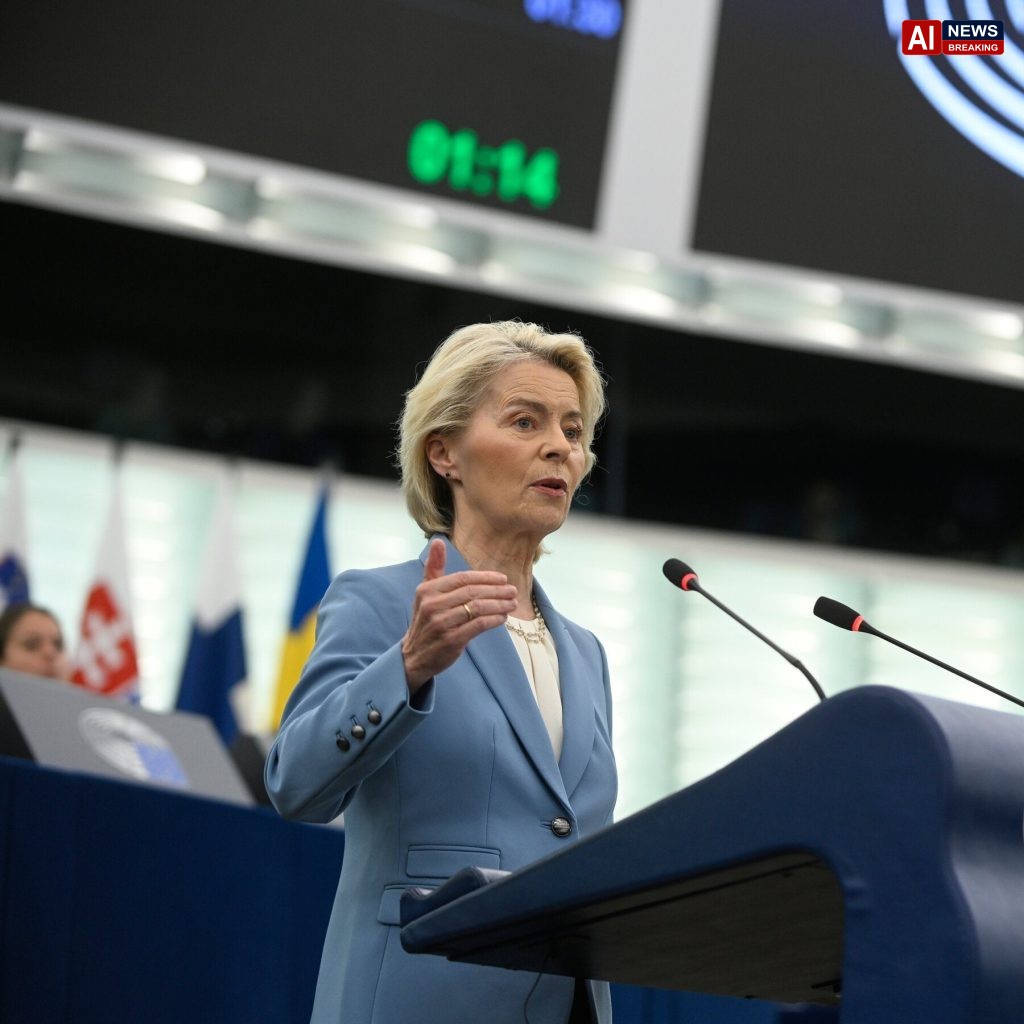
Europe’s Trade Tensions With China Are Coming to a Head - AI News Breaking
prepares negotiate trade measures:
The European Union is on the cusp of a decisive shift in its trading relationship with China, as senior negotiators prepare for high‑level talks in Beijing later this month. For years, Europe has balanced its dependence on Chinese manufactured goods with concerns over market access, intellectual property protection and state‑driven subsidies that many EU officials say distort competition. The current climate, however, is being reshaped by a surge in Chinese exports that is beginning to strain key sectors of the European economy, from automotive to renewable energy, prompting a reassessment of the bloc’s trade policy toolkit.Data from Eurostat shows that imports from China have risen by more than 20 percent over the past two years, outpacing the growth of overall EU imports..
In the automotive supply chain, for example, Chinese‑made batteries and electronic components now account for a sizeable share of the inputs used by European manufacturers. While this has helped some firms lower production costs, it has also sparked fears of over‑reliance on a single source for critical technology. The European Commission’s latest impact assessment warns that a continued influx of low‑priced Chinese goods could erode the competitiveness of domestic producers and lead to job losses in sectors already grappling with a transition to greener technologies.At the same time, the EU’s internal market is feeling the pressure of China’s strategic investments in areas such as wind turbines, solar panels and electric vehicles..
Chinese firms have secured a number of high‑profile contracts across Europe, often with the backing of state financing that European companies find difficult to match. Critics argue that this creates an uneven playing field, as subsidies and favorable financing terms are not fully transparent under World Trade Organization (WTO) rules. In response, the European Commission has begun to draft a set of anti‑dumping and anti‑subsidy measures that could be deployed if investigations confirm that Chinese firms are receiving unfair advantages.The forthcoming negotiations in Beijing will be the first since the EU’s adoption of its new Trade and Sustainable Development Strategy, which seeks to integrate climate and human‑rights considerations into trade policy..
EU trade chief Valdis Dombrovskis has indicated that the talks will address not only tariff reductions but also broader issues such as market access for European services, protection of strategic technologies, and the enforcement of labour standards. “We are entering a new era where trade cannot be divorced from security and sustainability,” he told a press conference in Brussels last week.China, for its part, has signalled a willingness to engage but remains cautious about any measures that could be interpreted as protectionist. In a statement released by the Ministry of Commerce, Chinese officials emphasized the importance of “mutual respect and win‑win cooperation” and warned that “unilateral actions could jeopardise the long‑term stability of our trade relationship.” Chinese diplomats have also highlighted their own concerns about European barriers to Chinese investment, particularly in the digital and telecom sectors, where EU regulators have recently tightened scrutiny over foreign ownership.Analysts note that the stakes are high for both sides..
For the EU, a failure to curb what it perceives as unfair trade practices could undermine the credibility of its industrial policy, especially as the bloc seeks to meet ambitious climate targets under the European Green Deal. European car manufacturers, for instance, have warned that an unchecked flow of cheap Chinese batteries could hamper the rollout of locally produced electric vehicles, threatening the EU’s goal of achieving a 30 percent share of EV sales by 2030. Conversely, Chinese exporters fear that a wave of anti‑dumping duties could curtail their access to the EU’s 447‑million‑strong consumer market, which remains a key destination for Chinese goods.The political context adds another layer of complexity..
Relations between Brussels and Beijing have been strained by recent diplomatic disputes over human‑rights issues, cyber‑security concerns and the status of Taiwan. While trade negotiations are traditionally insulated from such geopolitical frictions, the EU’s new “strategic autonomy” doctrine – a pledge to reduce dependence on external powers for critical supplies – suggests that economic policy is increasingly being viewed through a security lens. This shift has prompted member states such as Germany, France and the Netherlands to call for a coordinated response that balances economic interests with the need to safeguard strategic industries.In the lead‑up to the talks, the European Parliament’s Committee on International Trade has scheduled a series of hearings to examine the impact of Chinese imports on European value chains..
Experts from industry, consumer groups and think tanks are expected to testify on topics ranging from the resilience of the semiconductor supply chain to the environmental footprint of Chinese‑made renewable‑energy equipment. Preliminary findings indicate that while Chinese products often deliver lower upfront costs, they can pose hidden environmental and social costs that are not fully accounted for in price comparisons. This has reinforced the EU’s argument for a more holistic assessment of trade fairness that goes beyond traditional tariff analysis.The potential policy tools under consideration include the imposition of provisional anti‑subsidy duties, stricter customs checks, and the expansion of the EU’s “trade defence” mechanisms..
Such measures would be in line with recent actions taken against other major economies, where the EU has invoked its powers to protect “vulnerable” sectors from what it deems unfair trade practices. However, the Commission must also navigate the legal constraints of WTO rules, which limit the scope and duration of unilateral trade restrictions. Any decision to impose duties will likely be subject to a rigorous legal review and could be contested by China at the WTO dispute settlement body.Observers caution that the outcome of the Beijing talks could set a precedent for how the EU handles trade disputes with other emerging economies..
If the EU adopts a more assertive stance, it may embolden other partners to seek similar concessions, potentially reshaping the global trade architecture. On the other hand, an overly confrontational approach could risk triggering retaliatory measures from China, which has previously threatened to impose counter‑vailing duties on European agricultural products and luxury goods. Such a scenario would not only affect exporters but could also reverberate through supply chains that depend on cross‑border inputs.As the negotiations draw nearer, both sides appear to be preparing for a complex dialogue that will test the limits of economic interdependence in a world increasingly defined by strategic competition..
The EU’s push for tougher trade measures reflects a broader ambition to protect its industrial base while upholding standards that align with its climate and social objectives. China’s response will reveal how willing it is to accommodate these demands without compromising its own growth model, which relies heavily on export‑driven expansion. The forthcoming talks in Beijing will therefore be watched closely, not only for their immediate commercial implications but also for the signal they send about the future balance of power in global trade..
Updated: October 8, 2026
Insight: By tightening trade defenses, the EU risks turning a fragile supplier relationship into a strategic showdown that could slow its own green‑mobility agenda.
Should Beijing refuse concessions, Beijing’s counter‑vailing threats may ripple across EU agriculture, forcing a costly recalibration of the bloc’s dependence on Chinese components.