Karnataka SIR: Teaching on the back burner
 Trump administration offers mixed messages on limits to Ukraine’s Starshield access
 US Treasury proposes a rule to crack down on high-tech investments in China, other adversaries
 Calley Means, a key MAHA advocate, resigns as a top RFK Jr. adviser
 Spotify Tightens Family Plan Controls with QR Code Verification
Jaishankar discusses bilateral ties with Cote d’Ivoire
**
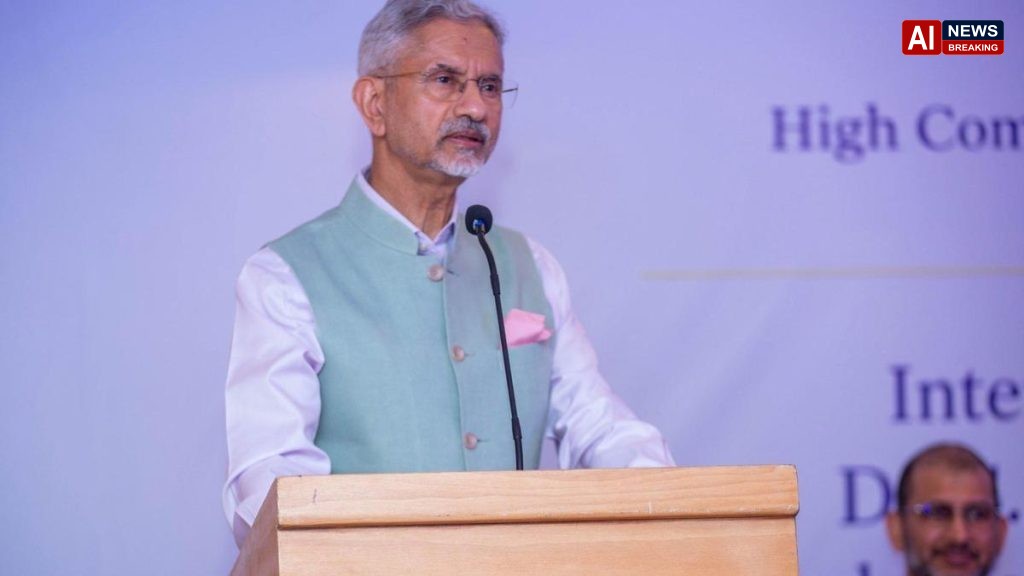
Jaishankar discusses bilateral ties with Cote d'Ivoire - AI News Breaking
New Delhi’s Foreign Minister, Dr S. Jaishankar, landed in Abidjan on Thursday after concluding a brief stopover in Accra, marking the second leg of a three‑nation tour that also includes Ethiopia. The visit, framed by both governments as a “strategic partnership” milestone, comes at a time when India is seeking to deepen its engagement across West Africa, a region that has seen a surge in Chinese investment and growing competition for resources, markets and geopolitical influence. Over the course of two days, Jaishankar is scheduled to meet President Alassane Ouattara, senior officials from the Ministry of Foreign Affairs and the Ministry of Economy and Finance, as well as representatives from the private sector, to review progress on existing agreements and explore new avenues for cooperation.The itinerary reflects a broader shift in India’s diplomatic calculus, moving beyond its traditional focus on East and Southern Africa toward a more balanced presence across the continent..
Côte d’Ivoire, the world’s largest producer of cocoa beans and a regional hub for trade, finance and transport, offers a compelling complement to India’s interests in energy, agriculture and manufacturing. In a joint press briefing, Jaishankar highlighted “the shared commitment of our two nations to sustainable development, economic diversification and inclusive growth,” noting that the bilateral trade volume, which stood at roughly $1.2 billion in the 2022‑23 fiscal year, had risen by 18 percent compared to the previous period.Key to the discussions is the expansion of Indian investment in Côte d’Ivoire’s burgeoning agro‑processing sector. Indian firms, particularly those in the food‑processing and packaging arenas, have expressed interest in establishing joint ventures to add value to cocoa, coffee and cashew outputs, thereby moving beyond the export of raw commodities..
Jaishankar’s delegation includes senior officials from the Ministry of Commerce and Industry, who will present a “greenfield investment framework” aimed at streamlining approvals, offering fiscal incentives and ensuring regulatory certainty. The framework is expected to dovetail with Côte d’Ivoire’s “Emerging Industries” policy, which seeks to attract foreign capital for downstream processing and technology transfer.Energy cooperation also features prominently on the agenda. While Côte d’Ivoire relies heavily on hydro‑electric power, the nation is pursuing diversification through solar and natural‑gas projects to meet rising domestic demand and to position itself as an electricity exporter to neighboring landlocked states..
India’s state‑run oil and gas conglomerate, ONGC Videsh, and the renewable‑energy arm of Tata Power have already signed memoranda of understanding with Ivorian counterparts, and Jaishankar is expected to announce a new partnership for a 150‑megawatt solar farm in the northern Sahel region. The initiative aligns with India’s “International Solar Alliance” objectives and underscores a shared vision of clean‑energy transition in line with the Paris Agreement.Beyond the economic dimensions, the two governments are set to deepen collaboration in security and capacity‑building. Côte d’Ivoire, having emerged from a decade of post‑election unrest, has made significant strides in reforming its security apparatus and combating trans‑national crime..
Jaishankar reiterated India’s willingness to share expertise in counter‑terrorism, maritime security and cyber‑defence, offering training programmes through the Indian Naval Academy and the National Institute of Cyber Security. The minister’s visit follows a similar security dialogue held in Accra, where India pledged to provide satellite imagery and intelligence‑sharing support to West African nations confronting piracy and illicit trafficking.Cultural and people‑to‑people ties are also slated for reinforcement. The Indian diaspora in Côte d’Ivoire, though modest in size—estimated at around 3,000 individuals—has been instrumental in fostering trade links, particularly in the retail and hospitality sectors..
Jaishankar’s schedule includes a reception at the Indian Embassy, where cultural performances and a showcase of Ivorian arts will underscore the “soft‑power” dimension of bilateral relations. Educational cooperation is set to expand, with proposals for scholarship programmes under the Indian Technical and Economic Cooperation (ITEC) scheme, and the possibility of establishing a joint research centre focusing on tropical agriculture and climate‑resilient farming techniques.The timing of the visit is noteworthy against the backdrop of shifting global supply chains. Recent disruptions in the Red Sea and rising freight costs have prompted many Asian manufacturers to look westward for alternative sourcing hubs..
Côte d’Ivoire’s strategic location, with deep‑water ports in Abidjan and San‑Pedro, offers a viable conduit for Indian goods destined for West African markets and beyond. In response, Jaishankar is expected to outline a “maritime corridor” initiative, facilitating smoother cargo movement through coordinated customs procedures and digital documentation, thereby reducing turnaround times and enhancing trade efficiency.While the agenda is largely optimistic, analysts caution that several challenges could temper the enthusiasm. The Ivorian economy remains vulnerable to fluctuations in global commodity prices, and recent fiscal deficits have limited the government’s capacity to meet all the fiscal incentives proposed by Indian investors..
Moreover, the competitive presence of Chinese state‑owned enterprises—particularly in infrastructure and telecom—means that Indian firms must offer compelling value propositions to secure market share. Observers also note that the success of security cooperation hinges on the political stability of the region, which has experienced sporadic insurgencies in the Sahel and lingering ethnic tensions.Nevertheless, the bilateral talks appear to be moving beyond rhetoric toward concrete deliverables. A draft memorandum of understanding, anticipated to be signed at the conclusion of the visit, is said to include a target of $2 billion in cumulative trade and investment by 2028, with specific milestones for sectoral projects and capacity‑building programmes..
Both sides have expressed a desire for regular high‑level dialogues, proposing an annual “India‑Côte d’Ivoire Strategic Forum” to monitor progress and adjust priorities as needed.Jaishankar is scheduled to depart for Addis Ababa on Saturday, where he will engage with Ethiopian officials on similar themes of trade, energy and regional connectivity. The three‑nation tour, which began in Accra on Monday, underscores India’s intent to present a coordinated and nuanced approach to its African diplomacy, balancing economic interests with strategic partnerships. As the continent’s demographic dividend accelerates and its markets expand, the outcomes of these engagements will likely shape the contours of India’s long‑term presence in Africa, with Côte d’Ivoire poised to become a pivotal node in that evolving network..
Updated: October 8, 2026
India’s deepening foothold in Côte d’Ivoire signals a calculated pivot to West Africa, where securing agro‑processing and clean‑energy projects not only counters China’s expanding clout but also creates a supply‑chain bridge to European markets.
If the promised $2 billion investment materialises, the partnership could transform Ivory Coast into a strategic launch‑pad for Indian manufacturing, reshaping regional trade flows and elevating New Delhi’s geopolitical leverage across the Sahel‑to