 Open to alliance with parties that agree with SAD’s ideology: Sukhbir Singh Badal
 Palestinian Gunmen Open Fire on Israelis in the West Bank, Officials Say
 Russians across
 Jagan to move Supreme Court again over ‘obstruction’ of YSRCP nominees in Andhra local body polls
 Pentagon directive bans troops from using nonpublic info to bet in prediction markets
Indian Stock Market Crash Today: Sensex Falls 1,045 Points, Nifty Below 22,300 as Crude, RBI Rate Hike and FII Selling Trigger Heavy Sell-Off
Indian Stock Market Crash Today: Sensex Falls 1,045 Points, Nifty Below 22,300 as Crude, RBI Rate Hike and FII Selling Trigger Heavy Sell-Off - AI News Breaking
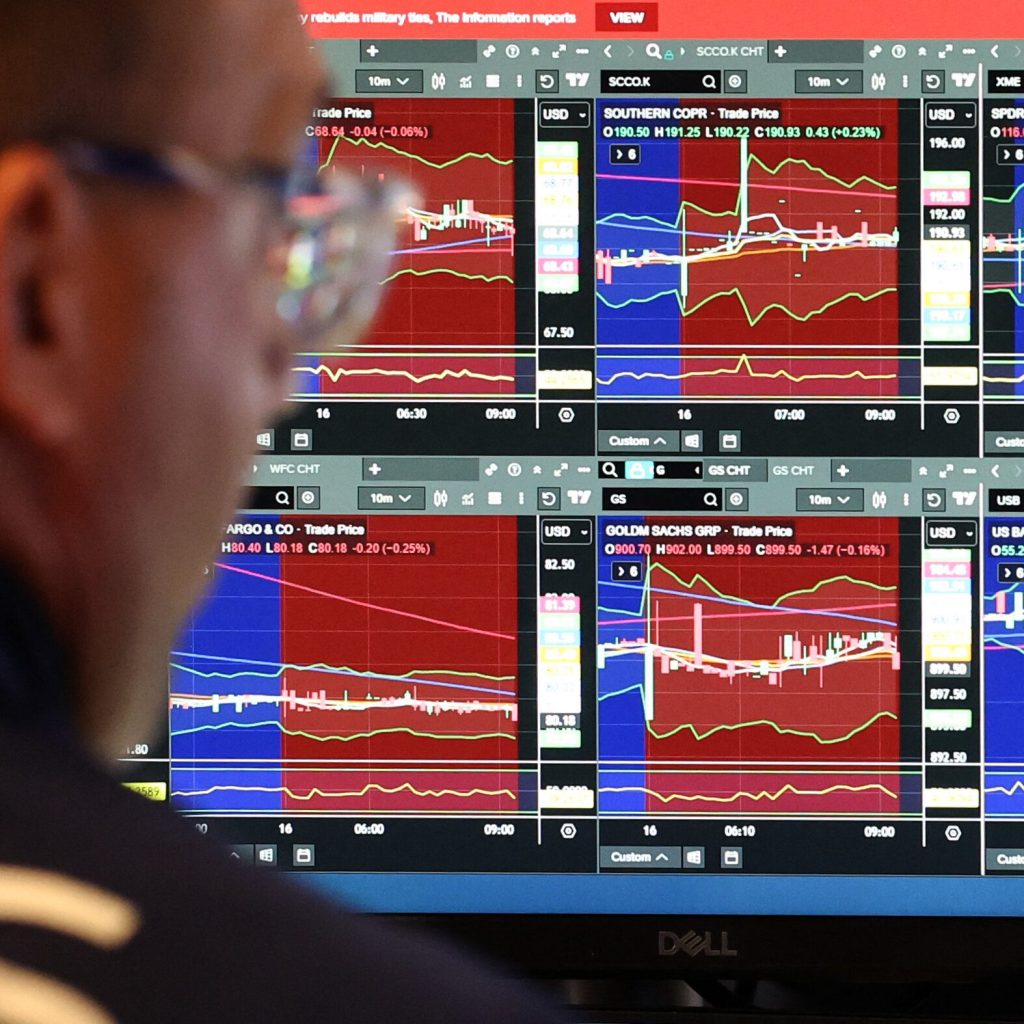
October 8, 2026: The Indian stock market witnessed a sharp sell-off on Thursday as rising crude oil prices, the Reserve Bank of India’s hawkish policy shift, persistent foreign investor selling, elevated global bond yields and a weak rupee combined to trigger heavy selling across Dalal Street.
The BSE Sensex crashed 1,045.46 points, or about 1.44%, to close at 71,593.24, while the NSE Nifty 50 declined 371.25 points, or around 1.64%, to end at 22,231.80. The Sensex closed at its lowest level since February 2024, while the Nifty fell to an approximately 18-month low.
Key Highlights
Indian Stock Market Crash Today — October 8, 2026
Sensex: 71,593.24, down 1,045.46 points or about 1.44%
Nifty 50: 22,231.80, down 371.25 points or about 1.64%
Brent crude: moved above $100 a barrel and briefly crossed $104
RBI repo rate: raised by 25 basis points to 5.50%
RBI stance: shifted from neutral towards calibrated tightening
Foreign investors: continued heavy selling in Indian equities
Small- and mid-cap stocks: suffered particularly strong selling pressure
Major sectors: metals, real estate, oil and gas and several rate-sensitive sectors declined sharply
IT stocks: showed relative resilience, with select technology shares ending higher
Market outlook: volatility is likely to remain elevated as investors track crude oil, FII flows, RBI policy and upcoming corporate earnings
Why Did the Indian Stock Market Crash Today?
Thursday’s market decline was not caused by a single event. Instead, several negative factors came together at the same time.
The biggest domestic trigger was the Reserve Bank of India’s unexpected shift towards a tighter monetary policy stance. The central bank raised its benchmark repo rate by 25 basis points to 5.50%, marking its first increase in several years, while changing its policy language towards “calibrated tightening.” The decision increased concerns that borrowing costs could remain higher for longer and that additional monetary tightening could become necessary if inflationary pressures persist.
At the same time, crude oil prices climbed sharply amid continuing geopolitical and supply concerns in the Middle East. Brent crude moved above the psychologically important $100-a-barrel level and rose above $104 during the session. For India, which remains heavily dependent on imported crude oil, a prolonged oil-price surge can increase the country’s import bill, put pressure on the rupee and worsen inflation risks.
The combination of higher oil prices and tighter monetary policy created a particularly uncomfortable environment for Indian equities.
Sensex Crashes More Than 1,000 Points
The BSE Sensex started Thursday’s session under pressure and selling intensified as the trading day progressed.
By the end of the session, the 30-share index had fallen 1,045.46 points to 71,593.24, representing a decline of roughly 1.44%. The index had touched significantly lower levels during the session as panic selling spread across several sectors.
The fall was important not merely because of the size of the one-day decline, but also because of the level at which the Sensex finished.
The index closed at its lowest level since February 2024, highlighting the extent to which Indian equities have come under pressure during the recent sell-off.
The market’s decline also demonstrated that investors are becoming increasingly sensitive to the combination of inflation, interest rates, currency weakness, oil prices and foreign capital flows.
A market that had previously been able to absorb individual negative developments is now facing several macroeconomic pressures simultaneously.
Nifty 50 Falls Below 22,300
The NSE Nifty 50 suffered an equally severe decline.
The benchmark index dropped 371.25 points, or approximately 1.64%, to close at 22,231.80. The Nifty’s closing level represented an approximately 18-month low and reflected the broad nature of the selling pressure.
The decline pushed the index decisively below the 22,300 level, a psychologically important area for traders.
The Nifty had already been showing signs of technical weakness before Thursday’s sell-off. Once important support levels were broken, algorithmic and momentum-driven selling added to the pressure.
This created a feedback loop:
Weak global cues → selling at the open → technical support breakdown → stop-loss selling → broader institutional selling → further market decline.
The result was one of the sharpest sessions for Indian equities in recent months.
RBI Rate Hike Becomes a Major Market Trigger
One of the most important developments behind the stock market crash was the RBI’s latest monetary policy decision.
The central bank raised the repo rate by 25 basis points to 5.50% and moved its stance towards calibrated tightening. The decision came as inflation risks increased, particularly because of higher energy prices.
For investors, the issue is not simply the immediate 25-basis-point rate increase.
The larger concern is what the policy shift means for the future.
A tightening monetary policy can affect equity valuations in several ways.
First, higher interest rates increase borrowing costs for businesses and consumers.
Second, companies with significant debt may face higher interest expenses.
Third, higher bond yields can make fixed-income investments comparatively more attractive.
Fourth, higher discount rates reduce the present value of future corporate earnings, which can place pressure on stock valuations.
This is particularly important for companies whose valuations depend heavily on expectations of strong future growth.
The RBI’s policy shift therefore forced investors to reassess the valuation of several sectors.
Crude Oil Above $100 Adds to India’s Economic Risk
The second major trigger was the sharp increase in crude oil prices.
Brent crude rose above $100 per barrel and moved above $104 during Thursday’s trading session as geopolitical tensions and concerns about global energy supplies increased.
For India, this is a particularly important risk.
India is a major importer of crude oil. When international oil prices rise sharply, the country can face several simultaneous pressures.
1. Higher import bill
More expensive crude means India must spend more dollars to purchase the same quantity of oil.
2. Pressure on the rupee
Higher demand for dollars can place pressure on the Indian currency.
3. Imported inflation
Expensive crude can increase transportation and logistics costs and eventually feed into prices across the economy.
4. Pressure on corporate margins
Industries that depend heavily on fuel and transportation can face higher operating costs.
5. Pressure on interest rates
If higher oil prices push inflation higher, the RBI may have less room to cut interest rates and could even be forced to maintain or increase rates.
This explains why the crude oil rally has become one of the biggest concerns for Indian equity investors.
Foreign Investors Continue to Sell Indian Stocks
Another major factor behind the market weakness is continued selling by foreign investors.
Foreign investors have been reducing exposure to Indian equities for an extended period, and the pace of selling has become a significant concern for the market.
According to Reuters, foreign investors sold a net ₹469.9 billion, or approximately $4.86 billion, over nine sessions, taking their total outflows for the year to around $30.4 billion.
Persistent foreign selling matters because large institutional investors can significantly influence market liquidity and direction.
When FIIs sell aggressively, large-cap stocks often experience immediate pressure.
The impact is particularly strong when foreign selling occurs simultaneously with rising global bond yields.
Investors have to compare the potential return from Indian equities with returns available in US dollar-denominated fixed-income assets.
If US Treasury yields remain elevated, some global investors may decide that the risk-reward balance has become less attractive for emerging-market equities.
That creates another headwind for Indian stocks.
Rising US Bond Yields Add to Global Pressure
The Indian market sell-off also needs to be viewed through the global bond market.
US Treasury yields have climbed sharply, with the 10-year yield reaching around 5.3%, according to market reports.
Higher US yields can affect emerging markets in several ways.
When US government bonds offer higher yields, global investors may prefer the relative safety and liquidity of US assets.
This can reduce the flow of capital towards emerging markets such as India.
Higher US yields can also support the US dollar, which creates additional pressure on emerging-market currencies.
For India, the combination of:
high US yields + strong dollar + expensive crude + FII selling
creates an especially difficult environment.
Rupee Weakness Adds Another Layer of Concern
The Indian rupee has also been under pressure.
The currency remained around the ₹96-plus level against the US dollar after recently weakening significantly. Reports indicated that the rupee had moved beyond ₹96.50 in recent trading.
A weaker rupee is not automatically negative for every Indian company.
IT exporters, for example, can benefit from a weaker domestic currency because overseas revenues translate into more rupees.
However, for the broader Indian economy, persistent currency weakness can increase the domestic cost of imported commodities.
Crude oil is particularly important.
Because oil is purchased internationally in dollars, a weaker rupee can magnify the impact of higher crude prices.
That means the Indian economy could face a double burden:
higher oil price + weaker rupee.
This is one reason investors are watching currency markets closely.
All Major Sectors Face Selling Pressure
The Thursday sell-off was broad-based.
Reuters reported that all 16 major sectoral indices declined, while small- and mid-cap indices fell by more than 2%.
This is important because a decline concentrated in only one or two sectors would be easier for investors to interpret.
Instead, the selling spread across the market.
Metals, real estate, oil and gas and other economically sensitive sectors were among the areas facing significant pressure.
Rate-sensitive sectors were particularly vulnerable because the RBI’s tighter stance directly affects financing conditions.
Companies that rely heavily on debt financing can become less attractive when borrowing costs rise.
Adani Enterprises, JSW Steel and ITC Among Major Losers
Several prominent stocks came under heavy selling pressure.
Adani Enterprises was among the notable laggards, while JSW Steel and ITC also suffered sharp declines. Financial Express reported that Adani Enterprises fell around 5.4%, while JSW Steel and ITC declined by more than 4% during the session.
Adani Ports, InterGlobe Aviation and other economically sensitive stocks also faced substantial pressure during the session.
The selling demonstrated the market’s preference for reducing exposure to higher-risk and cyclical areas.
When investors become uncertain about interest rates and economic growth, they often move away from stocks whose earnings are highly sensitive to economic conditions.
IT Stocks Provide Some Relief
Technology stocks performed relatively better than the broader market.
Shares such as Infosys and Tech Mahindra managed to remain in positive territory even as most of the broader market declined. TCS also showed relative resilience around the start of the September-quarter earnings season.
There are several reasons why IT stocks can sometimes outperform during periods of rupee weakness.
A significant portion of the revenues of major Indian IT companies comes from overseas markets.
Therefore, a weaker rupee can provide a translation benefit when foreign currency revenue is converted into Indian rupees.
However, IT stocks are not completely immune to global economic risks.
If higher interest rates eventually weaken economic growth in the United States and Europe, technology spending could also slow.
Investors will therefore be watching the upcoming earnings season closely.
TCS Earnings Season Could Become a Major Market Test
The timing of the market crash is also important because India’s July-September corporate earnings season is beginning.
Tata Consultancy Services is among the first major companies to report results, making its performance and management commentary particularly important for investors.
Corporate earnings could provide the next major direction signal for the market.
If companies report strong earnings and maintain positive guidance, investors may begin to look beyond the current macroeconomic pressures.
But if earnings disappoint, the market could remain vulnerable.
Investors will particularly monitor:
- Revenue growth
- Operating margins
- Management guidance
- Domestic demand
- Export demand
- Impact of crude oil prices
- Interest costs
- Currency movements
- Capital expenditure plans
- Global economic conditions
A strong earnings season could help stabilize sentiment, while weak results could reinforce the bearish trend.
Why Small-Cap and Mid-Cap Stocks Are More Vulnerable
The sell-off was not limited to large-cap stocks.
Small- and mid-cap indices also declined sharply, with Reuters reporting falls of more than 2%.
This is significant because smaller companies generally have greater sensitivity to:
- domestic interest rates,
- liquidity conditions,
- borrowing costs,
- economic growth,
- investor risk appetite.
When markets become defensive, investors frequently reduce exposure to smaller companies first.
Valuation is another issue.
During periods of strong market optimism, small-cap and mid-cap companies can command high valuations because investors expect rapid future growth.
But when interest rates rise and liquidity tightens, those valuations can contract rapidly.
That can produce larger percentage declines than those seen in established large-cap companies.
Investor Wealth Takes a Major Hit
The market crash also resulted in a substantial decline in the overall market value of listed companies.
Market reports estimated that investor wealth erosion reached several lakh crore rupees during the sell-off, with estimates approaching ₹10 lakh crore during the day’s sharpest phase.
It is important to understand that such a decline represents a change in market capitalisation rather than a literal cash withdrawal of the same amount from investors’ bank accounts.
Market capitalisation changes when share prices change.
Nevertheless, the decline is economically significant because it affects investor portfolios, sentiment and the perceived value of publicly listed companies.
Global Markets Add to the Pressure
The Indian market was also affected by weakness across global markets.
Asian equities were under pressure as investors reacted to rising oil prices and elevated government bond yields. Reuters reported that emerging Asian equities suffered their sharpest one-day decline in about a week.
US market futures also weakened as concerns about oil prices and bond yields increased.
The global environment therefore provided little support for Indian equities.
The current market situation is a reminder that Indian stocks cannot be analyzed independently of international financial markets.
India is increasingly integrated into global capital flows.
When international investors reduce risk exposure, emerging markets can experience significant selling pressure even when domestic economic fundamentals remain relatively strong.
What Does the Stock Market Crash Mean for Investors?
The biggest question now is whether Thursday’s crash represents the beginning of a prolonged bear phase or a sharp correction within a broader market cycle.
The answer is not yet clear.
Several indicators suggest that the market has entered an oversold zone after the recent decline. Reuters noted that market indicators were showing heavily oversold conditions.
However, an oversold market does not automatically mean that prices will immediately recover.
Markets can remain oversold for extended periods when a major macroeconomic trend is driving the selling.
Therefore, investors should distinguish between a technical bounce and a sustainable trend reversal.
Can Sensex and Nifty Recover?
A recovery is possible, but several conditions may need to improve before a sustained rebound develops.
Crude oil must stabilize
A sustained decline in crude oil prices would remove one of the biggest inflationary threats facing India.
FII selling must slow
A reduction in foreign selling would improve liquidity and market confidence.
The rupee needs stability
A stable currency would reduce concerns about imported inflation.
Bond yields need to moderate
Lower global yields would make emerging-market equities comparatively more attractive.
Corporate earnings must remain strong
Good earnings could provide fundamental support to stock valuations.
RBI policy expectations must stabilize
Investors need greater clarity regarding the future path of interest rates.
Until these factors improve, market rallies could remain vulnerable to renewed selling.
Nifty 50 Technical Outlook After the Crash
From a technical perspective, the Nifty’s close near 22,232 is significant.
The index has broken below several recent support zones, and the momentum has clearly shifted toward the bears.
The immediate focus for traders will be whether the index can reclaim the 22,300–22,500 zone.
A sustained recovery above that region could provide the first indication that selling pressure is easing.
On the other hand, continued trading below 22,200 could expose the index to further downside.
The next major levels will need to be assessed according to price action, volume and market breadth rather than relying on a single number.
Traders should also watch whether the index forms a lower low followed by a strong reversal candle.
That would provide a stronger technical signal than simply observing one intraday rebound.
Sensex Outlook: What Traders Should Watch Next
For the Sensex, the closing level near 71,593 is equally important.
The index has moved into a much weaker technical structure after today’s decline.
The immediate priority for bulls will be to defend the latest lows and prevent another wave of panic selling.
If the index stabilizes and starts making higher intraday lows, traders could begin looking for a recovery towards previous breakdown zones.
However, if the Sensex continues to make fresh lows with increasing volumes, the bearish trend could extend.
Investors should therefore avoid assuming that a single positive session automatically marks the end of the correction.
What Could Trigger a Stock Market Rebound?
There are several possible catalysts that could reverse the current sentiment.
1. Fall in crude oil prices
This would immediately reduce inflation concerns and improve India’s external balance outlook.
2. Positive corporate earnings
Strong results from major companies could convince investors that corporate fundamentals remain resilient.
3. Lower US bond yields
A decline in Treasury yields could reduce pressure on emerging-market assets.
4. FII buying returns
Foreign institutional investors returning to Indian equities would provide an important liquidity boost.
5. Stable rupee
Currency stability would reduce concerns about imported inflation.
6. Easing geopolitical tensions
Any meaningful reduction in tensions around oil-producing regions or major shipping routes could trigger a rapid decline in the crude risk premium.
7. RBI policy clarity
Clearer communication about the future path of interest rates could reduce uncertainty.
What Could Make the Market Fall Further?
The risks are equally important.
The market could face additional pressure if crude oil remains above $100 for an extended period.
A further rise towards significantly higher levels could increase inflation expectations and put additional pressure on the RBI.
Continued FII selling would also remain a major negative.
Another risk is the US bond market.
If Treasury yields continue climbing, global investors may continue reallocating capital away from riskier assets.
Geopolitical escalation could create another oil-price shock.
Finally, disappointing corporate earnings could turn a macro-driven correction into a broader earnings-driven sell-off.
Should Investors Buy the Dip?
The phrase “buy the dip” becomes particularly dangerous during a market correction because not every decline represents a buying opportunity.
Investors should differentiate between companies whose share prices are falling because of temporary sentiment and companies whose fundamental outlook has deteriorated.
A high-quality business with strong cash flows, manageable debt, durable competitive advantages and reasonable valuations may become more attractive after a broad market correction.
However, investors should avoid buying simply because a stock has fallen 10%, 20% or 30%.
A falling stock can continue to fall if its earnings expectations are declining.
Therefore, investors should examine:
- Valuation
- Earnings growth
- Debt levels
- Cash flows
- Sector outlook
- Management quality
- Competitive position
- Dividend history
- Exposure to interest rates
- Exposure to crude oil
- Dependence on imports
- Currency sensitivity
Which Stocks Could Remain Relatively Strong?
During periods of macroeconomic uncertainty, companies with strong balance sheets and relatively predictable cash flows can sometimes outperform.
Defensive sectors may receive greater investor attention if economic uncertainty increases.
Information technology exporters can also benefit from rupee weakness, although their performance will ultimately depend on global technology demand.
Large private-sector financial institutions with strong asset quality may also attract investors if valuations become more attractive.
However, investors should not interpret relative strength during one trading session as a guarantee of future performance.
Stock selection should be based on fundamentals and valuation rather than simply identifying the day’s gainers.
Impact on Banks and Financial Stocks
The RBI rate hike has direct implications for the banking and financial sector.
Higher rates can increase lending rates and improve interest income for banks in some circumstances.
However, the picture is more complicated.
If borrowing becomes expensive, credit demand can slow.
Higher interest rates can also increase repayment pressure for highly leveraged borrowers.
Investors will therefore monitor the impact on loan growth, net interest margins, asset quality and credit costs.
The market’s reaction to the RBI decision suggests that investors are currently more concerned about tighter financial conditions than about the potential benefits of higher lending yields.
Impact on Real Estate Stocks
Real estate stocks are particularly sensitive to interest rates.
Higher borrowing costs can affect homebuyers and developers simultaneously.
For consumers, higher mortgage rates can reduce affordability.
For developers, financing costs can increase.
This can pressure project margins and potentially slow new launches.
That explains why the RBI’s hawkish shift is especially important for the real estate sector.
If rates remain elevated for an extended period, investors could become more selective within the sector.
Impact on Auto and Aviation Stocks
High crude oil prices can also affect transportation-related industries.
Aviation companies are particularly sensitive because jet fuel is a major operating expense.
If oil remains above $100 for a prolonged period, airline margins can come under pressure unless companies are able to pass higher costs on to passengers.
Automobile companies can also be affected indirectly through fuel costs, consumer purchasing power and inflation.
The impact varies significantly between companies, making individual stock analysis important.
Impact on IT Stocks
IT companies may have a relative advantage from rupee weakness because a large share of their revenues is earned internationally.
However, there are two opposing forces.
A weaker rupee can improve revenue translation.
But higher global interest rates can potentially slow technology spending if businesses reduce discretionary investment.
Therefore, the IT sector’s future performance will depend heavily on US and European economic conditions.
The upcoming earnings season will be especially important.
The Bigger Economic Picture
Thursday’s market crash should not be viewed simply as a stock-market event.
It is a reflection of a larger global economic challenge.
India is currently dealing with several external pressures simultaneously:
higher oil prices, currency weakness, foreign capital outflows, elevated global interest rates and geopolitical uncertainty.
Each of these factors can affect the economy independently.
When they occur together, their effects can reinforce each other.
For example:
Higher oil prices can increase inflation.
Higher inflation can reduce the scope for monetary easing.
Higher interest rates can reduce liquidity.
Reduced liquidity can pressure equity valuations.
Falling equities can reduce investor confidence.
Foreign investors may then become more cautious.
That can increase selling pressure.
This interconnected chain helps explain why the market reaction has been so severe.
Why the Current Correction Is Different
The recent market decline is different from an ordinary profit-booking session because it involves both domestic and international macroeconomic factors.
Profit booking generally occurs after a strong rally when investors lock in gains.
The current correction is more complicated.
Investors are reassessing:
- Interest rates
- Inflation
- Oil prices
- Currency
- Foreign capital flows
- Global bond yields
- Corporate earnings
- Geopolitical risk
That means volatility could remain elevated even after today’s crash.
Market Outlook for the Coming Sessions
The next few trading sessions will be crucial.
The market could remain volatile as investors react to developments in crude oil, global bond yields, currency markets and corporate earnings.
A sharp rebound is possible if geopolitical tensions ease or crude prices fall.
But investors should also be prepared for continued weakness if oil remains elevated and foreign selling continues.
The key question is whether the market can establish a base.
A base generally requires several sessions of stabilization rather than a single intraday recovery.
Traders should therefore monitor volume, market breadth, institutional flows and whether major indices reclaim broken support levels.
What Should Retail Investors Do Now?
Retail investors should avoid making emotionally driven decisions after a sharp market decline.
A large red candle can create fear, particularly for investors who entered the market near recent highs.
But panic selling can lock in losses.
At the same time, blindly averaging every falling stock can also be dangerous.
A more disciplined approach is to review each holding individually.
Ask:
Has the company’s fundamental outlook changed?
If the answer is no, a market-wide correction may create a long-term opportunity.
If the company’s earnings outlook has deteriorated significantly, however, the decline may not simply be temporary market noise.
Investors with long-term horizons should focus on asset allocation, diversification and valuation rather than attempting to predict the exact bottom.
What Traders Should Watch on the Next Trading Day
The first major indicator will be GIFT Nifty.
A strong or weak GIFT Nifty signal can indicate how the Indian market may open, although it is not a guarantee of the actual opening.
The second factor will be crude oil.
If Brent remains above $100, inflation concerns are likely to remain elevated.
The third factor will be US Treasury yields.
Any further sharp rise could create additional pressure on emerging markets.
The fourth factor will be FII activity.
If foreign investors continue selling heavily, rallies could face resistance.
The fifth factor will be corporate earnings.
Strong results could provide an important counterweight to macroeconomic concerns.
AI News Breaking Editorial Analysis
The October 8 Indian stock market crash appears to be a classic case of multiple macroeconomic risks converging at the same time. The RBI’s shift towards calibrated tightening matters because it changes the market’s expectations for liquidity and borrowing costs, while crude oil above $100 creates an additional inflationary burden for an oil-importing economy. At the same time, elevated US Treasury yields make global capital more selective and can encourage foreign investors to reduce exposure to emerging markets. The most important signal from today’s session is therefore not simply that the Sensex lost more than 1,000 points or that the Nifty fell below 22,300; it is that market participants are simultaneously pricing in higher inflation, tighter monetary conditions, weaker currency dynamics and elevated geopolitical risk. The next phase will depend heavily on whether crude oil stabilizes and whether corporate earnings can provide evidence that India’s underlying economic growth remains resilient. If oil prices decline and FII selling slows, the current oversold conditions could support a sharp technical rebound. If oil remains elevated and foreign outflows continue, however, further volatility and downside risks cannot be ruled out. In our assessment, investors should treat the present environment as a high-volatility, selective-stock-picking market, rather than assuming that every decline represents an immediate buying opportunity. Long-term investors should prioritize balance-sheet strength, sustainable earnings and reasonable valuations, while short-term traders should remain disciplined with position sizing and risk management.