 Open to alliance with parties that agree with SAD’s ideology: Sukhbir Singh Badal
 Palestinian Gunmen Open Fire on Israelis in the West Bank, Officials Say
 Russians across
 Jagan to move Supreme Court again over ‘obstruction’ of YSRCP nominees in Andhra local body polls
 Pentagon directive bans troops from using nonpublic info to bet in prediction markets
Keralam MLA pushes for night access to Sabarimala trek path, sparks controversy
**
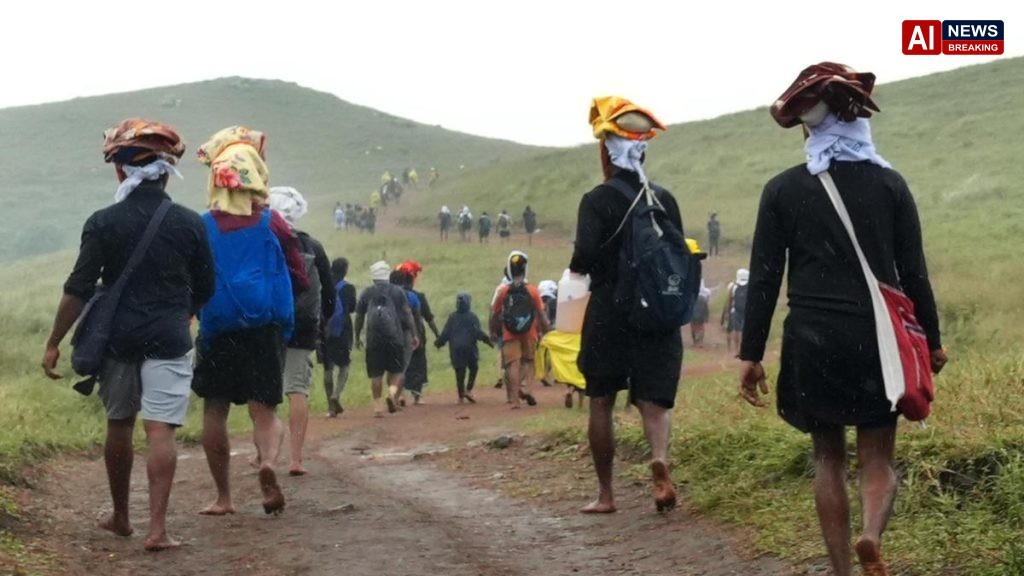
Keralam MLA pushes for night access to Sabarimala trek path, sparks controversy - AI News Breaking
keralam pushes night access:
The Kerala Legislative Assembly member from Poonjar, M.J. Sebastian, has renewed a long‑standing demand for unrestricted, round‑the‑clock access to a 30.7‑kilometre segment of the Sabarimala pilgrimage route. The MLA argues that permitting night travel would alleviate the chronic congestion that plagues devotees during the annual pilgrimage season and would make the arduous trek more convenient for the millions who undertake the journey each year..
Sebastian’s proposal, lodged with the state’s forest department, seeks to lift the existing curfew that bars entry to the trail after sunset, a rule that has been in place for several decades.The Sabarimala shrine, perched in the Western Ghats of southern India, draws a massive influx of pilgrims between November and January. The route under discussion traverses dense forest tracts that form part of the Periyar Tiger Reserve and other protected zones. Under current regulations, the forest department closes the trail at 6 p.m..
to minimise human‑wildlife conflict and to protect the fragile ecosystem that supports several endangered species, including tigers, elephants and the Nilgiri tahr. Forest officials maintain that the curfew is essential for both visitor safety and conservation objectives.Sebastian’s advocacy for 24‑hour access is framed as a response to the logistical challenges that pilgrims face. In recent years, the number of devotees has swelled to over 10 million, putting unprecedented pressure on the narrow pathways, parking facilities and temporary shelters that line the trek..
The MLA points to incidents of stampedes, traffic snarls and dehydration, particularly during the early morning hours when pilgrims attempt to cover as much ground as possible before nightfall. He contends that allowing continuous movement would disperse crowds more evenly and reduce the risk of accidents that have, on occasion, claimed lives.The proposal has ignited a heated debate among environmentalists, local communities and religious groups. Conservation NGOs argue that the night curfew is a hard‑won safeguard that prevents poaching, reduces the likelihood of vehicle‑animal collisions and limits disturbances to nocturnal wildlife..
They warn that lifting the restriction could open the forest to illegal logging and sand mining, activities that have historically exploited gaps in enforcement during off‑hours. The Kerala Forest Department, citing data from its wildlife monitoring units, says that incidents of human‑wildlife encounters rise sharply after dusk, with several recorded cases of elephants charging vehicles and tigers venturing closer to human settlements.Local residents of the Poonjar taluk, whose livelihoods depend on tourism and forest‑related activities, have expressed mixed reactions. Some shopkeepers and transport operators welcome the idea, anticipating increased revenue from a longer flow of pilgrims..
Others fear that a surge in night traffic could strain the already limited infrastructure, lead to littering and jeopardise the sanctity of the sacred landscape. Community leaders have called for a consultative process that balances development aspirations with ecological stewardship, urging both the MLA and the forest department to engage in transparent dialogue.Religious authorities have also weighed in. The chief priest of Sabarimala, known as the Mahadevan, emphasised the spiritual significance of the night’s darkness in the pilgrim’s journey, noting that the ritual of “Kalpaka” traditionally begins after sunset and concludes before dawn..
While not outright rejecting the MLA’s request, the priest cautioned that any alteration to the schedule must respect the theological framework that underpins the pilgrimage’s timing. He suggested that improvements in day‑time facilities, such as additional rest houses and water points, might address congestion without compromising religious rites.In response to the growing controversy, the state government has convened a joint committee comprising representatives from the forest department, the tourism ministry, the pilgrimage board and civil society organisations. The committee is tasked with conducting a comprehensive impact assessment that will examine traffic patterns, wildlife movement data, and the capacity of existing infrastructure..
Preliminary reports indicate that a pilot programme could be launched during the off‑peak season to test night‑time access under controlled conditions, employing GPS‑based monitoring of both vehicles and wildlife to gauge any adverse effects.Critics of the pilot warn that even limited trials could set a precedent that undermines long‑term conservation goals. They point to similar experiments in other protected areas of India, where short‑term relaxations of curfews have led to irreversible habitat fragmentation and increased human encroachment. The committee’s terms of reference, however, include provisions for immediate suspension of the trial should any significant threat to wildlife be detected, a clause that seeks to balance flexibility with precaution.As the debate unfolds, the broader question of how to reconcile the massive pilgrimage with the imperatives of environmental protection remains unresolved..
Kerala’s administration has previously demonstrated a willingness to innovate, launching eco‑friendly shuttle services and deploying solar‑powered lighting along certain stretches of the path. Whether such measures will satisfy both the devotional fervour of pilgrims and the ecological concerns of conservationists is yet to be seen. The outcome of the committee’s deliberations, expected later this year, will likely shape policy not only for Sabarimala but for other high‑traffic sacred sites that intersect with fragile ecosystems across the country.For now, M.J..
Sebastian continues to press for legislative backing, arguing that modern infrastructure and stringent monitoring can mitigate the risks associated with night travel. He has pledged to allocate state funds for the installation of night‑vision cameras, emergency communication points and wildlife deterrent systems along the route. The forest department, while acknowledging the potential benefits of improved pilgrim flow, remains cautious, reiterating that any modification to the curfew must be grounded in robust scientific evidence and aligned with national wildlife protection statutes..
The forthcoming decisions will test the capacity of Kerala’s institutions to harmonise cultural tradition with ecological responsibility..
Updated: October 8, 2026
Kerala MLA M.J. Sebastian has pressed for 24‑hour access to a 30‑km stretch of the Sabarimala trek, arguing it would ease crowding and safety woes during the peak pilgrimage season. Conservationists and forest officials warn that lifting the night curfew could jeopardise wildlife and the fragile ecosystem, prompting a joint committee to assess the proposal.
If the curfew is lifted, the pilgrimage’s economic boost could eclipse the fragile ecology, risking a permanent erosion of the tiger reserve’s sanctity. A cautious, data‑driven pilot may prove a litmus test, but any lapse risks turning a revered trail into a commercial corridor, setting a precedent that other sacred sites could emulate—threatening the balance between faith and nature.