 Powerful Earthquake in Tibet Kills at Least 16
 How Pastors Mobilize Communities in Congo’s Fight Against Ebola
 Gadi Eisenkot
 Tao Tokyo Spring 2027
 Karnataka SIR: Teaching on the back burner
A Savannah police officer gave her Flock login to her ICE agent husband
**
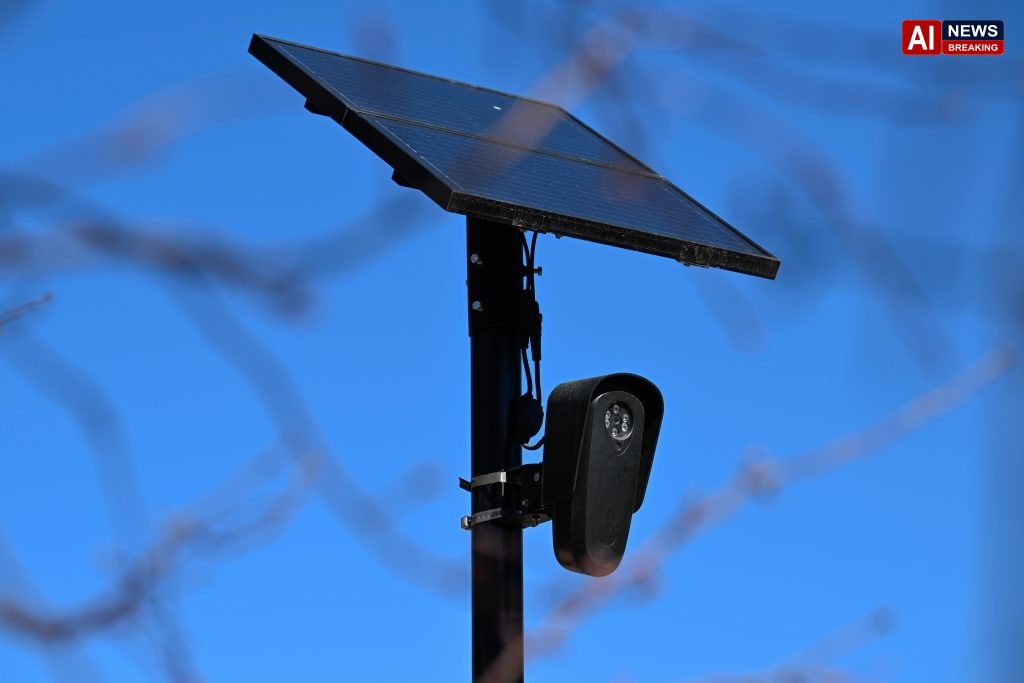
A Savannah police officer gave her Flock login to her ICE agent husband - AI News Breaking
Savannah police officer Amber Harpe was dismissed from the Savannah Police Department in August after an internal investigation revealed that she had given her husband, Tyler Harpe, access to the department’s Flock vehicle‑tracking system. The department, which uses the software to monitor the location and movements of its fleet, does not share its data with federal agencies, and the investigation concluded that the officer’s actions breached established security protocols. The case has drawn attention not only because it involves a police officer and an Immigration and Customs Enforcement (ICE) agent but also because the data accessed was subsequently used in a pattern that raised questions about racial profiling and the appropriate limits of inter‑agency data sharing.The investigation was launched after a routine audit of system log‑ins flagged an unfamiliar user accessing the Flock platform from a non‑departmental IP address..
When investigators traced the activity, they discovered that the credentials belonged to Officer Harpe, who had inadvertently disclosed her username and password to her spouse. Tyler Harpe, who works as a special agent for ICE, used the credentials to conduct nearly a thousand searches—983, to be precise—over a period of several weeks. The searches focused on 97 distinct license plates, the majority of which were registered to Hispanic drivers living in Savannah and the surrounding area.Data obtained from the Flock system includes real‑time GPS coordinates, route histories, and timestamps for each vehicle..
By cross‑referencing this information with publicly available registration records, the Harpes were able to construct a detailed picture of the movements of the identified drivers. While the couple asserted that the searches were conducted for “research and educational” purposes, critics argue that the volume and focus of the queries suggest a more targeted intent. The pattern of searches aligns with concerns that ICE agents may be leveraging local law‑enforcement tools to locate individuals for immigration enforcement, a practice that has been widely condemned by civil‑rights groups.Savannah Police Chief James W..
Cooper released a statement after the investigation concluded, emphasizing that the department’s policies strictly prohibit the sharing of login credentials and that any unauthorized access is treated as a serious breach. “Our officers are entrusted with sensitive tools that are essential to public safety,” Cooper said. “When that trust is compromised, we must act decisively to protect the integrity of our systems and the privacy of the communities we serve.” The department’s internal affairs unit recommended termination, and the decision was carried out in accordance with collective bargaining agreements and state employment law.The incident has reignited a broader debate about the relationship between local police forces and federal immigration authorities..
While ICE has formal agreements—known as 287(g) partnerships—with certain law‑enforcement agencies that allow for collaborative enforcement of immigration laws, Savannah does not have such an agreement. Moreover, the city’s mayor, Eddie DeLoach, has repeatedly stated that the Savannah Police Department will not share resources with ICE without explicit legal authority. The Harpes’ actions, therefore, appear to have circumvented both departmental policy and municipal directives, raising the specter of “shadow” cooperation that operates outside the bounds of public oversight.Civil‑rights organizations quickly mobilized in response to the revelations..
The Southern Poverty Law Center issued a press release condemning the misuse of municipal data for immigration enforcement, calling the incident “a stark reminder of how vulnerable local data can be when individual officers act outside the chain of command.” Similarly, the American Civil Liberties Union of Georgia filed a formal complaint with the Savannah City Council, urging the council to adopt stricter data‑security measures and to audit all access logs for the Flock system on a quarterly basis. The ACLU also highlighted the disproportionate impact on Hispanic communities, noting that the license plates searched were overwhelmingly linked to drivers of Latin American origin.In the wake of the scandal, Savannah’s city council convened an emergency session to consider a series of policy proposals aimed at tightening control over the department’s digital assets. Proposed measures include multi‑factor authentication for all system log‑ins, mandatory annual cybersecurity training for officers, and the establishment of an independent oversight committee with the authority to review any external requests for data..
Councilmember Lisa Glover, who chairs the Public Safety Committee, argued that “the technology that helps us keep our streets safe must not become a weapon used to target specific communities without due process.”Legal experts suggest that the Harpes could face both criminal and civil liability. Under Georgia’s Computer Fraud and Abuse Act, unauthorized access to a protected computer system is a felony punishable by up to five years in prison. Federal statutes also prohibit the misuse of government‑owned data for personal or non‑official purposes..
Although no charges have been filed at the time of writing, the Savannah District Attorney’s Office confirmed that it is reviewing the case and will coordinate with the U.S. Attorney’s Office to determine whether federal prosecution is appropriate. Meanwhile, the family of one of the drivers whose license plate was searched has retained counsel to explore a potential civil suit for invasion of privacy and emotional distress.The incident has also sparked internal reflection within the Savannah Police Department about its culture and oversight mechanisms..
A senior lieutenant, who spoke on condition of anonymity, described the department as having “a strong sense of camaraderie but sometimes a lax attitude toward digital hygiene.” He noted that prior to the Harpes’ case, the department relied on trust and informal reminders to enforce password security, rather than implementing technical safeguards. “We thought we were a close‑knit team and that would be enough,” he said. “This has been a wake‑up call that we need robust, enforceable policies, not just good intentions.”Public reaction in Savannah has been polarized..
Some community members expressed relief that the department acted swiftly to terminate the officer, viewing it as a necessary step to restore confidence. Others, particularly those with strong pro‑law‑enforcement views, questioned whether the punishment was proportionate, suggesting that the officer’s intent was not malicious and that the data was used for legitimate investigative purposes. A local petition calling for the reinstatement of Officer Harpe garnered a few hundred signatures before it was withdrawn in light of the growing evidence of targeted searches.National media outlets have covered the story extensively, framing it as part of a larger pattern of local officials providing ICE with access to law‑enforcement databases..
The Verge published a detailed analysis, citing internal documents that show similar incidents in other jurisdictions where police officers have shared badge numbers, vehicle‑registry data, or even facial‑recognition footage with federal immigration agents. These reports underscore a recurring tension between municipal autonomy and federal enforcement priorities, especially in cities that have declared themselves sanctuary jurisdictions.As Savannah moves forward, the incident may serve as a catalyst for legislative action at the state level. Georgia’s legislators are reportedly drafting a bill that would criminal.
Updated: October 18, 2026
This development highlights evolving dynamics and may have broader implications in the near term.