 Trying to establish ‘facts’ about incident ‘apparently’ involving Indians on yacht off Yemen coast: India
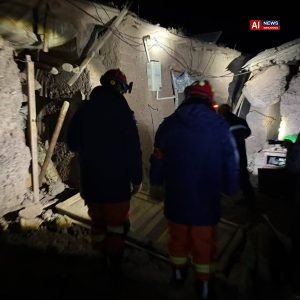
 Powerful Earthquake in Tibet Kills at Least 16
 How Pastors Mobilize Communities in Congo’s Fight Against Ebola
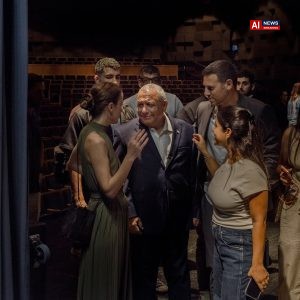
 Gadi Eisenkot
Former IDF chief Gadi Eisenkot is now Israel’s leading challenger to Prime Minister Netanyahu, promoting a quiet, technocratic campaign that emphasizes security expertise and institutional integrity over charismatic politics.
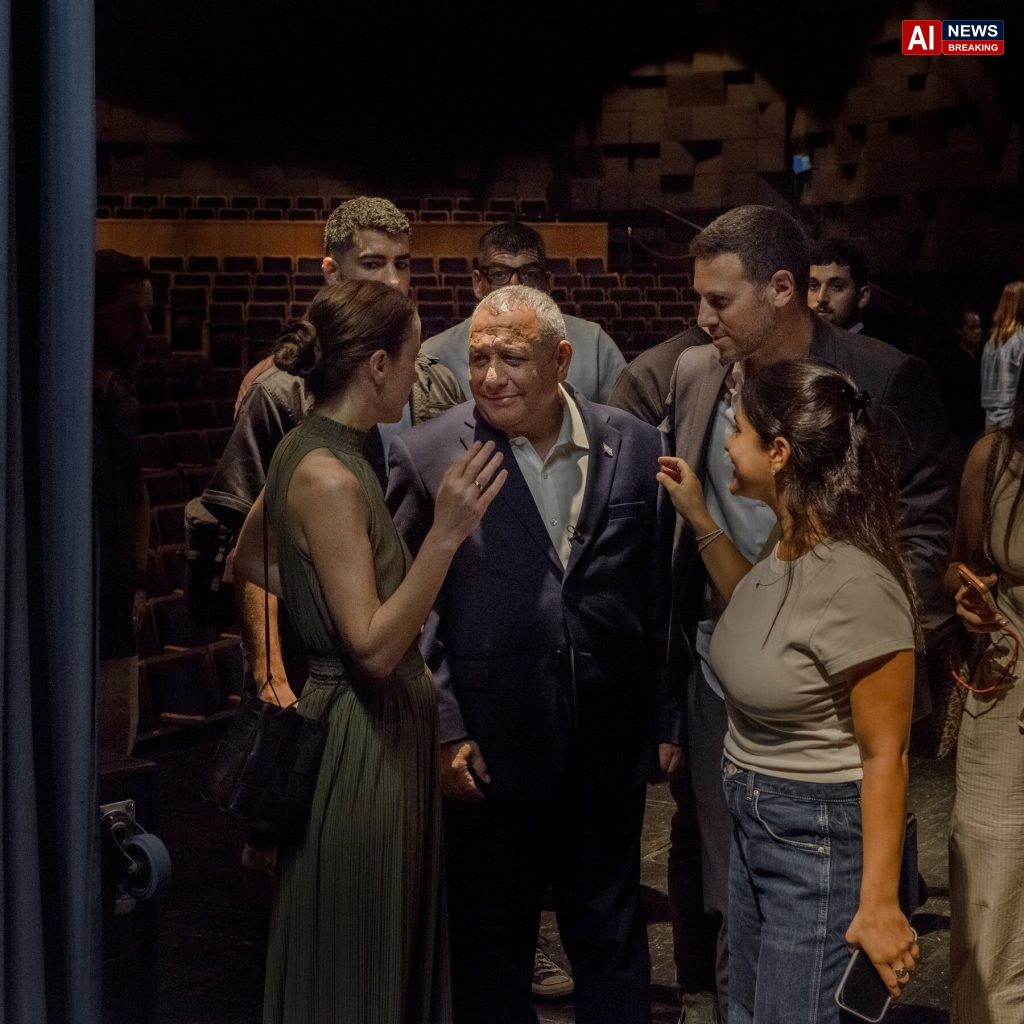
Gadi Eisenkot - AI News Breaking
Gadi Eisenkot, the former chief of staff of the Israel Defence Forces, has emerged as the most prominent challenger to Prime Minister Benjamin Netanyahu in the forthcoming election, topping opinion polls that show a steady drift away from the long‑standing leader. Eisenkot’s campaign, however, is markedly different from the combative style that has defined Netanyahu’s political career. The former military commander presents himself as a technocratic, low‑profile figure, emphasising institutional competence and national security over rhetoric..
His ascent has been fuelled by a combination of voter fatigue with Netanyahu’s protracted legal battles, a yearning for fresh leadership, and Eisenkot’s own reputation as a disciplined strategist who once oversaw Israel’s security apparatus during a period of relative stability.In the first weeks after announcing his candidacy, Eisenkot positioned himself as an “anti‑leader” – a term he used to describe what he sees as Netanyahu’s authoritarian tendencies and reliance on personal charisma to dominate the political arena. He has repeatedly warned that Israel’s democratic institutions risk erosion when power becomes concentrated in a single individual for an extended period. The former chief of staff argues that a leader should be a servant of the state rather than its master, a sentiment that resonates with a segment of the electorate disillusioned by the prime minister’s repeated confrontations with the judiciary and the media..
Yet the same language also about Eisentok’s own approach to governance, given his background in a highly hierarchical military structure.Eisenkot’s campaign strategy is deliberately understated. He shuns large rallies and flamboyant media appearances, preferring intimate meetings with community leaders and closed‑door briefings with security experts. This low‑key style has been praised by some as a refreshing alternative to the theatrics of Israeli politics, but it has also unsettled supporters who fear the absence of a clear, charismatic narrative could hinder his ability to mobilise voters on a national scale..
In a political culture where personal magnetism often translates into electoral success, Eisenkot’s restraint may prove a double‑edged sword.The former chief of staff’s security credentials form the backbone of his public persona. During his tenure as head of the IDF, Eisenkot oversaw the development of the Iron Dome missile‑defence system and managed several high‑profile operations in Gaza and the West Bank. He frequently cites these achievements to illustrate his capacity to protect Israeli citizens and maintain regional stability..
Critics, however, argue that his focus on security could eclipse pressing domestic concerns such as the cost of living, housing shortages and the integration of minority communities. Balancing his expertise in defence with a broader socioeconomic agenda will be essential if he hopes to expand his appeal beyond the traditionally security‑oriented voter base.Netanyahu, now in his fifth term, continues to dominate the political scene despite facing indictments on charges of bribery, fraud and breach of trust. His supporters contend that his experience and diplomatic relationships, particularly with the United States, make him indispensable in a volatile Middle East..
Eisenkot’s challenge, therefore, is not merely to present an alternative but to persuade a public that has, for decades, associated strong leadership with Netanyahu’s brand of assertive politics. The former chief of staff’s critique of the prime minister as an “anti‑leader” seeks to flip the narrative, portraying Netanyahu’s dominance as a liability rather than a strength.Polls released in recent weeks show Eisenkot ahead of the prime minister by a narrow margin, though the data fluctuates depending on the methodology used. Analysts point out that Israel’s electorate remains highly fragmented, with numerous small parties capable of influencing coalition formation..
Eisenkot’s chances of forming a government will depend not only on his personal vote share but also on his ability to negotiate with centrist and right‑wing factions that have traditionally aligned with Netanyahu. The former chief of staff has signalled a willingness to engage with these groups, emphasizing a pragmatic approach to coalition building rather than ideological purity.Public sentiment on Eisenkot’s low‑key campaign is mixed. A segment of younger voters appreciates his focus on policy over personality, viewing him as a potential stabilising force capable of navigating Israel’s complex security environment without resorting to polarising rhetoric..
Conversely, older constituents who have voted for Netanyahu in previous elections express skepticism about Eisenkot’s lack of political experience, questioning whether his military background translates into effective civilian governance. The divergence in perception underscores the broader challenge facing any candidate attempting to replace a figure as entrenched as Netanyahu.The upcoming election will also be shaped by external factors, including the ongoing conflict in Gaza, diplomatic relations with the United States under a new administration, and regional dynamics involving Iran and Hezbollah. Eisenkot’s expertise in defence may grant him credibility on these issues, yet his ability to articulate a coherent vision for peace, economic recovery and social cohesion remains under scrutiny..
Observers note that Israel’s electorate is increasingly demanding comprehensive policy platforms that address both security and quality of life, a balance Eisenkot must achieve to secure a governing majority.Ultimately, Eisenkot’s bid represents a test of whether Israel is prepared to shift from a leadership model built around a charismatic, long‑serving prime minister to one founded on technocratic competence and subdued public presence. His campaign’s trajectory will be monitored closely by both domestic and international audiences, as the outcome could reshape the country’s political landscape and its approach to regional challenges. Whether Eisenkot can convert his poll lead into a decisive electoral victory will hinge on his capacity to broaden his appeal, forge effective alliances and demonstrate that his “anti‑leader” stance is not a rejection of leadership but a redefinition of it..
Updated: October 23, 2026
Eisenkot’s technocratic ascent threatens to dethrone Netanyahu’s charisma‑driven model, forcing Israeli voters to weigh institutional competence against the allure of strong‑man leadership. If his low‑key, security‑first brand can broaden into a cohesive socio‑economic vision, it may redraw coalition dynamics and signal a lasting shift in Israel’s democratic calculus.