 US cop who killed one-year-old resigns hours after release of shooting footage
 North Korea’s Kim Jong-un Arrives in China, South Korea Says
 El Gouna Takeaways: ‘Safe Exit’ Wins Top Prize, Arab TV Seeks New Talent and Egyptian Filmmakers Push Boundaries
 Phillies Legend Chase Utley Breaks Silence On Don Mattingly Replacement Report
 Courts cannot be unmindful when precious water bodies remain unprotected: SC
How a Small Student Protest Spread Across France
**
How a Small Student Protest Spread Across France - AI News Breaking
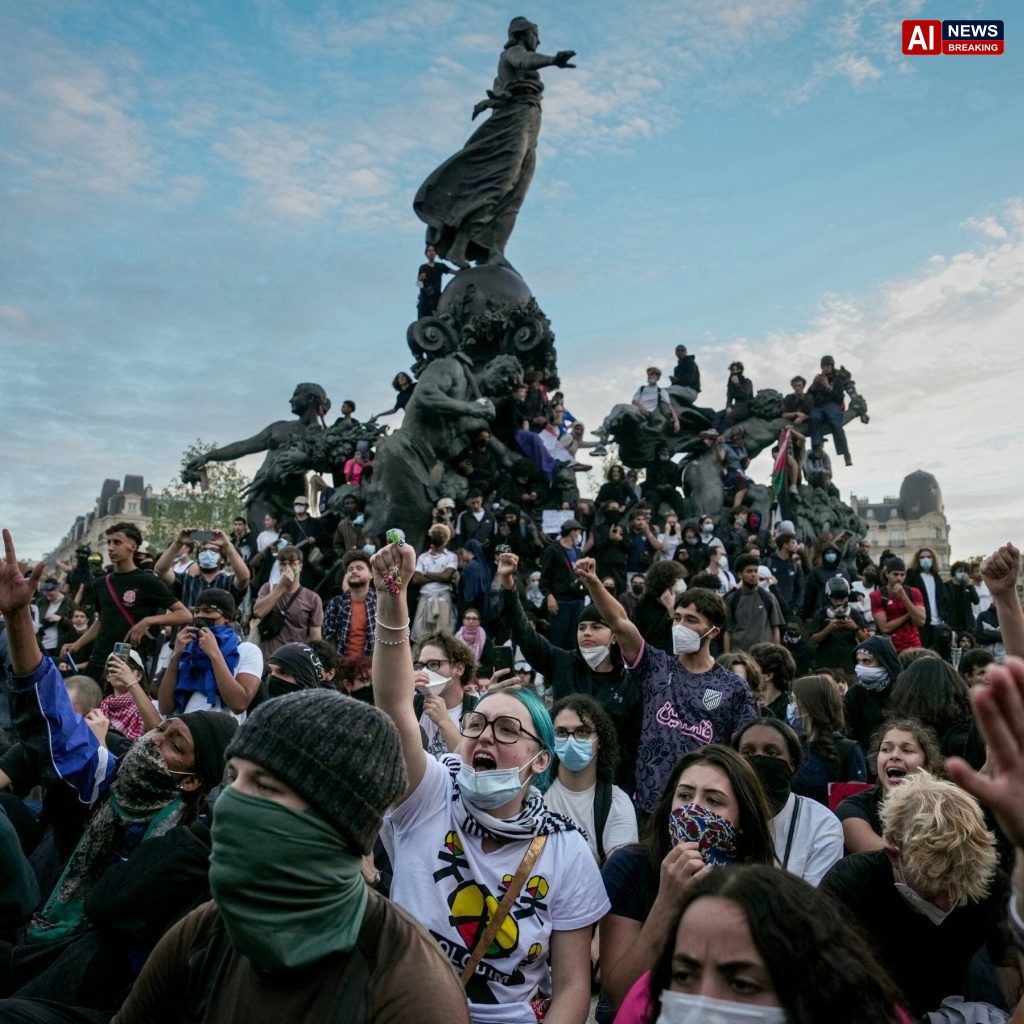
A modest protest that began in the corridors of a handful of French secondary schools has, within weeks, swelled into a nationwide movement that now includes teachers’ unions, public sector workers and a diverse coalition of activist groups. The original grievance – a demand for greater say in school governance and an end to what participants describe as the “top‑down” imposition of educational reforms – has resonated far beyond the classrooms, tapping into a broader discontent with the government’s handling of public services, pension reforms and perceived erosion of democratic participation.The spark was lit on 12 March, when students from three schools in the city of Lille staged a sit‑in to oppose a new curriculum framework introduced by the Ministry of National Education. The framework, rolled out earlier in the year, tightens central control over teaching methods and assessment standards, prompting concerns that it would curtail teachers’ professional autonomy and marginalise local needs..
The students, supported by a small number of teachers, demanded a reversal of the policy and called for a national debate on education reform.Within days, the protest was echoed in secondary schools across the north‑east, with pupils in Lyon, Strasbourg and Bordeaux organising similar demonstrations. Social media platforms, particularly Instagram and TikTok, played a pivotal role in amplifying the message. Hashtags such as #ÉcolesLibres and #NotreVoixOntLeDroit spread rapidly, drawing the attention of national media outlets and prompting coverage on both public broadcasters and independent news sites..
By the end of the first week, the movement had attracted the backing of the French Confederation of Secondary School Teachers (CNESCO), which issued a statement endorsing the students’ call for a more inclusive policy‑making process.Union leaders seized the moment to link the school protests with a broader agenda of labour rights. On 21 March, the General Confederation of Labour (CGT) and the French Democratic Confederation of Labour (CFDT) organised a coordinated rally in Paris, drawing several thousand participants from the education sector, public transport workers and civil servants. Speakers at the rally highlighted the interdependence of the issues: “When the state dictates the terms of education without consulting those on the front line, it sends a message to all public employees that their voices are not valued,” declared a CFDT representative..
The rally concluded with a joint resolution urging the government to suspend the contested curriculum changes and to open a transparent, multi‑stakeholder dialogue.The escalation prompted a swift response from the Ministry of National Education. In a press conference on 24 March, Minister Jean‑Michel Blanquer acknowledged the concerns raised by students and unions, pledging to convene a round‑table meeting with representatives from schools, teacher unions and civil society. However, he also warned that “the integrity of the national education system must be safeguarded,” insisting that the new framework was essential for maintaining France’s competitive edge in a globalised knowledge economy..
The minister’s remarks were met with scepticism by protestors, who viewed them as a veiled attempt to maintain the status quo.Parallel to the formal negotiations, a wave of solidarity actions unfolded in other sectors. Public transport workers in Marseille and Nantes staged brief strikes, halting tram services for a few hours to express support for the students. Healthcare professionals in several hospitals organised “white coat” vigils, wearing blue ribbons to signify unity with the education movement..
Even environmental groups such as Extinction Rebellion joined the cause, organising a series of “climate‑classroom” workshops that highlighted the link between sustainable development education and the right to shape curricula.The media landscape reflected the growing complexity of the protest. While state‑run channels emphasised the importance of national cohesion and warned against the dangers of fragmented decision‑making, independent outlets focused on personal stories of students feeling disenfranchised. A feature in Le Monde profiled a 16‑year‑old from Lille who said, “We are not just fighting for a syllabus; we are fighting for the right to be heard in decisions that affect our future.” Meanwhile, talk‑show hosts on radio stations such as France Inter invited union leaders and education experts to debate the merits of decentralising school governance, providing a platform for nuanced discussion rather than outright confrontation.By early April, the protest had entered a new phase: the formation of a cross‑sectoral coalition known as the “Alliance for Democratic Public Services.” The coalition’s charter, signed by representatives from more than twenty unions, student organisations and NGOs, called for a comprehensive review of all recent government reforms affecting public institutions..
It demanded the establishment of permanent consultative bodies at regional levels, with legally binding powers to influence policy. The coalition also proposed a series of town‑hall meetings across the country, inviting citizens to voice their concerns directly to elected officials.The government’s reaction to the coalition’s demands has been measured but cautious. On 8 April, Prime Minister Élisabeth Borne announced the creation of an independent advisory panel, chaired by a former education minister, to examine the contested curriculum and broader reform agenda..
The panel is slated to deliver recommendations within three months, and its findings will be presented to parliament before any legislative action. Critics, however, argue that the timeline is insufficient for a genuine democratic process and that the panel’s composition – heavily weighted towards former officials – may bias its conclusions.Despite the ongoing negotiations, the movement’s momentum shows no signs of waning. Recent demonstrations in Paris, Lyon and Montpellier have drawn crowds comparable to those of the earlier union rallies, underscoring the depth of public engagement..
For many participants, the protest has become a litmus test for the health of French democracy. “If we cannot even discuss how we teach our children,” said a union delegate in Lyon, “how can we expect to address the larger challenges facing our society?” The coming weeks will determine whether the dialogue initiated by the students and their allies will translate into substantive policy change or dissipate under the weight of institutional inertia..
The school sit‑ins have morphed into a litmus test for French participatory governance, revealing that centralized reform can catalyze a broader alliance of labor, civic and environmental forces demanding institutional humility. If the state concedes only token consultation, it risks eroding trust in public services; a genuine power‑sharing framework could instead re‑anchor democracy in the very classrooms that sparked the unrest.