 Trump at South Florida rally revives the idea of military intervention in Cuba after Iran
 Trump, seeking to help Maine Sen. Susan Collins, exempts some Canadian imports from his 50% tariffs
 Mississippi DEI ban can go into full effect after Fifth Circuit reversal
 How Defiant Youth Are Testing India’s Idea of Democracy
 Netanyahu pushes hawkish
Mississippi DEI ban can go into full effect after Fifth Circuit reversal
**
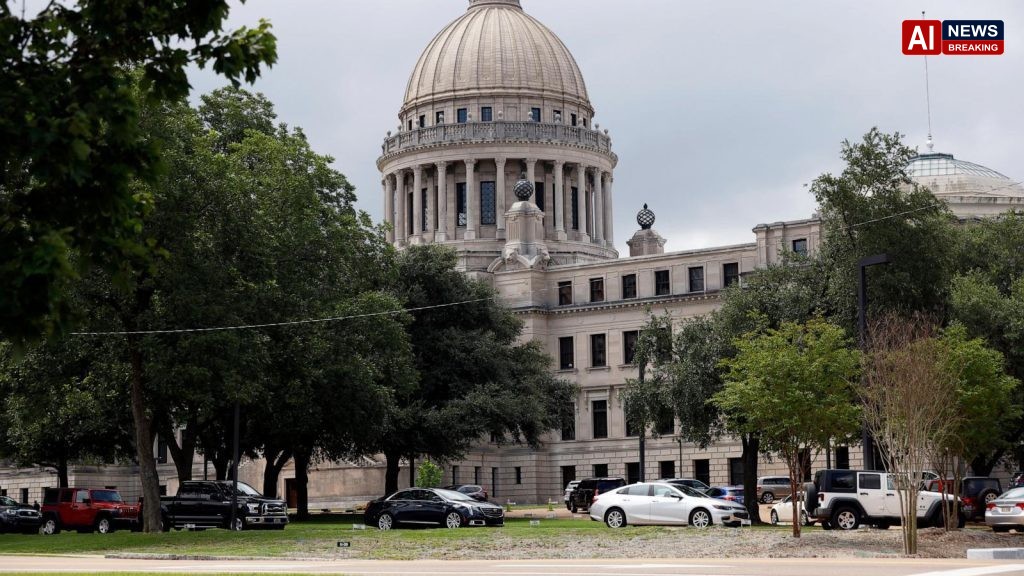
Mississippi DEI ban can go into full effect after Fifth Circuit reversal - AI News Breaking
mississippi full effect fifth:
Mississippi DEI ban can go into full effect after Fifth Circuit reversal The U.S. Fifth Circuit Court of Appeals has overturned a district‑court injunction that halted key parts of Mississippi’s recently enacted ban on diversity, equity and inclusion (DEI) programmes. The appellate judges ruled that the lower court erred in finding the state’s legislation unconstitutional, clearing the way for the law to be applied across public universities, community colleges and state‑run agencies..
Legal analysts say the decision marks a pivotal moment in the national clash over DEI initiatives, signalling that the judiciary may be less willing to block state‑level restrictions that target such policies. The contested statute, signed into law by Governor Tate Reeves in April, bars public institutions from requiring or even encouraging consideration of race, gender, sexual orientation or other protected characteristics in admissions, hiring, promotions or curricula. Proponents argue the ban restores merit‑based decision‑making and protects students from “political indoctrination.” Opponents, including civil‑rights groups, contend it erodes the progress made under the Civil Rights Act and violates equal‑protection guarantees by targeting a specific class of individuals..
The district court in Jackson, presided over by Judge Michael Hurst, had issued a preliminary injunction in June after a coalition of universities and advocacy organisations sued, alleging the law would cause “irreparable harm” to students of colour and LGBTQ+ people. The injunction barred enforcement of three core provisions: the prohibition on “diversity statements” in admissions, the ban on mandatory DEI training for staff, and the restriction on funding for programs that address systemic inequities. In a 2‑1 opinion released Tuesday, the Fifth Circuit reversed that ruling, holding that the plaintiffs had not demonstrated a likelihood of success on the merits of their constitutional claims..
The majority emphasized that the state’s interest in “promoting a neutral, colour‑blind public sphere” is a legitimate governmental purpose, and that the ban does not single out any particular group for disadvantage. The dissent warned that the decision could “undermine decades of hard‑won civil‑rights protections” and leave vulnerable students without recourse. Attorney General Lynn Fitch, who defended the legislation, hailed the appellate judgment as “a vindication of Mississippi’s commitment to fairness and academic freedom.” She noted that the state will now move forward with full implementation, and that any further legal challenges will have to be pursued in the Supreme Court..
The governor’s office released a statement declaring that Mississippi “will no longer be subject to Washington‑driven DEI mandates that undermine our children’s education.” University of Mississippi President John Hassell issued a measured response, saying the institution will “comply with the law while continuing to foster an inclusive environment through voluntary, non‑mandated initiatives.” He indicated that the university plans to review admissions criteria, scholarship allocations and faculty hiring practices to ensure compliance without sacrificing the campus’s diverse character. Similar statements were echoed by Mississippi State University and Jackson State University, the latter of which has a historically Black student body and expressed particular concern about the ban’s impact. Civil‑rights organisations, including the NAACP Legal Defense Fund and the American Civil Liberties Union of Mississippi, announced they will appeal to the U.S..
Their filings argue that the Fifth Circuit’s reasoning conflicts with precedent set by Grutter v. University of Texas, cases that recognised limited considerations of race in higher education as permissible. They also contend that the ban violates Title VI of the Civil Rights Act, which prohibits discrimination on the basis of race, colour, or national origin in programs receiving federal funds..
Legal scholars suggest the Supreme Court’s upcoming term could become a battleground for the DEI debate. Professor Anita Hill of the University of Alabama remarked that the Court “is now being asked to decide whether a state can dictate the content of university discourse.” She warned that a ruling in favour of Mississippi could embolden other red‑state legislatures to enact even stricter bans, potentially reshaping the landscape of higher‑education policy across the country. Meanwhile, students and faculty have begun organising on‑campus protests..
At the University of Mississippi, a coalition of over 500 students staged a sit‑in at the administration building, chanting “Equity can’t be banned.” Faculty members at Jackson State have filed a separate grievance with the state’s higher‑education board, alleging that the ban interferes with academic freedom protected under the First Amendment. Both actions have drawn attention from national media and have sparked debates on whether peaceful protest is itself a protected form of expression under the new law. Economists warn that the ban could have unintended financial consequences for the state’s higher‑education system..
A study from the Mississippi Economic Research and Information Center projects a possible decline of up to 3 percent in out‑of‑state enrolment over the next five years, as prospective students may choose institutions in states with more flexible DEI policies. The report also highlights potential reductions in federal research funding, noting that agencies such as the National Science Foundation increasingly tie grant eligibility to compliance with diversity initiatives. In Washington, congressional leaders have taken note..
Senate Majority Leader Chuck Schumer announced plans to introduce a federal “DEI Protection Act” that would prohibit states from enacting laws that interfere with federally funded programmes’ diversity efforts. Republican Senate leaders dismissed the proposal as “federal overreach” and pledged to defend states.
Updated: October 24, 2026
Summary: The Fifth Circuit has overturned a lower‑court injunction, allowing Mississippi’s new law that bans public institutions from using race, gender or sexual orientation in admissions, hiring and curricula to take effect. Civil‑rights groups say the ruling threatens hard‑won equity gains and plan to appeal to the Supreme Court.
Mississippi’s DEI ban, now unblocked, signals a judicial shift that could turn “color‑blind” rhetoric into a legal template for other red‑state legislatures, reshaping campus culture beyond the Deep South. Yet the looming Supreme Court showdown may force the nation to confront whether state‑mand