 SS United States scheduled for sinking next month to become works largest artificial reef
 Modi’s Plan to Stop India’s Protests
Modi government amends
**
Modi’s Plan to Stop India’s Protests - AI News Breaking
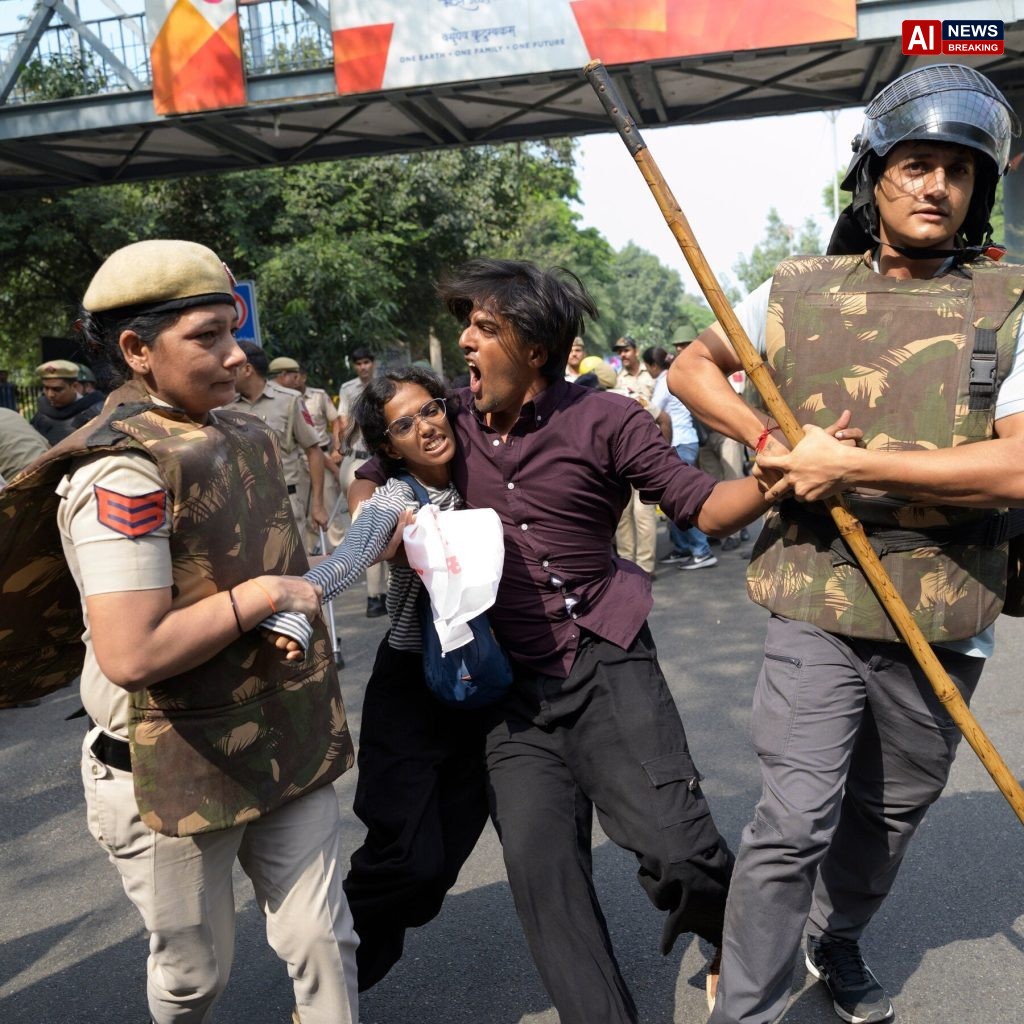
Prime Minister Narendra Modi’s government has moved to quell the wave of protests that has swept across India’s universities and urban centres, a strategy that analysts say may be as much about consolidating political power as it is about restoring public order. The unrest, sparked by a combination of economic grievances, perceived erosion of civil liberties and contentious educational reforms, has seen tens of thousands of students and young workers take to the streets, demanding greater transparency and a reversal of policies they describe as increasingly authoritarian. In response, the administration has introduced a series of legislative and policing measures that critics argue could further marginalise dissenting voices while strengthening the incumbent’s grip on the nation’s political apparatus.At the heart of the government’s approach is a new amendment to the Unlawful Activities (Prevention) Act, which broadens the definition of “secessionist” activity to include certain forms of protest deemed “disruptive to public order.” The amendment, passed by a majority in the Lok Sabha, gives law enforcement agencies expanded powers to arrest individuals without prior judicial oversight if they are suspected of inciting unrest..
While the Home Ministry insists the change is necessary to counter threats posed by extremist groups, human‑rights organisations such as Amnesty International and the National Campaign for Civil Liberties have warned that the legislation could be weaponised against peaceful demonstrators, blurring the line between legitimate activism and criminality.Concurrently, the Ministry of Education has rolled out a revised version of the National Education Policy (NEP) that accelerates the integration of digital surveillance tools into university campuses. Under the new guidelines, institutions are required to install real‑time monitoring software on Wi‑Fi networks and to maintain logs of student communications for a period of twelve months. Proponents argue that these measures will deter “foreign interference” and protect academic integrity, but student unions have decried the policy as an intrusion into academic freedom, fearing that it could be used to track participation in protests or to pre‑emptively identify dissenting scholars.The political calculus behind these moves appears to involve a calculated re‑engagement with a rival faction within the broader nationalist coalition..
Amit Shah, the Home Minister and a long‑time confidante of Modi, has been tasked with leading a high‑profile campaign that frames the protests as a threat to national security. By positioning Shah at the forefront of the crackdown, the government may be seeking to sideline senior leader Rahul Gandhi, whose party, the Indian National Congress, has struggled to regain relevance after a series of electoral defeats. Gandhi’s recent statements condemning the new security laws have resonated with segments of the youth electorate, prompting speculation that the administration’s hardline stance is intended to draw a clear contrast between “law‑and‑order” governance and the opposition’s perceived leniency.In the parliamentary arena, the opposition has attempted to mount a defense of civil liberties, but internal divisions have hampered a cohesive response..
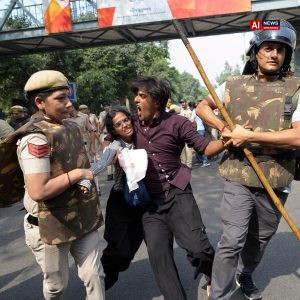
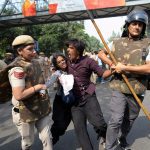
Some senior Congress members have called for a suspension of the amended Unlawful Activities Act, while others argue that any criticism of the government could be construed as “unpatriotic” in a climate where nationalist sentiment is increasingly conflated with loyalty to the ruling party. The fracturing within the opposition mirrors a broader trend in Indian politics, where ideological fault lines are being redrawn around issues of identity, digital governance and the role of the state in regulating public discourse.The crackdown has also drawn attention to the role of the Indian police forces, which have been deployed in unprecedented numbers across protest hotspots in Delhi, Bengaluru, Kolkata and several smaller towns. Reports from independent observers suggest that police units have employed crowd‑control tactics such as water cannons, tear‑gas and, in some instances, live ammunition, leading to injuries and a handful of fatalities..
The Ministry of Home Affairs maintains that all force used has been “proportionate and necessary,” yet human‑rights monitors contend that the lack of transparent investigations into alleged excesses undermines public confidence in law‑enforcement agencies.International reaction to India’s handling of the protests has been measured but pointed. The United States State Department issued a statement urging “respect for fundamental freedoms” while acknowledging India’s sovereign right to maintain internal security. The European Union’s diplomatic mission in New Delhi similarly called for “dialogue and adherence to democratic principles.” Though these remarks stop short of formal condemnation, they signal a growing awareness among Western capitals of the delicate balance India must strike between security imperatives and its reputation as the world’s largest democracy.Economic analysts warn that the unrest, if left unchecked, could have a material impact on India’s growth trajectory..
The country’s services sector, which accounts for over half of gross domestic product, has already shown signs of strain as tech firms grapple with employee strikes and supply‑chain disruptions linked to the protests. Moreover, foreign direct investment inflows have shown a modest decline in the quarter following the escalation of demonstrations, with investors citing “political uncertainty” as a contributing factor. The Modi administration, which has championed a narrative of robust economic stewardship, now faces the challenge of reconciling its security agenda with the need to maintain a stable environment for business.Social media platforms have become another battleground, as the government has issued directives to Twitter, Facebook and local messaging apps to remove content deemed “misinformation” related to the protests..
Critics argue that the guidelines are vague and could be used to suppress legitimate criticism of government policy. In response, several tech companies have announced the formation of advisory panels comprising Indian civil‑society members to oversee content moderation decisions, a move that some view as a compromise but others see as insufficient to guarantee freedom of expression.Amid the heightened tension, civil‑society groups have organised legal aid clinics to assist those detained under the new security provisions. Lawyers affiliated with the Indian National Bar Association have filed petitions in the Supreme Court challenging the constitutionality of the amended Unlawful Activities Act, arguing that it violates the right to peaceful assembly guaranteed by the Indian Constitution..
The court’s forthcoming rulings could set important precedents for how far the state may extend its surveillance and policing powers in the name of national security.Looking ahead, the trajectory of Modi’s plan to contain the protests will likely be shaped by a combination of judicial outcomes, public sentiment and the ability of opposition parties to coalesce around a unified platform. If the government’s approach succeeds in dampening dissent without triggering a broader backlash, it may solidify the incumbent’s political dominance ahead of the next general election. Conversely, an escalation of confrontations or a perception of overreach could galvanise a new generation of activists, potentially reshaping India’s political landscape in ways that challenge the very narrative of stability the administration seeks to project..
Modi’s crackdown blends security rhetoric with political calculus, turning protest suppression into a litmus test for his electoral durability. If the heavy‑handed laws silence dissent without sparking a broader backlash, they’ll cement his dominance; but any misstep could ignite a new, tech‑savvy