 Muizzu could stir up anti-India campaign again: Former Maldives Minister Abdullah Shahid
 Who is Rashesh Upadhyay? What’s the cyber fraud, digital arrest case against him? How was he caught by the ED? Explained
 Ashwini Vaishnaw sets October 2028 deadline for smartphones designed, manufactured, branded in India: What he said
 Machado returns to
 How do horror novelists celebrate Halloween? ‘Whimsical witch stuff’ and vintage radio shows
Ashwini Vaishnaw sets October 2028 deadline for smartphones designed, manufactured, branded in India: What he said
**
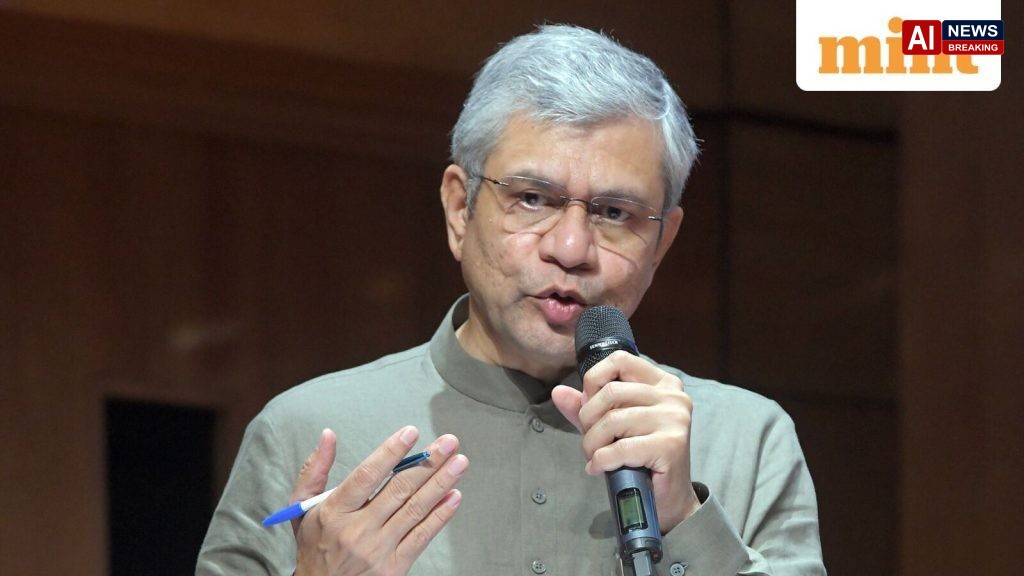
Ashwini Vaishnaw sets October 2028 deadline for smartphones designed, manufactured, branded in India: What he said - AI News Breaking
Ashwini Vaishnaw, India’s Minister for Electronics and Information Technology, announced on Thursday that the nation will aim to have smartphones that are designed, manufactured and branded within its borders by 23 October 2028. The deadline, he said, marks a decisive shift from the current model in which most Indian‑made phones are assembled for foreign brands, to a future where home‑grown firms control the entire value chain—from concept to consumer. “We are moving from being a global assembly hub to a true centre of innovation,” Vaishnaw told a gathering of industry leaders, policymakers and analysts in New Delhi, underscoring the government’s resolve to nurture indigenous design talent and protect intellectual property.The target is anchored in the broader “Make in India” narrative that has guided the country’s industrial policy for the past decade, but it represents a more ambitious stride..
While India now assembles roughly a quarter of the world’s smartphones, the devices are largely re‑badged products of Chinese, Korean and Taiwanese manufacturers. Vaishnaw’s statement signals a desire to reverse that dependency, encouraging firms to set up research and development centres, secure patents and cultivate design expertise locally. “A phone made in India will no longer be just a product of a foreign blueprint,” he remarked, adding that the government will roll out a “comprehensive ecosystem of incentives, subsidies and regulatory support” to make the goal attainable.To achieve the October 2028 milestone, the Ministry of Electronics and Information Technology (MeitY) plans to introduce a suite of policy measures..
These include tax breaks for companies that invest a minimum of 30 percent of their R&D budget in India, faster clearance of patents, and a dedicated fund of up to ₹10 billion to support start‑ups focused on smartphone design. The government also intends to tighten the “Make in India” eligibility criteria for the lucrative Production Linked Incentive (PLI) scheme, linking a portion of the incentive to demonstrable design activity and domestic branding. Industry observers note that such moves could compel multinational corporations to localise more of their product development, lest they lose out on financial benefits.The announcement arrives at a time when India’s electronics sector is grappling with supply‑chain disruptions and geopolitical tensions that have strained imports of key components such as semiconductors..
By fostering end‑to‑end domestic capability, officials hope to insulate the market from external shocks. “If we can design our own chips, cameras and software interfaces, we reduce reliance on any single foreign source,” Vaishnaw said, pointing to recent shortages that forced manufacturers to postpone launches. The minister also highlighted the potential for job creation, estimating that a fully integrated smartphone ecosystem could generate up to 3 million skilled positions across design, testing, software development and marketing.Critics, however, caution that the timeline may be overly optimistic..
Analysts at Gartner note that the average development cycle for a flagship smartphone—from concept to market launch—spans 18 to 24 months, and that building a robust design talent pool could take longer than five years. Moreover, the Indian market is fiercely price‑sensitive, with consumers accustomed to affordable devices priced under ₹15,000. Competing with established global brands on both cost and innovation will require significant scale and efficiencies that have yet to be demonstrated domestically..
“The ambition is commendable, but the execution will be the real test,” said Priya Mehta, a senior analyst at IDC India.Nevertheless, the policy has already sparked interest among domestic firms. Several Indian start‑ups, such as InnoTech Mobile and Vedanta Devices, announced plans to expand their R&D units in Bengaluru and Hyderabad, citing the forthcoming incentives as a catalyst. Even some foreign players are reconsidering their strategies; a senior executive from a leading Korean smartphone maker hinted that the company is evaluating joint‑venture arrangements with Indian design houses to retain market share under the new regime..
“Collaboration could be the quickest route to compliance and to tapping the local talent pool,” the executive said confidentially.The government’s push also dovetails with recent reforms aimed at strengthening intellectual property protection. In the past two years, India has accelerated patent grant times and increased penalties for infringement, steps that Vaishnaw said are essential to encourage innovators to invest in homegrown technology. “Design without protection is a dead end,” he warned, urging legislators to fast‑track amendments that would streamline the filing process for software and hardware patents..
The ministry plans to launch a “Design Innovation Hub” in partnership with the Indian Institutes of Technology, offering mentorship and access to state‑of‑the‑art prototyping facilities.International reactions have been mixed. While some trade partners view the move as a natural evolution of India’s growing manufacturing prowess, others worry about potential protectionist undertones. The United States Trade Representative’s office issued a brief statement affirming that “fair competition and open markets remain critical,” but expressed optimism that “enhanced domestic capability can contribute to a more balanced global supply chain.” Meanwhile, China’s Ministry of Commerce dismissed the deadline as “ambitious but unrealistic,” noting that Chinese firms already dominate the global design landscape and that technology transfer is a gradual process.As the October 2028 horizon approaches, stakeholders will be watching how the announced measures translate into tangible outcomes..
Early indicators such as the number of patents filed, the establishment of design labs and the market share of Indian‑branded phones will serve as barometers of progress. Vaishnaw concluded his address by urging the industry to view the deadline not as a bureaucratic target but as a rallying point for collective ambition. “The world is watching how India will rewrite the story of smartphone innovation,” he said, “and we are ready to write it together.”.
India aims to have smartphones fully designed, manufactured and branded locally by October 2028, backing the push with tax incentives, R&D funding and tighter PLI rules to nurture homegrown talent and reduce foreign reliance. The target, part of the “Make in India” drive, faces skepticism over the tight timeline and cost challenges but has already sparked interest from domestic startups and foreign firms seeking joint‑venture opportunities.
If India can turn policy dollars into genuine design talent, the 2028 deadline could become a catalyst that redefines its tech narrative—from cheap assembly line to a home‑grown innovation hub.
But the real litmus test will be whether Indian firms can marry that ambition with price‑competitive products, or risk