Indonesia denies foreign claim to rescued orangutans
 Turkey hosts COP31 climate talks in Antalya.
 Pope meets Argentine bishops.
 APOD: 2026 November 8 – Major Fireball Meteor
 Indonesian Horror Hit ‘Pabrik Gula’ Gets 2028 Sequel as MD Entertainment Lines Up Three Imax Films
Why has actor Naseeruddin Shah come out in support of SRFTI student protests
**
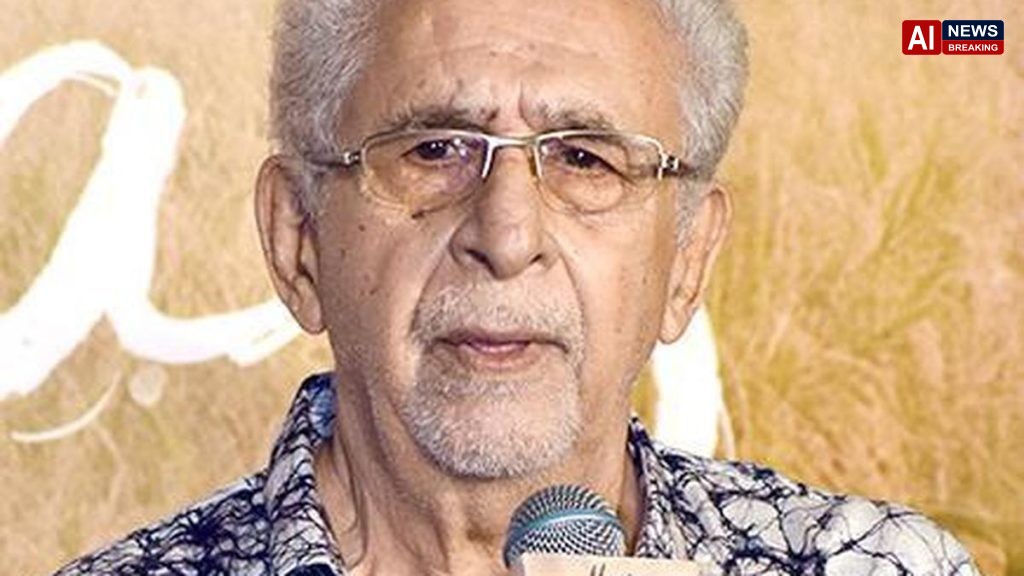
Why has actor Naseeruddin Shah come out in support of SRFTI student protests - AI News Breaking
Veteran actor Naseeruddin Shah has publicly thrown his weight behind the ongoing student protests at the Satyajit Ray Film and Television Institute (SRFTI), a move that has drawn attention to the broader debate over arts education in India. Speaking at a press conference in Delhi on Tuesday, Shah urged “all right‑minded citizens” to stand with the students, whose demands range from the reinstatement of a contested fee structure to the preservation of the institute’s autonomy. His intervention, delivered in his characteristic measured diction, has amplified a cause that began as a campus grievance and has quickly become a flashpoint for cultural policy across the country.The protests at SRFTI began in late August when the institute’s governing council announced a revision of the tuition fee that would see a 30 per cent increase for the upcoming academic year..
Students argued that the hike would disproportionately affect those from modest backgrounds and undermine the institute’s founding principle of providing merit‑based access to quality film education. The fee revision was accompanied by a proposed amendment to the institute’s charter that would grant the Ministry of Information and Broadcasting greater oversight over curriculum and faculty appointments, a step many feared could erode the creative independence that has defined SRFTI since its inception in 1995.In response, a coalition of students, alumni and faculty members organized sit‑ins, hunger strikes and a social media campaign under the banner “Education Not Exploitation”. Their demands coalesced around three core demands: the withdrawal of the fee increase, the restoration of the institute’s autonomous status, and the establishment of a transparent grievance redressal mechanism..
Over 200 students have occupied the main auditorium, while faculty members have staged a parallel boycott of lectures, citing concerns that the new policy could set a precedent for other central institutions.Naseeruddin Shah’s decision to voice support for the demonstrators marks a significant escalation in the public profile of the movement. Shah, whose career spans over five decades and includes acclaimed performances in both Hindi and regional cinema, has long been an outspoken advocate for artistic freedom and education. In his statement, he warned that “when the state begins to dictate the terms of artistic training, it threatens the very soul of our cultural heritage.” He also highlighted the socioeconomic dimension of the fee hike, noting that “the arts have always thrived when talent, not wealth, is the determining factor.”The actor’s endorsement has resonated beyond the confines of SRFTI, prompting a wave of solidarity from other cultural institutions..
Prominent directors, cinematographers and theatre personalities have taken to social media, sharing the hashtag #SupportSRFTI and calling for a “national dialogue on the future of arts education.” Even the Student Federation of India, a major student body, has issued a statement aligning its own demands with those of SRFTI, framing the issue as part of a larger struggle against the commercialization of higher education in the public sector.Government officials, meanwhile, have maintained a defensive posture. A spokesperson for the Ministry of Information and Broadcasting reiterated that the fee revision was “necessary to align SRFTI’s financial model with contemporary standards” and that the proposed charter amendment was intended to “ensure accountability and quality.” However, senior officials have also signalled a willingness to engage in talks, inviting a delegation of student representatives and faculty members to a closed‑door meeting next week. Critics argue that such overtures may be too little, too late, given the depth of mistrust that has built up over months of negotiation breakdowns.Legal experts suggest that the students could have a viable case under the Right to Education Act and the Constitution’s guarantee of equality before the law, especially if they can demonstrate that the fee increase disproportionately impacts economically disadvantaged groups..
Past litigation involving similar fee hikes at other central universities has resulted in courts ordering the reinstatement of prior fee structures, citing the principle that public institutions must not become instruments of exclusion. Nonetheless, scholars caution that the legal route is fraught with procedural delays, and that a negotiated settlement would likely be a more expedient solution.The involvement of a figure like Shah also underscores the intersection of celebrity influence and policy advocacy in India’s public sphere. While some commentators praise his courage in confronting bureaucratic inertia, others caution against the potential for celebrity activism to eclipse grassroots voices..
“The students are the ones living the daily reality of these policies,” wrote a professor of media studies in a leading newspaper, “and any external support should amplify, not replace, their agency.” Shah’s own remarks, however, appeared to acknowledge this nuance, emphasizing that his role was to “lend a microphone, not to speak for them.”As the standoff enters its third week, the atmosphere on campus remains tense but organized. Students have rotated shifts to maintain a continuous presence, and faculty members have continued to meet with administrators in an attempt to bridge the widening gap. The next few days will be crucial, with the scheduled meeting between the institute’s governing council and the student delegation poised to either defuse the situation or deepen the impasse..
Observers note that the outcome could set a precedent for how cultural and educational institutions negotiate financial sustainability without compromising their founding ideals.Regardless of the eventual resolution, the episode has already sparked a broader conversation about the role of the state in nurturing creative talent, the affordability of arts education, and the power of public figures to shape policy debates. As Naseeruddin Shah concluded in his address, “When we protect the spaces where stories are taught, we protect the stories that will shape our nation’s future.” His appeal, echoing across social platforms and newsrooms alike, may well prove to be a catalyst for lasting change in the way India approaches its cultural institutions..
Updated: October 26, 2026
Insight: Shah’s endorsement turns a campus fee dispute into a symbolic stand for artistic sovereignty, suggesting that any drift toward bureaucratic control could erode the very cultural narratives India relies on to project its identity.
If the protest reshapes policy, it may set a precedent that arts education must remain merit‑based