Indonesia denies foreign claim to rescued orangutans
 Turkey hosts COP31 climate talks in Antalya.
 Pope meets Argentine bishops.
 APOD: 2026 November 8 – Major Fireball Meteor
 Indonesian Horror Hit ‘Pabrik Gula’ Gets 2028 Sequel as MD Entertainment Lines Up Three Imax Films
Lula wins Brazil presidential
President Luiz Inácio Lula da Silva has clinched a decisive win in Brazil’s tightly contested presidential election, beating Flávio Bolsonaro with 51% of the vote. After recounts and legal challenges, Lula returns to the Casa Civil for a third non‑consecutive term, setting the stage for major shifts in Brazil’s domestic agenda and foreign policy.
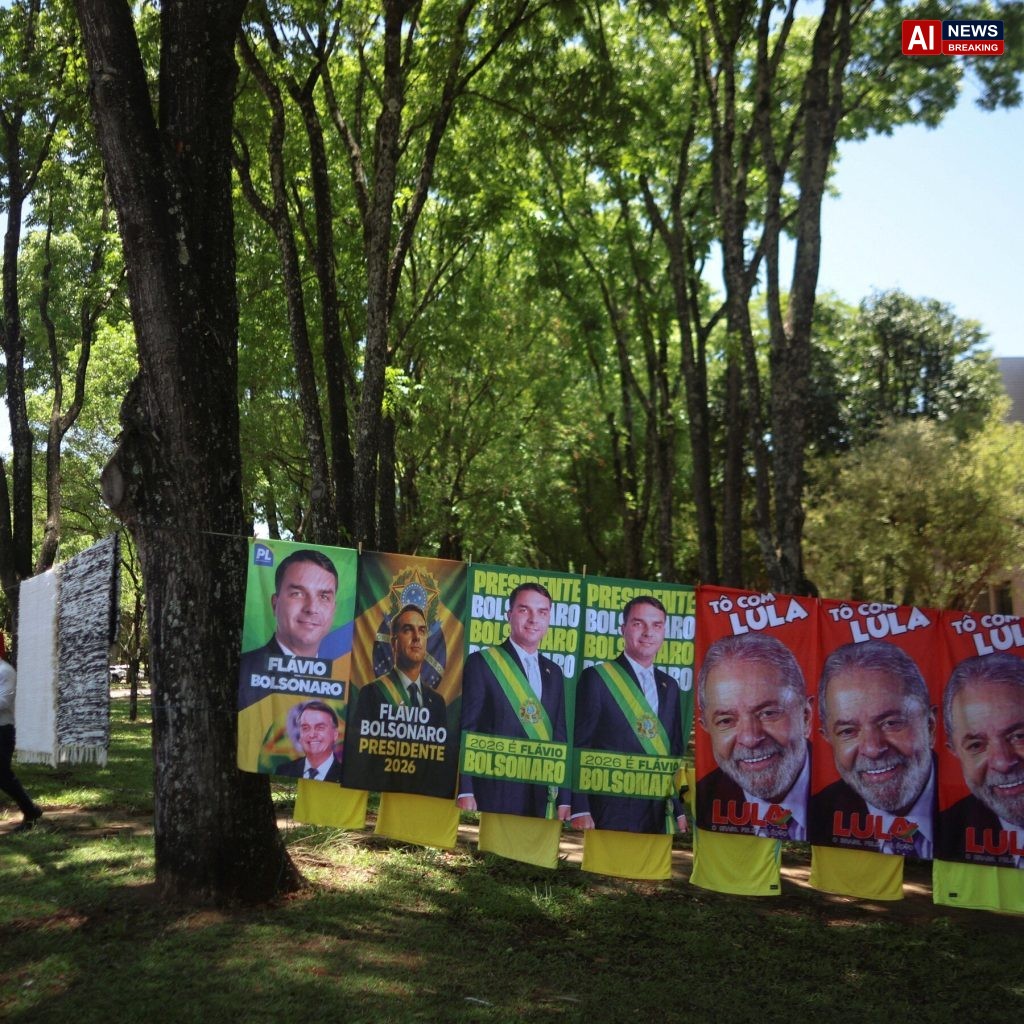
What to Know About Brazil’s Election as Bolsonaro Faces Off With Lula - AI News Breaking
President Luiz Inácio Lula da Silva secured a decisive victory in Brazil’s tightly contested presidential election, defeating Flávio Bolsonaro, the eldest son of former president Jair Bolsonaro, who had been the figurehead of the right‑wing opposition. The result, announced after a series of recounts and legal challenges, confirmed Lula’s return to the Casa Civil for a third non‑consecutive term. Voter turnout was high, with more than 150 million Brazilians casting ballots, reflecting the deep polarization that has characterised the nation’s politics since the 2018 election that brought Jair Bolsonaro to power..
International observers noted that the process, while fraught with tension, adhered largely to democratic norms.The final tally showed Lula with approximately 51 percent of the valid votes, compared with Flávio Bolsonaro’s 48 percent, a margin that, while narrow, was sufficient to avoid a runoff under Brazil’s electoral law. In the weeks leading up to the count, both camps had mobilised massive legal teams to challenge irregularities and demand recounts in key swing states such as São Paulo, Minas Gerais and Rio Grande do Sul. The Superior Electoral Court (TSE) rejected the majority of those petitions, citing a lack of substantive evidence, and affirmed the original figures..
The court’s decision was met with protests from Bolsonaro supporters, who accused the judiciary of partisanship, but the TSE reiterated its independence and commitment to upholding the electoral calendar.Flávio Bolsonaro, a senator from the state of Rio de Janeiro, had positioned himself as a continuation of his father’s agenda, promising to maintain a hard‑line stance on crime, economic liberalisation and a skeptical approach to climate policy. His campaign focused heavily on social media, deploying a network of influencers and messaging apps to galvanise younger voters disenchanted with what he described as “the old political establishment”. Despite these efforts, analysts say his candidacy was hampered by the lingering scandals surrounding his father’s administration, including investigations into alleged corruption and the handling of the COVID‑19 pandemic.Lula’s campaign, in contrast, sought to present a narrative of renewal and social justice, promising to reinvigorate the country’s economy through a mix of progressive taxation, investment in renewable energy and a renewed focus on Brazil’s agribusiness sector..
He also pledged to restore Brazil’s standing on the global stage, re‑engaging with climate accords and multilateral institutions from which his predecessor had withdrawn. The former union leader’s platform resonated with voters in the north and northeast, regions that have traditionally supported the Workers’ Party (PT) and where poverty rates remain high.The election outcome has significant implications for Brazil’s foreign policy. Lula’s return is expected to reshape relations with key partners such as the United States, the European Union and China..
During his campaign, he signalled a willingness to re‑join the Paris Agreement and to cooperate more closely with the United Nations on Amazon preservation, a stance that could lead to renewed funding for conservation projects. At the same time, his administration will need to balance these commitments with the interests of powerful agribusiness lobbies that dominate the country’s export economy.Domestically, the transition will not be without challenges. Brazil’s economy continues to grapple with high inflation, fiscal deficits and a precarious public debt situation..
Lula has promised to implement a series of tax reforms aimed at increasing revenue from the wealthiest individuals and large corporations, a move that could face stiff opposition in a Congress still populated by many Bolsonaro‑aligned legislators. The president’s ability to pass his agenda will hinge on coalition‑building across a fragmented political landscape, where centrist parties hold the balance of power.Security concerns also loom large. While Flávor Bolsonaro’s platform promised a crackdown on crime through expanded police powers, Lula’s approach emphasises social programmes aimed at reducing inequality as a long‑term solution to violence..
Critics on both sides argue that the former may be more immediate, while the latter could prove more sustainable. The president has pledged to increase funding for community policing and to invest in youth employment schemes, but he will need to negotiate with state governments that have, in recent years, adopted more hard‑line policies.The electoral process itself has sparked a broader debate about the health of Brazil’s democracy. The 2022 cycle saw an unprecedented spread of disinformation, with deep‑fake videos and false narratives circulating on messaging platforms..
In response, the TSE introduced new verification tools and collaborated with social‑media companies to flag misleading content. While these measures were praised by some watchdogs, others argued they were insufficient to counter the sophisticated tactics employed by extremist groups. The post‑election period will likely see continued scrutiny of Brazil’s media ecosystem and calls for stronger regulatory frameworks.In the immediate aftermath, the inauguration ceremony is set for 1 January 2027, marking a symbolic return to the democratic tradition of peaceful power transfer that Brazil has largely upheld since the end of its military dictatorship in 1985..
The president‑elect has already begun assembling a cabinet, selecting a blend of seasoned technocrats and progressive figures to lead ministries ranging from the environment to finance. Observers note that the composition of his team will be a litmus test for how far he intends to diverge from his predecessor’s policies.As Brazil moves forward, the world will watch closely how Lula navigates the twin imperatives of economic recovery and environmental stewardship, while attempting to heal a society that has been sharply divided along political lines. The election’s outcome underscores a desire among a majority of voters for a return to stability and social inclusion, yet the narrow margin also serves as a reminder that the country remains deeply split..
How effectively the new administration can bridge this divide, deliver on its promises and maintain the integrity of democratic institutions will shape Brazil’s trajectory for years to come..
Updated: October 26, 2026
Summary: Lula clinched a third non‑consecutive term with just over 51 percent of the vote, narrowly defeating Flávio Bolsonaro amid intense legal battles and high voter turnout. His victory sets the stage for a shift toward progressive tax reforms, renewed climate commitments and a fraught coalition in a deeply polarized Brazil.
Lula’s win shows Brazil’s electorate is betting on a pragmatic blend of progressive social policies and agribusiness pragmatism, a middle‑ground that could temper the nation’s political pendulum and mute extremist flare‑ups. Yet the razor‑thin margin signals a volatile coalition landscape where any