Indonesia denies foreign claim to rescued orangutans
 Turkey hosts COP31 climate talks in Antalya.
 Pope meets Argentine bishops.
 APOD: 2026 November 8 – Major Fireball Meteor
 Indonesian Horror Hit ‘Pabrik Gula’ Gets 2028 Sequel as MD Entertainment Lines Up Three Imax Films
Russia committed war crimes in Ukraine by attacking energy grid: UN-backed inquiry
**
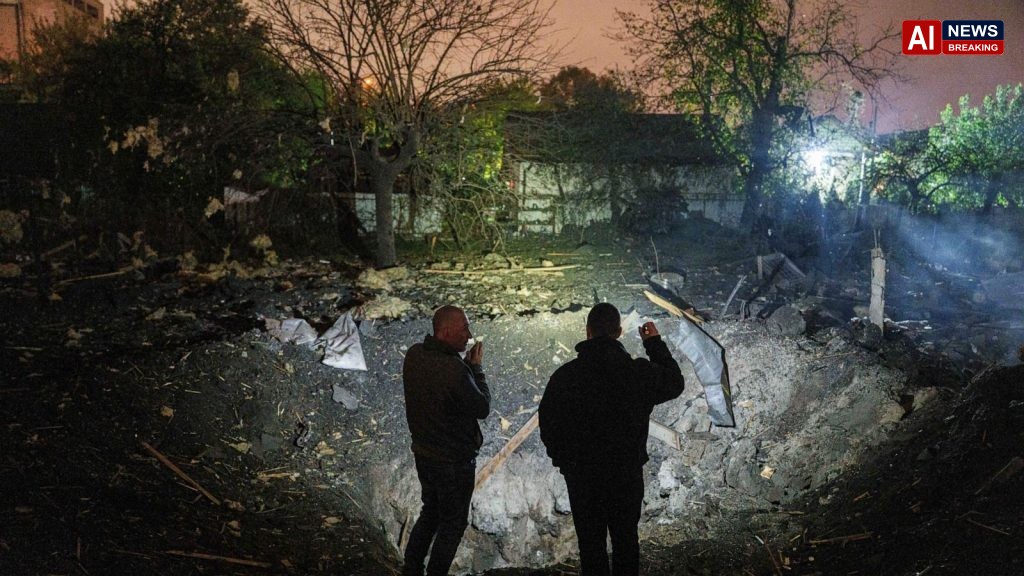
Russia committed war crimes in Ukraine by attacking energy grid: UN-backed inquiry - AI News Breaking
russia committed crimes ukraine:
A United Nations‑backed investigation has concluded that Russia deliberately targeted Ukraine’s energy infrastructure in a campaign that constitutes both war crimes and crimes against humanity. The report, compiled by the International Commission of Inquiry on Ukraine, finds that the systematic strikes on power plants, substations and fuel depots were designed to deprive civilians of essential services, exposing millions to severe hardship as winter temperatures plunged. The findings, released on Tuesday, add a new layer of legal and moral scrutiny to the conflict that began with Russia’s full‑scale invasion in February 2022 and have prompted calls for further international action.The commission, which was established by the UN Human Rights Council in March 2022, examined a breadth of evidence gathered over the past two years..
Satellite imagery, open‑source intelligence, testimonies from survivors and Ukrainian officials, as well as intercepted communications, were cross‑checked to establish a pattern of intentionality. The report states that “the attacks on Ukraine’s electricity grid were not incidental by‑products of combat operations but rather a coordinated strategy aimed at inflicting collective punishment on the civilian population.” It cites at least 150 documented strikes on energy facilities between March 2022 and February 2024, many of which occurred during periods of extreme cold when heating supplies were already scarce.According to the commission’s analysis, the timing and selection of targets were calculated to maximize civilian suffering. In December 2022, for instance, a series of missile attacks knocked out the power supply to the city of Kharkiv, leaving more than 1.2 million residents without heat for several days..
The report notes that the assaults continued even after Ukrainian authorities restored partial service, suggesting a deliberate effort to undermine recovery efforts. “The pattern reveals a clear intent to weaponise the lack of electricity and heating as a method of coercion,” the document reads, echoing language traditionally reserved for crimes of genocide and ethnic cleansing.The legal assessment draws upon the Geneva Conventions and the Rome Statute of the International Criminal Court, which prohibit attacks directed at civilians or civilian objects that do not constitute legitimate military targets. By classifying the energy grid as civilian infrastructure, the commission argues that Russia’s actions breached the principle of distinction and the prohibition against indiscriminate attacks..
Moreover, the report emphasizes that the scale and systematic nature of the campaign meet the threshold for crimes against humanity, defined as widespread or systematic attacks directed against a civilian population. The investigators assert that the evidence demonstrates a “policy or practice” of targeting essential services, a key element in establishing the requisite mens rea for such charges.Ukrainian officials have welcomed the findings, hailing them as a vindication of the suffering endured by their people. President Volodymyr Zelenskyy, in a televised address, called the report “a damning indictment of the Kremlin’s barbaric tactics” and urged the International Criminal Court to issue arrest warrants for senior Russian commanders..
“We have shown the world that Russia does not merely wage war; it weaponises the basic needs of its victims,” he said. Kyiv’s Prosecutor General’s office has already opened a parallel domestic investigation, citing the UN report as a catalyst for gathering further evidence to present before the ICC and other tribunals.The response from Moscow has been predictably dismissive. A spokesperson for the Russian Foreign Ministry labelled the inquiry “politically motivated” and accused the United Nations of “selective justice.” The Kremlin denied any intentional targeting of civilian infrastructure, arguing that the energy facilities were legitimate military objectives because they supplied power to Russian‑backed separatist forces in the Donbas region..
In a separate statement, the Russian Defense Ministry claimed that “any damage to civilian objects was collateral and regrettable, not part of a policy.” These assertions stand in to the commission’s detailed account of intercepted orders that explicitly referenced “crippling the enemy’s ability to function in winter.”International reactions have been swift. The United States, the United Kingdom and several EU member states issued statements condemning the findings and reiterating their support for sanctions against Russian officials implicated in the attacks. In a joint press release, the European Union’s High Representative for Foreign Affairs called for “urgent action by the United Nations Security Council to refer the case to the International Criminal Court.” Meanwhile, human‑rights organisations such as Amnesty International and Human Rights Watch have urged the UN Security Council to adopt a resolution that would empower the ICC to proceed with investigations, despite Russia’s long‑standing opposition to external judicial scrutiny.The report also raises practical concerns about the reconstruction of Ukraine’s energy network..
Analysts warn that the extensive damage, coupled with the loss of skilled personnel and the ongoing threat of further strikes, could delay full restoration for years. “Rebuilding a resilient grid will require not only massive financial investment but also guarantees of safety for the workers who will be on the front lines,” said a senior energy policy expert at the European Bank for Reconstruction and Development. The commission’s findings may bolster international funding appeals, as donors cite the documented war crimes as justification for accelerated aid packages.Legal scholars note that the designation of the attacks as crimes against humanity could have far‑reaching implications beyond the immediate conflict..
Under international law, such a classification obliges states to prosecute or extradite individuals responsible, irrespective of their official capacity. “If the ICC moves forward with indictments, we could see a historic precedent where senior military and political leaders are held accountable for targeting civilian infrastructure,” observed a professor of international criminal law at the University of Cambridge. However, the pathway to enforcement remains fraught, given Russia’s non‑cooperation with the ICC and its veto power within the UN Security Council.As the international community digests the report, the focus turns to concrete steps that can translate condemnation into accountability..
Ukrainian authorities have already begun compiling dossiers on specific commanders, linking them to the documented attacks. Meanwhile, the UN Human Rights Council is set to convene an emergency session to discuss the findings and consider possible referrals to the ICC. For the millions of Ukrainians who endured nights without heat, the inquiry offers a measure of recognition, but the road to justice—both legal and reparative—remains uncertain..
The coming weeks will likely determine whether the UN‑backed conclusions spark meaningful action or become another contested narrative in an already polarized geopolitical arena..
A UN-backed inquiry concludes that Russia’s systematic attacks on Ukraine’s energy grid were deliberate war crimes, exposing millions to extreme hardship. The findings have prompted calls for ICC action and heightened international pressure on Moscow, while Kyiv presses to hold commanders accountable.
Russia’s systematic bombing of Ukraine’s energy grid turns the war into a deliberate siege, turning every blackout into a weapon of collective punishment that reshapes the conflict from battlefield tactics into a new era of war‑crime accountability. The UN report now forces the international community to move beyond rhetoric and grapple with the practical reality that justice must be served even as reconstruction drags on, lest the memory of those cold nights fade into another chapter of unfulfilled promises.