Indonesia denies foreign claim to rescued orangutans
 Turkey hosts COP31 climate talks in Antalya.
 Pope meets Argentine bishops.
 APOD: 2026 November 8 – Major Fireball Meteor
 Indonesian Horror Hit ‘Pabrik Gula’ Gets 2028 Sequel as MD Entertainment Lines Up Three Imax Films
Poland Beefs Up Security at Border With Russia
** Poland is strengthening its Kaliningrad border with extra troops, high‑tech surveillance, and a new €150 million fortified outpost, prompting NATO praise and local concerns over trade and civil‑rights implications.
Poland Beefs Up Security at Border With Russia - AI News Breaking
poland beefs security border:
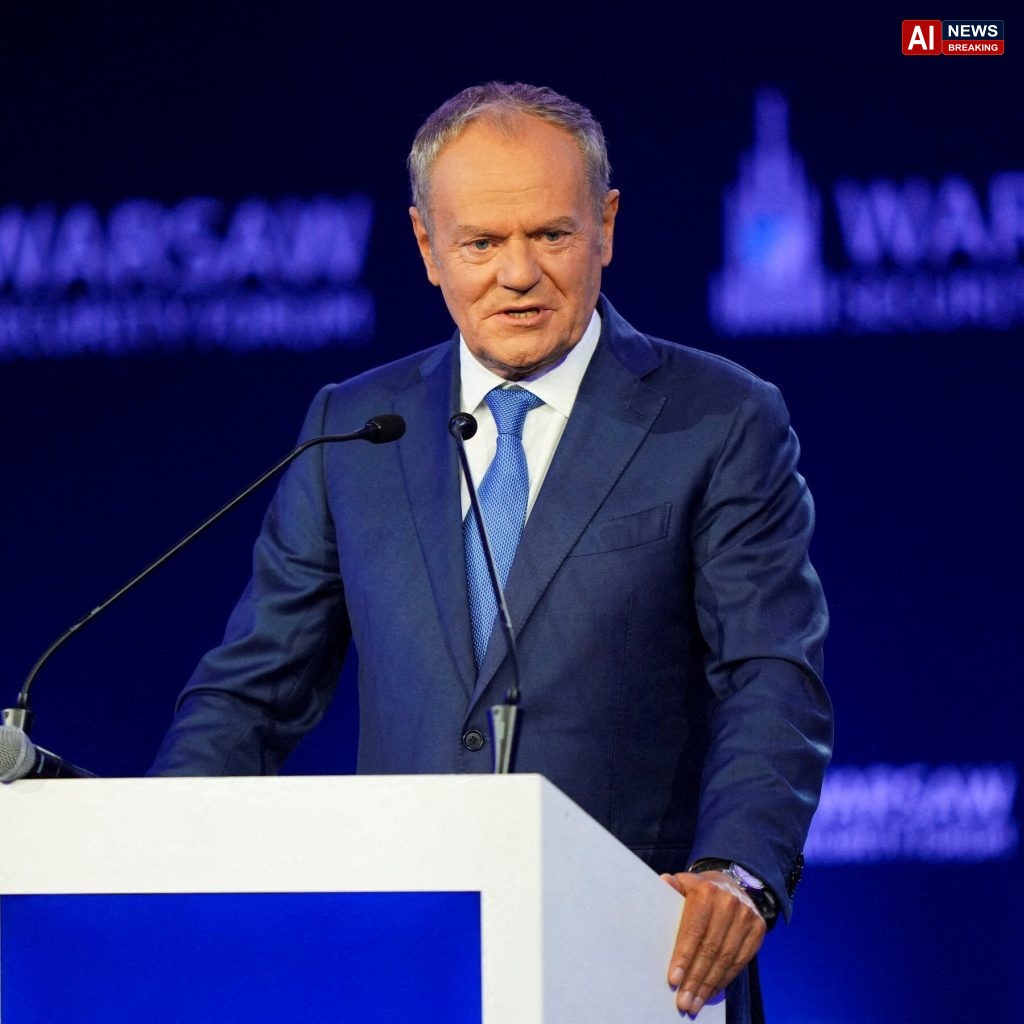
Poland has announced a substantial increase in its border security measures along the frontier that it shares with the Russian exclave of Kaliningrad, citing what Prime Minister Donald Tusk described as “disturbing movement” in the area. The government’s response, unveiled in a series of statements and press briefings over the past week, includes the deployment of additional troops, the installation of advanced surveillance equipment and the reinforcement of existing checkpoint facilities. Officials say the steps are intended to safeguard Poland’s territorial integrity while preserving the flow of legitimate trade and travel across the border.The prime minister’s remarks came after Polish intelligence services reported a spike in activity on the Kaliningrad side of the frontier, which they said could indicate preparatory actions for a potential incursion or, at the very least, a heightened risk of destabilising incidents..
While the exact nature of the movements remains classified, analysts suggest they may involve the movement of military hardware, increased patrols by Russian forces or the mobilising of paramilitary groups operating near the border. The Polish defence ministry has refrained from providing detailed specifics, stating that operational security considerations preclude a fuller disclosure.In response, the Ministry of Defence confirmed that an additional 2,500 soldiers from the 12th Mechanised Division will be rotated to the border region over the coming months. These troops will be equipped with modern night‑vision gear, unmanned aerial vehicles and portable radar systems designed to detect both ground and aerial incursions..
The government also announced that the existing network of border guard posts will be upgraded with thermal imaging cameras and automated licence‑plate recognition software, allowing for faster identification of vehicles approaching from the Russian side.Polish border guards, who operate under the jurisdiction of the Border Guard (Straż Graniczna), will see a marked increase in their operational capacity. The agency is set to receive a fleet of 15 new patrol boats for the Vistula Lagoon and a series of amphibious vehicles to enhance mobility in the region’s marshy terrain. Moreover, the government has earmarked €150 million from the national defence budget for the construction of a new fortified outpost near the town of Bartoszyce, a strategic point that overlooks one of the main crossing routes into the country.The move has been welcomed by several NATO allies, who have repeatedly called for member states that share borders with Russia to bolster their defensive postures..
A spokesperson for the alliance’s eastern command said that Poland’s actions were “consistent with the collective security framework” and underscored the importance of maintaining a robust, interoperable border infrastructure. The United States, meanwhile, indicated that it would consider providing additional intelligence sharing and logistical support to complement Poland’s efforts, though no formal agreements have yet been announced.In the capital, opposition parties have offered a more cautious perspective. Leaders of the Law and Justice (PiS) party argued that the government’s rhetoric could inflame tensions and that diplomatic channels should remain open to de‑escalate any potential confrontations..
A PiS parliamentary member warned that an over‑militarised border might disrupt the livelihoods of communities that depend on cross‑border trade, particularly small‑scale farmers and transport firms that have operated in the region for decades. The debate reflects a broader national conversation about how to balance security concerns with economic interdependence.Local businesses and residents near the border have expressed mixed feelings about the heightened security presence. While some merchants appreciate the promise of greater safety and the potential for increased investment in infrastructure, others fear that stricter controls could lead to longer wait times at checkpoints and a possible decline in the volume of goods passing through..
A spokesperson for the regional chamber of commerce in the Warmian‑Masurian Voivodeship noted that any disruption to the flow of trade could have ripple effects on the broader Polish economy, particularly in the logistics and tourism sectors.Human‑rights groups have also weighed in, urging the Polish authorities to ensure that any new security measures respect the rights of individuals crossing the border, including asylum seekers and minority groups. They have called for transparent oversight mechanisms to monitor the use of surveillance technology and to prevent potential abuses. The European Court of Human Rights has previously ruled on cases involving excessive border control measures in the region, highlighting the need for a careful balance between security and civil liberties.The Polish government has pledged that all new installations and deployments will be conducted in accordance with both national law and international obligations..
A spokesperson for the Ministry of the Interior affirmed that the border will remain open for legitimate travel and commerce, and that any temporary disruptions will be communicated in advance to affected parties. The ministry also announced the creation of a joint coordination centre that will bring together military, police, and customs officials to streamline decision‑making and response times.As the situation evolves, observers note that Poland’s actions are part of a broader pattern of increased vigilance among Eastern European states bordering Russia. Since the escalation of the conflict in Ukraine, several countries in the region have undertaken similar steps to reinforce their frontiers, citing concerns over spill‑over effects and the need to demonstrate solidarity with NATO partners..
Whether Poland’s latest measures will deter any potential aggression remains to be seen, but the government’s message is clear: it will not tolerate any threats to its sovereignty, and it will employ every tool at its disposal to protect its citizens and its borders..
Poland’s bolstered Kaliningrad frontier signals a shift from diplomatic caution to a visible NATO‑aligned deterrence posture, using tech‑heavy defenses to turn a porous border into a strategic buffer.
If the militarisation curtails Russian probing, it may also freeze cross‑border commerce, forcing local