Indonesia denies foreign claim to rescued orangutans
 Turkey hosts COP31 climate talks in Antalya.
 Pope meets Argentine bishops.
 APOD: 2026 November 8 – Major Fireball Meteor
 Indonesian Horror Hit ‘Pabrik Gula’ Gets 2028 Sequel as MD Entertainment Lines Up Three Imax Films
Iran-US Deal Draft Circulated After Doha Talks Hormuz Crisis
Iran Vows Heavier Response to US Strikes as China Cuts Crude Imports - AI News Breaking
iranus deal draft circulated:
Iranian negotiators leave Qatar after indirect discussions, but draft proposal and possible follow-up meeting keep diplomatic channel open.
Iranian negotiators have departed Doha following discussions with Qatari mediators, but diplomatic efforts to reach an agreement with the United States are continuing. A draft proposal is reportedly circulating, with another meeting possible.
Tehran says its seven-step plan to reopen the Strait of Hormuz and end the US naval blockade remains the basis for negotiations. The outcome could influence Middle Eastern security, global oil supplies and India’s energy-import costs.
Iranian Negotiators Leave Doha as Draft US-Iran Agreement Circulates
Iranian negotiators have left Doha after discussions with Qatari mediators aimed at finding a way to end the conflict with the United States. However, their departure does not necessarily signal the collapse of diplomatic efforts. An official briefed on the negotiations said on November 2 that a draft proposal was being circulated and that another meeting could take place.
According to the official, the Iranian representatives departed on Sunday. Their departure was not caused by difficulties in the negotiations, although no additional details were provided about the draft agreement or the reasons for concluding the latest round of discussions.
The development has attracted international attention because negotiations between Washington and Tehran could influence the future of the Middle East conflict, the security of international shipping and the global energy market.
The circulation of a draft proposal suggests that diplomatic discussions remain active despite the departure of the Iranian delegation. However, neither government has publicly confirmed that a final agreement has been reached.
The most important issues remain the US naval blockade of Iranian ports, Iran’s conditions for a settlement and the reopening of the strategically important Strait of Hormuz.
Draft Proposal Could Lead to Another Round of Negotiations
The circulation of a draft agreement is an important development in the diplomatic process.
Although the detailed contents of the proposal have not been disclosed, the possibility of a follow-up meeting suggests that both sides may still be examining potential areas of compromise.
In international diplomacy, the circulation of a draft document does not automatically mean that the parties have accepted its provisions. Such documents are often used to identify common ground, establish negotiating priorities and determine which disagreements require further political decisions.
The latest proposal could provide a framework for another round of indirect discussions involving Iranian and American representatives.
Qatar’s involvement is particularly important because Doha has been facilitating communication between the two sides.
The immediate challenge will be whether Washington and Tehran can agree on a sequence of reciprocal measures that addresses their security and economic concerns.
Iran’s Seven-Step Plan Remains Central to the Talks
Iranian Foreign Ministry spokesperson Esmaeil Baghaei said the negotiations are based on a seven-step plan developed by Tehran in September.
The framework is intended to address two major issues: reopening the Strait of Hormuz and ending the US naval blockade on Iran.
Baghaei confirmed that Deputy Foreign Minister Kazem Gharibabadi had been in Doha to facilitate the exchange of messages with Washington through Qatari intermediaries.
According to the Iranian spokesperson, Tehran has clearly communicated its demands and considers them reasonable and necessary for reaching an agreement.
Iran has maintained that a final agreement cannot be initiated and the Strait of Hormuz cannot be reopened or secured unless the American naval blockade is brought to an end and Iran’s requirements are addressed.
This position demonstrates that Tehran is treating the reopening of the waterway as part of a broader political settlement rather than an independent maritime decision.
The precise details of all seven steps have not been disclosed in the Reuters report. Therefore, the final terms and implementation sequence remain uncertain.
Iran’s Two-Day Plan to Reopen the Strait of Hormuz
The latest negotiations follow remarks by Iranian Foreign Minister Abbas Araqchi, who was quoted by Al Jazeera as saying that the Strait of Hormuz could be reopened within two days under a potential agreement.
This would represent a shorter implementation period than the seven days originally envisaged in Iran’s proposal.
The two-day timeline is significant because it suggests that Iran believes maritime arrangements could be implemented relatively quickly once the political conditions are settled.
However, the proposal remains conditional.
Iran has not confirmed an unconditional reopening, and there is no basis for treating the proposed timeline as proof that commercial shipping has already returned to normal.
Any reopening would require practical arrangements involving maritime authorities, commercial shipping companies, security forces and international insurers.
Vessels would need clear navigation instructions, reliable communication procedures and confidence that the maritime environment had become sufficiently safe.
The actual restoration of normal shipping would therefore depend on both political agreement and operational implementation.
US Naval Blockade Remains the Biggest Obstacle
The US naval blockade is one of the central disagreements between Washington and Tehran.
Iran wants the blockade ended before agreeing to a final settlement and restoring secure maritime navigation through the Strait of Hormuz.
For Tehran, the restrictions represent significant economic and strategic pressure. Restrictions affecting Iranian ports and maritime trade can complicate commercial activity, constrain exports and increase economic difficulties.
The United States, meanwhile, has used maritime restrictions as part of its broader pressure strategy against Iran.
This creates a difficult negotiating situation.
Iran wants Washington to address the blockade before proceeding with a final agreement. The United States must consider whether changing its restrictions would create an opportunity for a wider diplomatic settlement or weaken its negotiating position.
A successful agreement would probably require a clearly defined sequence of reciprocal steps.
Both governments would need to understand what actions are expected, when they should occur and how compliance would be assessed.
Until such arrangements are confirmed, the blockade remains a major obstacle to a comprehensive settlement.
Qatar’s Role in US-Iran Diplomatic Negotiations
Qatar has emerged as an important intermediary in the latest diplomatic efforts.
The country has facilitated the exchange of messages between Iran and the United States, providing a channel for indirect negotiations.
Such mediation is particularly valuable when direct diplomatic engagement between two governments is difficult.
Intermediaries can communicate proposals, clarify positions and help identify possible compromises without requiring every exchange to take place publicly.
The departure of Iranian negotiators does not necessarily mean that Qatar’s diplomatic role has ended.
The official account indicates that a draft proposal is circulating and that another meeting remains possible.
Nevertheless, Qatar cannot guarantee a settlement. The ultimate decisions rest with Washington and Tehran.
The next important development will be whether the draft proposal receives sufficient support to bring the parties back to another round of discussions.
Donald Trump Faces a Critical Decision
US President Donald Trump faces a complicated strategic decision as diplomatic negotiations continue.
Trump has described the discussions with Tehran as productive but has not ruled out further military action.
According to the latest Reuters report, Trump said the United States would not launch new attacks on Iran before the American midterm elections scheduled for Tuesday.
This statement has added another political dimension to the negotiations.
Washington must balance its military and economic pressure against the potential benefits of reaching an agreement.
Accepting elements of Iran’s proposal could help reduce regional tensions and restore maritime security.
However, agreeing to Tehran’s conditions could also create political criticism if the administration is perceived as making concessions without obtaining sufficient commitments.
Iran, meanwhile, wants the blockade removed and its demands addressed.
The two governments therefore face a difficult task: finding an arrangement that can be presented domestically as a meaningful diplomatic outcome.
The possibility of renewed military escalation remains because the fundamental disagreements have not yet been resolved.
Why the Strait of Hormuz Is So Important to the Global Economy
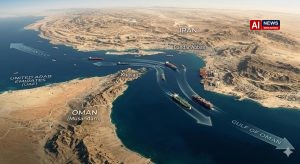
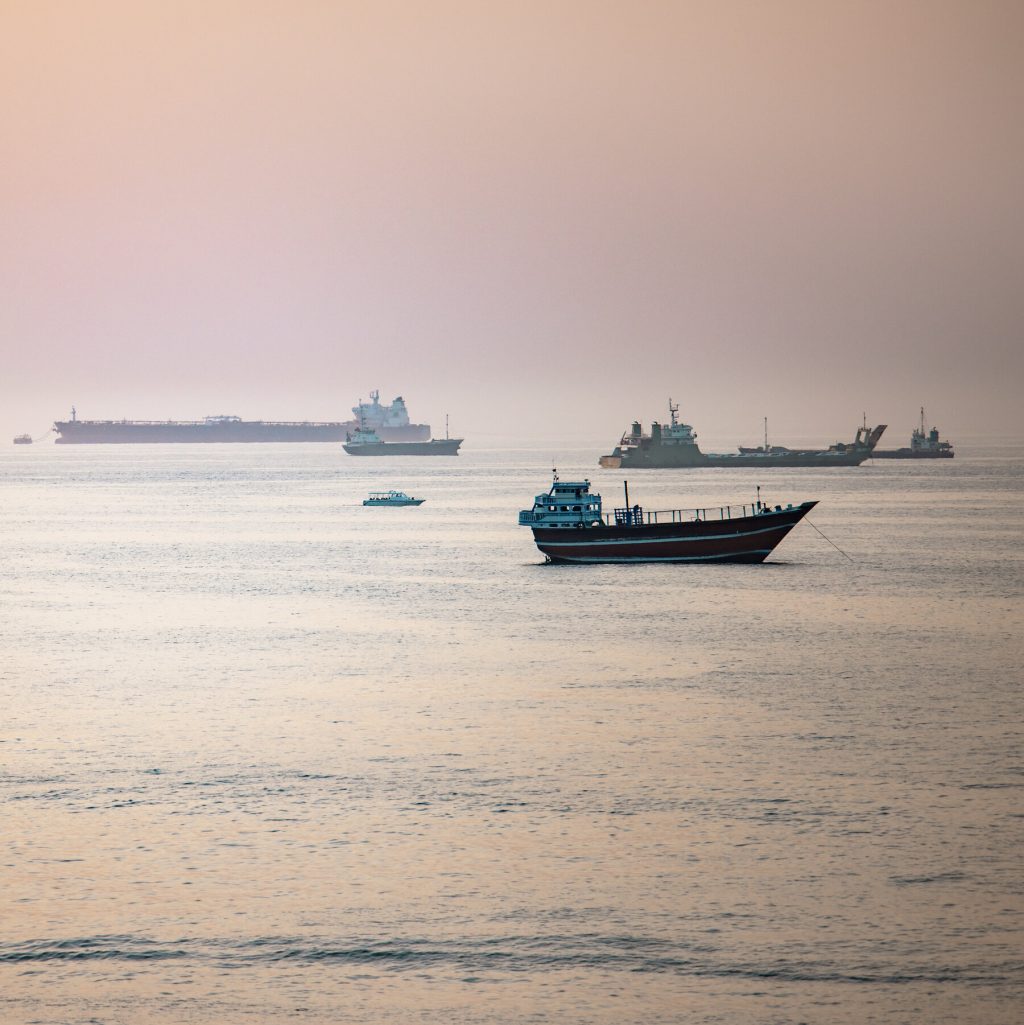
The Strait of Hormuz is one of the world’s most important maritime energy corridors.
It connects the Persian Gulf with the Gulf of Oman and the Arabian Sea, providing an essential route for oil and gas shipments from the Middle East.
Major energy-producing countries in the Gulf depend on maritime transportation to deliver supplies to international markets.
Asian economies, including China, India, Japan and South Korea, have significant interests in maintaining uninterrupted energy supplies through this region.
Any prolonged disruption can affect crude oil availability, shipping schedules, freight expenses and insurance costs.
The consequences extend beyond the petroleum industry.
Higher energy transportation costs can affect manufacturing, logistics, aviation, agriculture and other sectors that depend on affordable fuel and petroleum-linked products.
This is why the latest diplomatic developments are being closely watched by international governments and financial markets.
Could a US-Iran Agreement Reduce Global Oil Prices?
A successful agreement could improve sentiment in international energy markets.
If the Strait of Hormuz becomes reliably accessible, traders may reduce their assessment of geopolitical supply risks.
Shipping companies could gradually restore normal operations, while insurers may reconsider additional premiums associated with the region.
However, a diplomatic announcement would not automatically guarantee a sustained decline in crude oil prices.
International oil prices also depend on production decisions, global demand, inventories, currency movements and developments in other energy-producing regions.
The impact of any agreement would depend on whether it results in a genuine and lasting improvement in physical supply conditions.
For shipping companies, the return of normal operations could take time even after a political agreement.
India Could Benefit From the Reopening of Hormuz
India has a significant economic interest in the outcome because it is one of the world’s largest crude oil importers.
The country remains exposed to international energy prices and developments affecting major petroleum transportation routes.
A prolonged disruption around the Strait of Hormuz could increase uncertainty over energy supplies and transportation expenses.
If diplomatic negotiations produce a durable reopening, India could benefit from improved energy security and reduced shipping-related uncertainty.
The potential economic advantages include:
- Improved confidence in international crude oil supplies.
- Lower geopolitical risk in energy transportation.
- Potential relief from higher shipping and insurance costs.
- Reduced pressure on energy-importing businesses.
- Improved visibility for Indian manufacturers and transport companies.
- Potential support for inflation and trade-balance stability if international energy costs moderate.
Higher crude prices can increase India’s import bill and contribute to inflationary pressure.
They can also influence the rupee through changes in foreign exchange demand, although currency movements depend on several other economic factors.
The impact on petrol and diesel prices would depend on international crude prices, exchange rates, refining margins, taxes and domestic pricing decisions.
Therefore, a successful reopening would be positive for India’s economic outlook, but the benefits would depend on the duration and effectiveness of the agreement.
China, Japan and South Korea Also Watching the Negotiations
The diplomatic developments have implications for several major Asian economies.
China is a major energy importer and has significant commercial interests in the Middle East.
Japan and South Korea also depend heavily on imported energy, making the security of Gulf shipping routes an important national economic priority.
A prolonged disruption could increase their energy procurement costs and create uncertainty for industrial production.
A successful agreement could improve the outlook for international energy transportation and reduce the risk of further supply interruptions.
These countries also have an interest in preventing the conflict from developing into a wider regional confrontation.
What Happens If the Negotiations Fail?
The failure of diplomatic efforts could create further uncertainty.
If Washington refuses Iran’s conditions or Tehran rejects the terms being discussed, the two countries could remain locked in confrontation.
Possible consequences include:
- Continued restrictions on Iranian maritime trade.
- Prolonged uncertainty around the Strait of Hormuz.
- Higher shipping and insurance costs.
- Greater volatility in crude oil markets.
- Additional pressure on energy-importing countries.
- Increased risk of military escalation.
- Further disruption to international trade and business confidence.
The economic consequences could extend well beyond the Middle East.
Countries dependent on imported energy could face higher costs, while businesses may need to adjust supply-chain and transportation arrangements.
This makes the success or failure of the current diplomatic process particularly important.
Three Possible Scenarios for the Strait of Hormuz
Scenario 1: A comprehensive diplomatic agreement
Washington and Tehran reach an understanding on the blockade and Iran’s proposed maritime arrangements.
The Strait of Hormuz gradually returns to normal commercial operations, reducing geopolitical uncertainty and improving energy-market confidence.
Scenario 2: A partial agreement
The two sides agree on selected measures but leave major disagreements unresolved.
Some maritime restrictions could be eased, but shipping companies may continue to face additional security requirements and uncertainty.
Scenario 3: Negotiations collapse
The draft proposal fails to produce an acceptable settlement.
The blockade and maritime tensions continue, increasing the possibility of renewed confrontation and further energy-market volatility.
These are possible scenarios, not confirmed forecasts. The actual outcome will depend on the decisions made by both governments.
What the World Should Watch Next
The coming diplomatic developments will be important in determining whether the current process moves towards a settlement.
The most important indicators include:
- Whether a follow-up meeting is officially confirmed.
- Whether Washington responds positively to Iran’s proposal.
- Whether the US naval blockade becomes part of an agreed settlement.
- Whether Iran publishes or clarifies its maritime reopening arrangements.
- Whether commercial tankers resume regular movement through the strait.
- Whether shipping insurers reduce additional war-risk premiums.
- Whether international crude oil markets respond to improved security expectations.
The next stage will depend on whether the draft proposal can move from diplomatic circulation to a mutually accepted framework.
AI News Breaking Editorial Analysis
The latest Doha development should be viewed as evidence of continuing diplomacy rather than confirmation that a US-Iran agreement has been reached. Iranian negotiators have left Qatar, but the official account says their departure was not caused by difficulties in the talks. More importantly, a draft proposal is circulating and another meeting remains possible. These developments leave room for progress while highlighting the substantial disagreements that remain unresolved.
The central issue is the relationship between the US naval blockade and Iran’s proposed reopening of the Strait of Hormuz. Tehran wants the blockade ended and its requirements addressed before a final agreement or secure reopening can proceed. Washington must decide whether changing its pressure measures can produce a more durable settlement or whether it would surrender negotiating leverage without sufficient assurances. Any workable agreement will require reciprocal steps, a credible implementation sequence and a mechanism for addressing disputes.
The two-day reopening proposal is significant because it suggests that maritime access could be restored relatively quickly if political conditions are settled. Yet the real measure of success will not be the speed of an announcement. It will be the safe and sustained movement of commercial vessels, confidence among insurers and the absence of renewed military interference. For India and other energy-importing economies, a stable Strait of Hormuz would reduce a major source of uncertainty, but the benefits will depend on implementation and broader market conditions.
Our assessment is that the circulating draft represents a possible opening for de-escalation, but it is not yet a diplomatic breakthrough. The next phase will depend on whether Washington and Tehran can move from indirect messages to an agreed framework. Until the terms are disclosed and maritime operations are demonstrably normalised, governments, businesses and global markets should remain cautious. The Strait of Hormuz is too important to the international economy for a conditional proposal to be mistaken for a settled peace.
Key Highlights
- Iranian negotiators departed Doha after discussions with Qatari mediators.
- An official said their departure was not caused by difficulties in negotiations.
- A draft proposal for a possible US-Iran agreement is being circulated.
- Another diplomatic meeting remains possible.
- Iran’s seven-step plan remains the basis of discussions.
- Tehran links reopening the Strait of Hormuz to ending the US naval blockade.
- Iran has proposed a two-day reopening timeline under a potential agreement.
- India and other Asian energy importers have significant economic interests in the outcome.
Editorial disclaimer: The draft proposal has not been confirmed as a final agreement. The reported two-day Hormuz reopening timeline remains conditional. This article distinguishes reported developments from analysis and possible outcomes.