Europe warns of Russia’s hybrid attacks but struggles to counter them
  Former chief election commissioner calls SIR scheme illegal.
  A Corruption Scandal Is Reshaping Brazil’s Presidential Election
  US citizen injured in Illinois after ICE agents mistook him for fugitive, tried to arrest him
  At 10 years old, Smithsonian’s Black museum is undaunted amid pressure from Trump administration
 Netanyahu Issues Stark Warning: Iran’s Missiles Can Reach Deep Into Europe After Arad Strike, Calls for Global Action
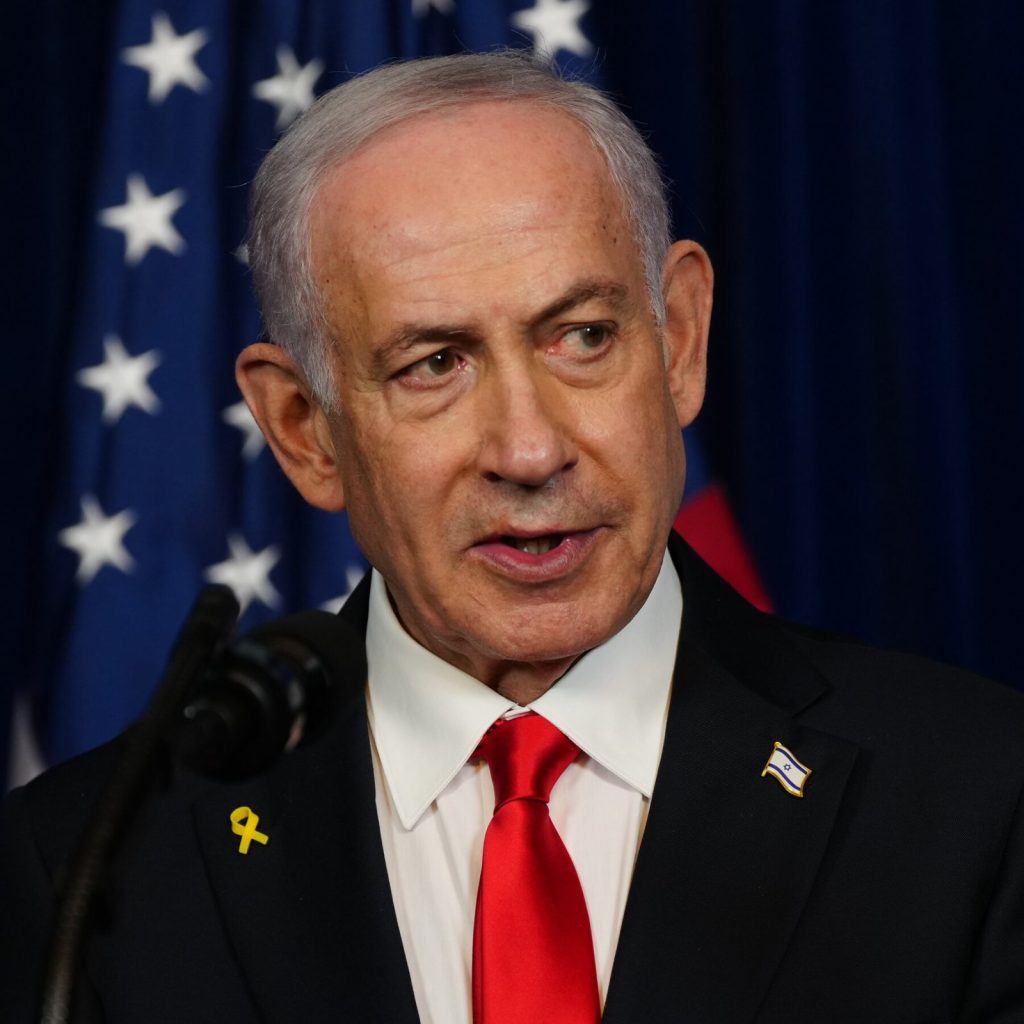
In a dramatic escalation of rhetoric amid the ongoing Middle East conflict, Israeli Prime Minister Benjamin Netanyahu has warned that Iran now possesses the capability to strike “deep into Europe,” urging world leaders to take immediate and unified action against Tehran. The statement came during his visit to the southern Israeli city of Arad, which was recently targeted in an Iranian missile attack, highlighting growing fears that the conflict could expand far beyond the Middle East.
Netanyahu’s Warning From Ground Zero
Standing at the site of the missile strike in Arad, Netanyahu described the recent Iranian attacks as a turning point in the conflict. The attack, which injured dozens, was cited as evidence that Iran is willing to target civilian areas and escalate the war without restraint.
Netanyahu emphasized that the past 48 hours had provided “clear proof” of the threat Iran poses not just to Israel, but to the entire world. He warned that Tehran’s expanding missile capabilities now put Europe within range, marking a significant shift in global security dynamics.
According to Netanyahu, Iran’s recent use of long-range missiles—including strikes reaching distances of around 4,000 kilometers—demonstrates that its military technology has advanced to a level where European cities could be targeted.
The Arad Missile Strike: What Happened?
The Iranian missile strike on Arad occurred amid intensifying hostilities between Israel and Iran. The attack reportedly targeted a civilian area, injuring more than 70 people. While no fatalities were reported, Israeli officials stressed that the outcome was due to chance rather than restraint.
The strike followed a series of retaliatory actions between the two countries. Iran claimed its attack was in response to a strike on its nuclear facility at Natanz, which it blamed on Israel.
The Arad incident is part of a broader pattern of escalating missile exchanges that have raised concerns among global leaders and defense analysts.
Iran’s Expanding Missile Capabilities
At the core of Netanyahu’s warning is Iran’s evolving missile technology. Recent developments suggest that Iran has significantly extended the range of its ballistic missiles.
Reports indicate that Iran launched missiles toward the U.S.-UK military base at Diego Garcia in the Indian Ocean—a distance of approximately 4,000 kilometers. While the missiles did not reach their intended target, the attempt itself marked a major leap in capability.
This demonstration has alarmed Western nations, as it suggests that major European capitals such as London, Paris, and Berlin could potentially fall within Iran’s strike range.
Israeli defense officials have echoed these concerns, stating that the recent missile launches indicate a “broadening of the conflict” and a new level of strategic threat.
Europe in the Crosshairs?
Netanyahu’s claim that Iran can reach Europe has sparked intense debate among international policymakers. While Israeli officials insist the threat is real and immediate, some European governments have taken a more cautious stance.
For example, the United Kingdom has stated that there is currently “no concrete evidence” confirming that Iran poses a direct missile threat to Europe.
However, defense experts warn that even if the capability is not fully operational, the trajectory of Iran’s missile program suggests that such a threat could become imminent.
The possibility of Europe being drawn into the conflict has raised concerns about NATO involvement and the risk of a wider war.
Call for Global Action
Netanyahu used his visit to Arad to call on world leaders to join Israel and the United States in confronting Iran. He framed the conflict as a global issue rather than a regional one, arguing that Iran’s actions threaten international security and stability.
He stated that Israel and its allies are “working for the entire world” and urged other nations to step up their involvement, both diplomatically and militarily.
This appeal comes amid growing international divisions over how to handle the crisis, with some countries advocating for de-escalation while others support stronger action against Iran.
The Strait of Hormuz Factor
Another key element of Netanyahu’s warning relates to Iran’s control over the Strait of Hormuz, one of the world’s most critical energy routes. He accused Iran of using the strategic waterway to “blackmail” the global economy.
The Strait of Hormuz is a vital passage for oil shipments, and any disruption can have significant global economic consequences. Recent tensions in the region have already caused volatility in oil prices and raised fears of a broader energy crisis.
Iran has threatened to restrict access to the strait for “enemy” nations, further escalating tensions and increasing the stakes for international involvement.
A Conflict With Global Implications
The ongoing conflict between Israel and Iran has already had far-reaching consequences. According to reports, more than 2,000 people have been killed across the region, with multiple countries now indirectly involved.
Missile and drone attacks have been reported not only in Israel but also in Gulf states, raising concerns about the conflict spilling over into a wider regional war.
The involvement of major powers, including the United States and the United Kingdom, has further complicated the situation. Both countries have taken steps to support Israel while also attempting to avoid full-scale war.
Iran’s Perspective
Iran, for its part, has defended its actions as legitimate retaliation against Israeli and U.S. strikes. Tehran has warned that it will respond forcefully to any attacks on its infrastructure, including energy facilities.
Iranian officials have also issued threats to target critical infrastructure across the Middle East if hostilities continue, signaling a willingness to escalate further.
This tit-for-tat dynamic has created a dangerous cycle of retaliation that risks spiraling out of control.
The Risk of Escalation
Experts warn that the situation is rapidly approaching a tipping point. The combination of advanced missile capabilities, strategic targets, and international involvement creates a volatile environment where miscalculations could lead to a broader war.
The possibility of nuclear escalation, while still considered low, cannot be entirely ruled out, particularly if the conflict intensifies further.
The use of long-range missiles marks a significant shift in the nature of the conflict, moving it from a regional confrontation to one with global implications.
Diplomatic Efforts and Challenges
Despite the escalating tensions, there have been calls for diplomatic solutions. International organizations, including the United Nations, have urged restraint and called for negotiations to de-escalate the situation.
However, diplomatic efforts face significant challenges, including deep mistrust between the parties and conflicting strategic interests among global powers.
Some countries have condemned both Iranian and Israeli actions, while others have taken sides, further complicating efforts to reach a consensus.
Impact on Global Economy
The conflict has already begun to impact the global economy, particularly in the energy sector. Disruptions in oil supply and rising geopolitical tensions have led to increased volatility in global markets.
The potential closure or restriction of the Strait of Hormuz could have severe consequences for global trade, affecting everything from fuel prices to supply chains.
Businesses and governments around the world are closely monitoring the situation, preparing for potential disruptions.
Military Developments on the Ground
On the battlefield, both Israel and Iran have continued to exchange strikes, targeting military and strategic sites. Israeli forces have intensified their operations, while Iran has expanded its missile attacks.
The use of advanced weaponry, including long-range missiles and drones, has increased the scale and intensity of the conflict.
The involvement of proxy groups and allied forces has further complicated the situation, creating multiple fronts of conflict across the region.
Public Reaction and Political Pressure
Public opinion in both Israel and Iran has been shaped by the ongoing conflict, with strong support for military action in both countries.
At the same time, there is growing concern among civilians about the human and economic costs of the war.
Political leaders are facing increasing pressure to either escalate or de-escalate the conflict, depending on domestic and international factors.
What Comes Next?
The situation remains highly fluid, with no clear resolution in sight. Netanyahu’s warning about Iran’s ability to strike Europe has added a new dimension to the crisis, raising the stakes for global involvement.
Whether the international community responds to his call for action remains to be seen. What is clear, however, is that the conflict is no longer confined to the Middle East—it has become a global issue with far-reaching consequences.