Indonesia denies foreign claim to rescued orangutans
 Turkey hosts COP31 climate talks in Antalya.
 Pope meets Argentine bishops.
 APOD: 2026 November 8 – Major Fireball Meteor
 Indonesian Horror Hit ‘Pabrik Gula’ Gets 2028 Sequel as MD Entertainment Lines Up Three Imax Films
China recruits Megaspeed executive to gather intelligence on Nvidia chief.
**
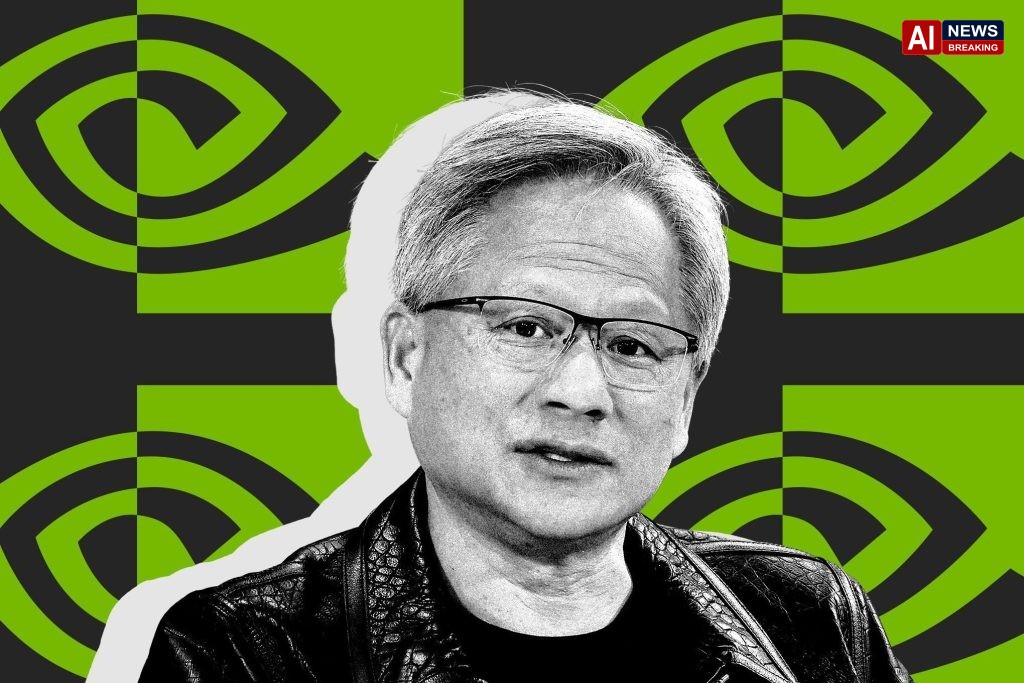
China recruits Megaspeed executive to gather intelligence on Nvidia chief. - AI News Breaking
China reportedly recruited AI exec to spy on Nvidia chief Beijing’s Ministry of State Security has allegedly recruited a senior executive from the Taiwanese‑based AI hardware firm Megaspeed to harvest intelligence on Nvidia’s founder and chief executive, Jensen Huang. The claim, first detailed by The New York Times, says the intelligence service tasked Alice Huang, who leads Megaspeed’s North‑American operations, with obtaining “technical and commercial insight” into America’s most advanced AI chips. The report adds that the effort was intended to “potentially influence the company to push for its most advanced chips to be made available to China,” a move that would have far‑reaching implications for the global semiconductor supply chain..
Megaspeed, a fast‑growing designer of high‑speed interconnects, counts Nvidia among its key customers. Alice Huang, a veteran of the AI‑hardware sector, has built a network that includes senior figures at Gigabyte, ASUS and other firms that sit at the heart of the industry’s ecosystem. According to the Times, the Ministry of State Security leveraged these relationships, offering incentives and covert support, to embed her within a circle that regularly exchanges technical data with Nvidia’s engineering teams..
The recruitment, the newspaper says, was part of a broader “technology acquisition” drive that has intensified since Washington’s 2022 export restrictions on advanced chips. The alleged plot surfaced amid mounting tensions between Washington and Beijing over artificial‑intelligence dominance. government announced a suite of measures aimed at curbing China’s access to cutting‑edge GPUs, citing national‑security concerns..
Nvidia, the world’s leading supplier of graphics processing units now repurposed for AI workloads, has become a focal point of the dispute. If the reports are accurate, the Chinese effort to obtain insider knowledge would represent a rare, direct attempt to subvert corporate confidentiality at the highest level of the sector. Chinese officials have long denied involvement in industrial espionage, arguing that their “policy guidance” merely encourages domestic firms to innovate..
officials have repeatedly warned that state‑backed actors are increasingly sophisticated, using commercial fronts, academic collaborations and even personal relationships to siphon sensitive data. The alleged recruitment of an executive who already enjoys a high degree of trust within the industry underscores the difficulty of detecting such operations, experts say. Legal scholars note that the alleged conduct would breach multiple U.S..
statutes, including the Economic Espionage Act, which criminalises the theft of trade s on behalf of a foreign power. In past cases, the Department of Justice has pursued similar charges against individuals who acted as “agents of a foreign government” while employed at U.S. Prosecutors would need to demonstrate that Alice Huang knowingly acted at the direction of the Ministry of State Security and that the information she passed was indeed a protected trade ..
The potential impact on Nvidia’s business strategy could be significant. Jensen Huang has repeatedly warned that China’s access to the most advanced GPUs could accelerate the development of autonomous weapons and other dual‑use technologies. The company has already begun to re‑engineer its supply chain, moving certain high‑end products out of China’s borders..
If Chinese intelligence were able to influence the timing or pricing of these chips, it could tilt the competitive balance in favour of Beijing’s domestic AI champions such as Huawei and Cambricon. Industry analysts stress that the episode, if confirmed, would likely prompt a wave of heightened security protocols across the sector. Companies are expected to review their “insider‑threat” programs, increase background checks for senior staff with foreign ties, and limit the flow of sensitive design data to external partners..
“We are entering an era where the line between commercial competition and geopolitical conflict is blurring,” said Dr Maya Patel, a senior fellow at the Center for Strategic and International Studies. The Chinese government, through a spokesperson for the Ministry of State Security, dismissed the New York Times report as “fabricated propaganda” aimed at stoking anti‑Chinese sentiment in the West. The ministry declined to comment on specific individuals, a standard practice when dealing with intelligence matters..
Meanwhile, Beijing’s State Council has reiterated its commitment to “protecting national security while fostering an open, innovative tech environment,” a phrasing that critics argue is deliberately ambiguous. In Washington, the revelations have reignited calls for stricter export controls and a more robust “foreign investment risk review” process. Senators from both parties have introduced legislation that would expand the Committee on Foreign Investment in the United States (CFIUS) jurisdiction to include non‑equity transactions such as joint‑development agreements..
If passed, such measures could force Chinese firms to relinquish collaborative projects that involve cutting‑edge AI hardware. The episode also about the role of the press in exposing espionage. The Verge linked to the Times story, noting that the details were based on “anonymous sources within the intelligence community and a former Megaspeed employee.” Media watchdogs caution that while investigative reporting is vital, reliance on unnamed sources can make verification challenging, especially when national‑security claims are involved..
Nonetheless, the story has already prompted a flurry of commentary from cybersecurity firms, think‑tanks and lawmakers. For Jensen Huang, the allegations arrive at a delicate moment. Nvidia’s stock has surged past a trillion‑dollar market cap, buoyed by unprecedented demand for AI accelerators..
In a recent earnings call, Huang emphasised “responsible AI development” and reaffirmed the company’s commitment to “protecting the integrity of our technology.” Whether the alleged.
Updated: November 6, 2026
China’s Ministry of State Security is alleged to have recruited Megaspeed executive Alice Huang to funnel technical and commercial intel on Nvidia’s CEO Jensen Huang, aiming to sway the chip maker’s supply of its most advanced AI GPUs to China. The claim, reported by the New York Times, has reignited U.S. calls for tighter export controls and heightened corporate security measures amid escalating U.S.-China tech rivalry.