
 Indonesia denies foreign claim to rescued orangutans
 Turkey hosts COP31 climate talks in Antalya.
 Pope meets Argentine bishops.
 APOD: 2026 November 8 – Major Fireball Meteor
 Indonesian Horror Hit ‘Pabrik Gula’ Gets 2028 Sequel as MD Entertainment Lines Up Three Imax Films
Islamist militants attack Ebola clinic in Congo
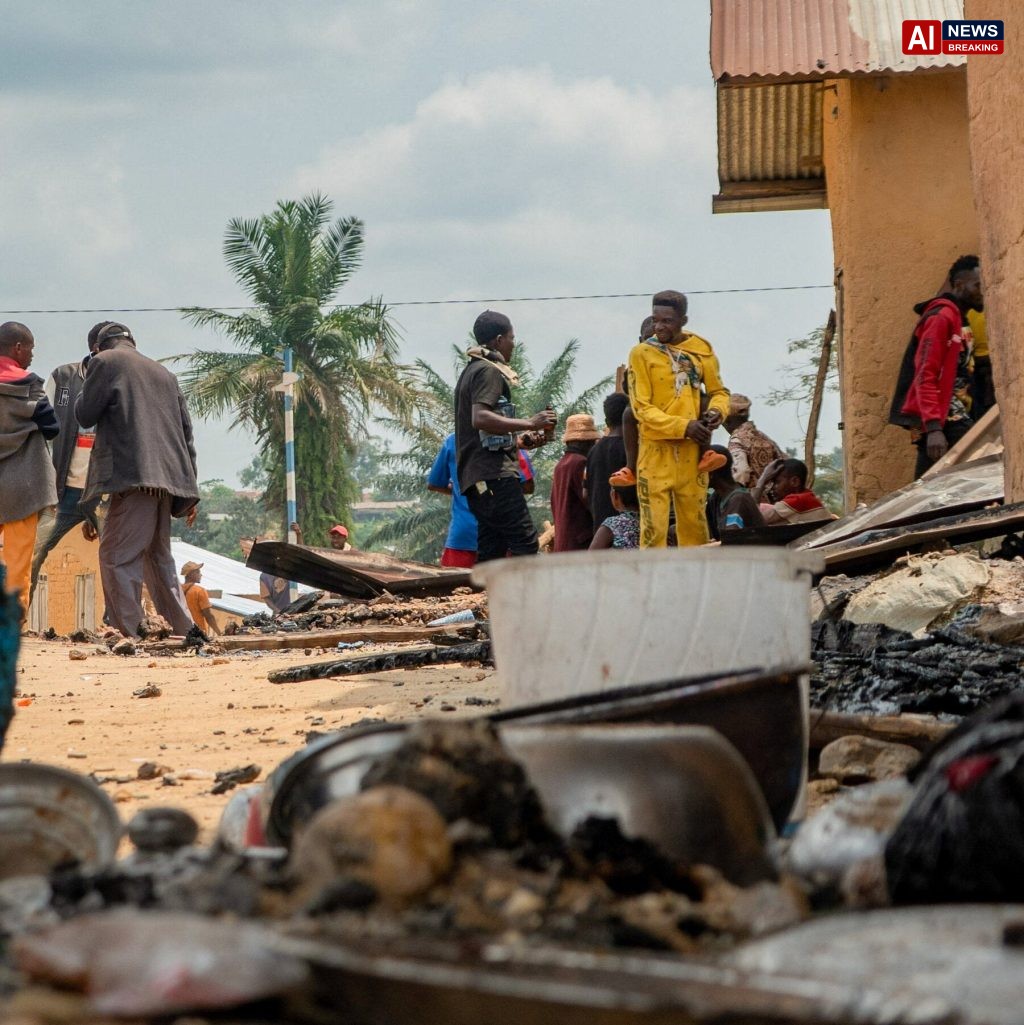
Islamist militants attack Ebola clinic in Congo - AI News Breaking
Islamist Militant Attack Forces Patients to Flee Ebola Clinic in Congo In a chilling incident that has drawn international concern, a coordinated assault on a health facility in the eastern province of Ituri killed at least forty‑four civilians, according to local authorities. The attack was carried out by a faction loyal to the Islamic State, whose presence has been increasingly reported in the region despite the country’s fragile security landscape. The clinic, which was treating patients infected with the Ebola virus, became a focal point of the violence when the militants stormed the compound in the early hours of Saturday..
The resulting chaos forced patients and staff to abandon their posts and flee the building, many of them escaping with little more than the clothes on their backs. The clash unfolded amid a growing Ebola outbreak that has already claimed hundreds of lives across the Democratic Republic of the Congo. Public health officials estimate that the country is currently grappling with more than 500 confirmed cases, with the disease spreading rapidly through rural communities that lack adequate medical infrastructure..
The clinic that was attacked had been operating for just over a month, providing essential treatment and vaccination services to a population that had long been left without access to reliable healthcare. Its destruction not only hampers containment efforts but also sends a chilling message to health workers who risk their lives to provide care. According to a statement released by the Ministry of Health, the attackers were identified as a group of roughly a dozen men who entered the facility armed with rifles and explosives..
Witnesses described the attackers as wearing local clothing but with distinctive insignia that the ministry claims matches those used by extremist cells loyal to the Islamic State. The militants reportedly targeted the central ward where the most critical patients were being cared for, causing a sudden surge of panic among those present. In the aftermath, emergency medical staff attempted to salvage as many patients as possible, but the damage was already extensive..
The incident comes at a time when international bodies are urging for a coordinated response to the dual crises of Ebola and armed conflict. The United Nations’ health arm, the World Health Organization, has warned that the outbreak’s trajectory could worsen if security conditions deteriorate further. Our ability to respond effectively hinges on stability and the safety of our teams, said a WHO spokesperson in a statement..
The attack raises the stakes for the ongoing efforts to roll out vaccination campaigns, which have been hampered by logistical challenges and a lack of trust in external actors. Local security forces have pledged to investigate the assault and to take steps to prevent similar incidents in the future. A spokesperson for the National Police announced that an investigative unit had been dispatched to the scene to collect evidence and interview witnesses..
He added that the police were working closely with the military and intelligence services to trace the attackers’ origin and to identify the individuals responsible. The government has also called for international support to bolster security in Ebola-affected areas, noting that a coordinated approach is essential to protect both health workers and patients. The attack has prompted a swift response from humanitarian organisations operating in the region..
Médecins Sans Frontières, which has been running a mobile clinic in Ituri, released a statement expressing deep concern over the incident. The organisation stated that it would review its security protocols and consider relocating some of its teams to safer locations. At the same time, the International Committee of the Red Cross has mobilised a rapid deployment team to assess the damage and to coordinate relief efforts with local authorities..
These organisations emphasize that the safety of patients and staff is paramount and that any compromise in security undermines the entire response strategy. Patients who managed to escape the clinic are now in a precarious position. Many have fled to nearby villages, where they are at risk of exposure to the virus if they are not isolated quickly..
Local health posts are overwhelmed, and the lack of personal protective equipment for caregivers has been highlighted as a critical gap. The Congolese government has called on the international community to donate additional medical supplies, including gloves, masks, and disinfectants, to prevent further spread of the disease. Humanitarian agencies have urged donors to consider the urgency of the situation, as the delay in providing resources could result in a resurgence of cases..
The attack also has wider implications for the region’s stability. The eastern Democratic Republic of the Congo has long been a hotbed of armed groups, with several factions vying for control over mineral resources and strategic routes. The presence of extremist groups adds another layer of complexity to an already volatile environment..
Analysts suggest that the Islamic State’s foothold in the region could embolden other militant groups to adopt similar tactics, further endangering civilians and disrupting essential services. The international community has called for a comprehensive strategy to counter extremism while simultaneously addressing the humanitarian crisis. In response to the violence, the United Nations Security Council has convened an emergency meeting to discuss the situation in Ituri..
A resolution was drafted to call for immediate action to protect health facilities and to condemn the use of violence against medical workers. The resolution also urges member states to increase funding for security measures and to support the development of community-based surveillance systems that can detect and report attacks before they occur. The council’s statement underscores the principle that violence against healthcare providers is unacceptable and must be stopped..
The Democratic Republic of the Congo’s president, Félix Tshisekedi, delivered a televised address, condemning the attack and reaffirming his administration’s commitment to safeguarding public health. He appealed to the international partners to expedite the delivery of vaccines and to provide technical assistance in fortifying health infrastructure. President Tshisekedi also pledged to work closely with the African Union and regional security forces to dismantle the networks that enable such attacks..
His message was reinforced by the voices of civil society, who called for greater transparency in reporting.
Updated: November 7, 2026
Insight: This development highlights evolving dynamics and may have broader implications in the near term.






