Indonesia denies foreign claim to rescued orangutans
 Turkey hosts COP31 climate talks in Antalya.
 Pope meets Argentine bishops.
 APOD: 2026 November 8 – Major Fireball Meteor
 Indonesian Horror Hit ‘Pabrik Gula’ Gets 2028 Sequel as MD Entertainment Lines Up Three Imax Films
Uttar Pradesh government hikes DA by 3% for employees
** The Uttar Pradesh government will raise the dearness allowance for its salaried workforce from 60% to 63% starting 1 July 2026, a 3% increase aimed at offsetting rising living costs. The move, affecting roughly 12 million employees, adds an estimated ₹3 billion to the state budget and aligns UP’s DA with the latest central government guidelines. Critics say the uplift is modest, but officials argue it safeguards purchasing power amid persistent inflation.
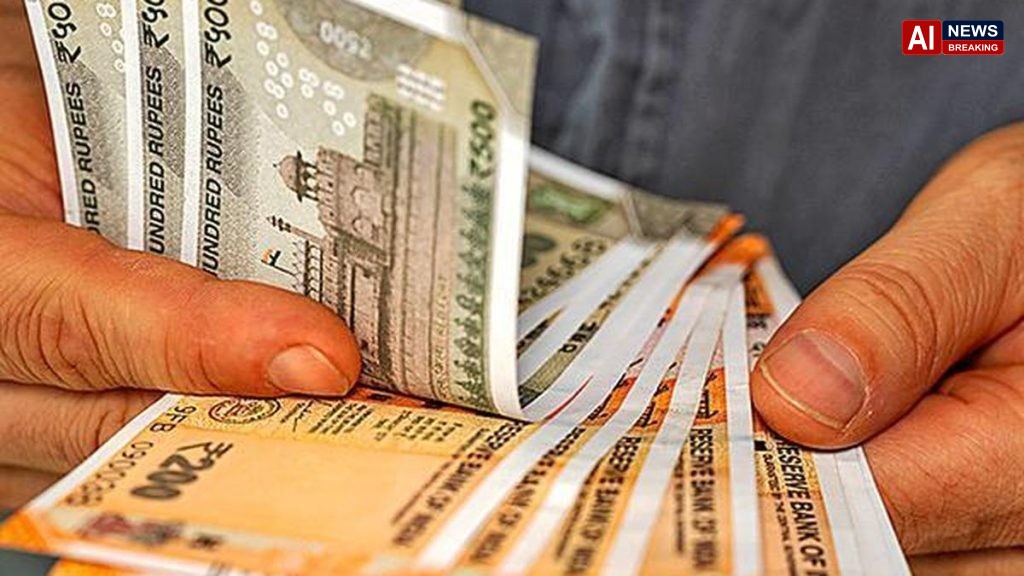
Uttar Pradesh government hikes DA by 3% for employees - AI News Breaking
The Uttar Pradesh government announced on Monday a 3 percent increase in the dearness allowance (DA) granted to its salaried employees, raising the rate from the current 60 percent to 63 percent. The decision, detailed in an official statement released on 7 November, will take effect from 1 July 2026, aligning the state’s compensation structure with the latest revisions of the consumer price index (CPI) that underpin the calculation of DA across the public sector in India.The move follows a series of similar adjustments in other states and at the centre, where inflationary pressures have prompted periodic revisions of the allowance intended to offset the erosion of real wages. The Uttar Pradesh administration cited a sustained rise in the cost of essential commodities, as reflected in the CPI for urban non‑food items, as the primary justification for the hike..
By increasing the DA to 63 percent, the state aims to preserve the purchasing power of its workforce, which includes teachers, police personnel, health‑care staff and a broad array of administrative officers.The new rate will be applied to the basic salary component of the affected employees, with the additional allowance calculated as a percentage of that base figure. Under the revised formula, a staff member earning a basic salary of ₹30,000 per month will see the DA component rise from ₹18,000 (60 percent) to ₹18,900 (63 percent), resulting in a net monthly increase of ₹900. While the absolute uplift may appear modest, the cumulative effect across the state’s estimated 12 million public servants translates into a substantial fiscal outlay..
State finance officials estimate that the additional expense will add roughly ₹3 billion to the annual budget, a sum that will be absorbed through reallocation of existing resources rather than new borrowing.Critics, however, argue that the increment does not fully address the broader challenges of wage stagnation and rising living costs that many employees face. A spokesperson for the Uttar Pradesh Teachers’ Association expressed concern that the DA increase, while welcome, falls short of compensating for the sharp escalation in housing, transport and food prices recorded over the past year. “Our members are still struggling to make ends meet,” the spokesperson said, urging the government to consider a more comprehensive review of salary structures, including basic pay revisions, rather than relying solely on the dearness allowance as a stop‑gap measure.The state’s finance department defended the policy, noting that the DA is a statutory component linked directly to inflation metrics, and that any deviation from the prescribed formula would contravene the central government’s guidelines..
It also highlighted that the 3 percent rise is in line with the latest central government notification, which raised the national DA ceiling to 63 percent based on the CPI for the preceding twelve months. By synchronising its rates with the centre, Uttar Pradesh ensures parity for its employees with those in other states and with central government staff, thereby averting potential disparities that could affect inter‑state transfers and promotions.Economic analysts observing the development point out that the increase reflects a broader trend of state governments seeking to balance fiscal prudence with the political imperative of maintaining morale among public sector workers. “In a state as large and demographically diverse as Uttar Pradesh, the government must tread carefully,” said Dr Rohit Sharma, a senior fellow at the Indian Institute of Public Finance..
“On the one hand, there is pressure to curb expenditure in a period of tight fiscal space; on the other, there is a genuine need to shield employees from inflation, especially in a post‑pandemic recovery phase where price volatility remains high.”The DA hike also carries implications for the private sector, where many firms benchmark their compensation packages against public‑sector standards. Small and medium enterprises, in particular, may feel compelled to adjust their own allowances to stay competitive in attracting talent, potentially feeding into a wider wage inflationary cycle. Trade bodies representing manufacturers and service providers have therefore called for a coordinated approach to wage policy, urging the central and state governments to provide clearer guidance that minimizes market distortions.In the context of Uttar Pradesh’s broader economic agenda, the increase in dearness allowance dovetails with the state’s ongoing initiatives to boost employment, improve infrastructure and expand social welfare schemes..
The administration has earmarked significant funds for the development of roads, irrigation projects and renewable energy installations, aiming to catalyse growth in both urban and rural areas. By ensuring that its employees retain adequate real income, the government hopes to sustain the momentum of these projects, given that a large proportion of the workforce involved in implementation is drawn from the state’s own civil services.The announcement was made by Chief Minister Yogi Adityanath’s office, which emphasized that the decision reflects the government’s “commitment to the welfare of its employees and to maintaining a fair and transparent compensation system.” The statement also highlighted that the increase would be communicated to all departments through official circulars, and that the payroll systems have been updated to incorporate the new rate from the stipulated date. The administration has assured that the transition will be smooth, with no disruption to salary disbursements.As the effective date approaches, union representatives across various sectors are preparing to negotiate further improvements in working conditions and benefits..
While the DA hike is seen as a positive step, many labour groups view it as part of a larger dialogue on public‑sector remuneration that will likely continue into the next fiscal year. Observers note that the interplay between inflation, wage policy and fiscal sustainability will remain a central theme in Uttar Pradesh’s governance narrative, especially as the state seeks to balance developmental aspirations with the economic realities confronting its workforce..
Uttar Pradesh will raise its dearness allowance for salaried staff from 60 percent to 63 percent on July 1, citing rising urban non‑food CPI and aligning with recent central government revisions. The modest ₹900 monthly uplift per ₹30,000 salary is expected to cost the state about ₹3 billion annually, drawing both praise for inflation protection and criticism for not tackling broader wage stagnation.
A modest DA rise buys the government short‑term political goodwill, but it also entrenches a reliance on inflation‑linked add‑ons that defer the deeper structural wage reforms civil servants demand.
If public‑sector benchmarks keep nudging private‑sector pay, the ripple could ignite broader wage‑price spirals just as Uttar Pradesh tightens its fiscal belt for ambitious infrastructure drives.