 Major fire breaks out in Mumbai’s Dongri, dousing ops on; one dead in November 7 highrise blaze
 Australia drops Marnus Labuschagne from New Zealand Test squad
 Targeted by U.S., Armed Group Strikes Back in Colombia
 Here’s the full text of Jensen Huang’s memo to Nvidia
 Oscar Predictions: Best Casting — ‘Being Heumann’ and ‘La Bola Negra’ Found the Year’s Boldest Discoveries. Will the Academy Reward Them?
Nvidia launches independent probe into CEO espionage allegations.
** Nvidia has appointed an independent committee to investigate claims that CEO Jensen Huang was targeted by Chinese intelligence, a move that could have significant regulatory and investor repercussions.
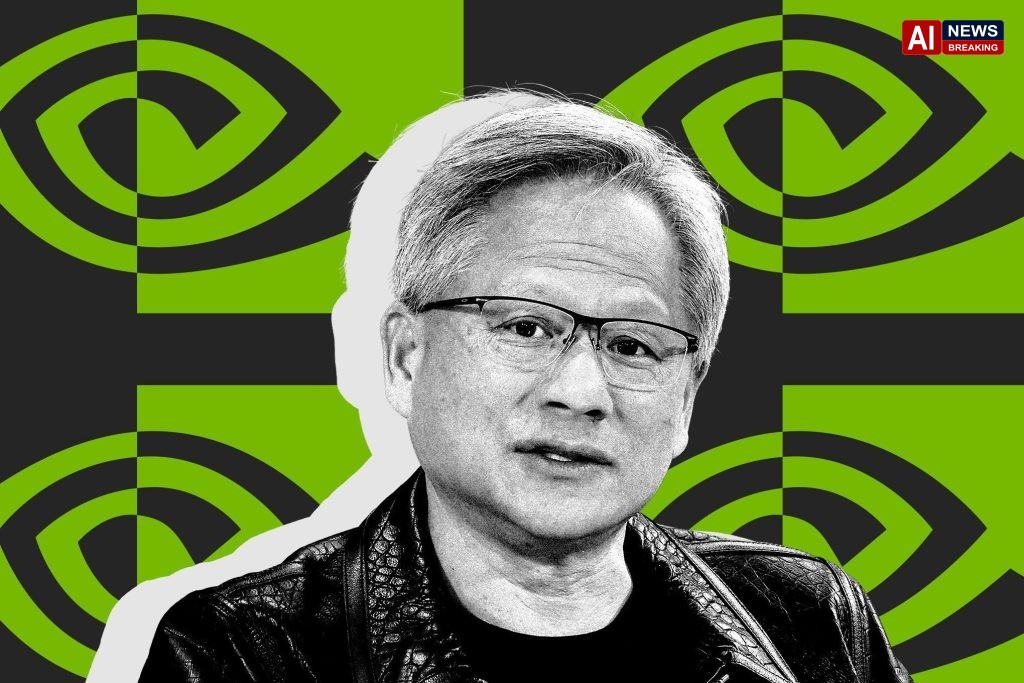
Nvidia launches independent probe into CEO espionage allegations. - AI News Breaking
Nvidia has launched an independent probe into allegations that its founder and chief executive, Jensen Huang, may have been the target of a Chinese intelligence operation. The company’s board of directors issued a brief statement on Monday, confirming that a committee of independent directors, supported by external counsel, will oversee the investigation. The board said it was acting “in the interest of U.S..
national and economic security” after media reports linked Huang to an alleged espionage effort orchestrated by China’s Ministry of State Security. The move marks the latest high‑profile scrutiny of a senior executive at a firm at the heart of the global semiconductor industry.The reports, first published by The Verge, claim that Alice Huang, an executive at Megaspeed, a Chinese technology firm with ties to the United States, was recruited by Chinese intelligence to gather information on Nvidia. According to the article, Alice Huang is a distant relative of Jensen Huang and had previously worked at Nvidia’s Shanghai office before moving to Megaspeed..
The piece alleges that she maintained regular contact with Jensen Huang and other senior staff, raising concerns that confidential data could have been passed to Beijing. Nvidia has not confirmed the identity of the Megaspeed executive, but the board’s statement suggests the company takes the allegations seriously enough to engage an outside investigative team.The investigation comes at a time when the United States is tightening controls over the export of advanced chips and related technologies. Nvidia, whose graphics processing units (GPUs) power everything from gaming rigs to artificial‑intelligence data centres, has been a focal point of U.S..
policy aimed at preventing Chinese firms from accessing cutting‑edge hardware. In September, the Biden administration tightened licensing rules for the export of high‑end GPUs, citing national‑security concerns. That policy backdrop adds weight to any suggestion that a senior Nvidia leader might have been compromised by a foreign intelligence service.Industry analysts say the outcome of the probe could have far‑reaching implications for Nvidia’s market position and its relationships with both suppliers and customers..
“If the investigation uncovers credible evidence of espionage, it could trigger a cascade of regulatory actions, including possible sanctions or restrictions on Nvidia’s ability to sell to certain markets,” said Laura Chen, a senior analyst at MarketWatch Research. “Investors are likely to watch the process closely, as even the perception of a security breach can affect share prices in a sector already marked by volatility.” Nvidia’s shares have hovered around the $900 level this month, reflecting both optimism about its AI‑driven growth and lingering concerns about geopolitical risk.Legal experts note that the board’s decision to appoint an independent committee aligns with best practices for handling potential conflicts of interest at the executive level. “When a company faces allegations that touch on national security, it is essential to create a firewall between the investigation and internal management,” explained Michael O’Connor, a corporate governance specialist at the law firm Perkins & Will..
“An independent panel, coupled with outside counsel, helps ensure that any findings are credible and can withstand scrutiny from regulators, shareholders, and the public.” O’Connor added that the board’s statement, while brief, is likely designed to reassure investors and the U.S. government that Nvidia is taking proactive steps.The allegations also raise broader questions about the vulnerability of multinational tech firms to foreign intelligence operations. Over the past decade, U.S..
companies such as Qualcomm, Intel and Tesla have faced similar scrutiny after investigations revealed attempts by foreign actors to infiltrate their research and development pipelines. In many cases, the suspected espionage involved recruitment of employees with personal or familial ties to the target firm, a tactic that intelligence agencies worldwide have used to gain access to proprietary information. Nvidia’s situation appears to follow that pattern, with the alleged involvement of a relative of the CEO.Chinese officials have not commented publicly on the claims, and the Ministry of State Security remains a ive entity, making verification of the reports difficult..
intelligence agencies have publicly warned that Chinese espionage efforts have intensified in the technology sector, particularly around AI and high‑performance computing. In a recent briefing, a senior official at the Office of the Director of National Intelligence warned that “state‑sponsored actors continue to target critical U.S. technology companies to acquire intellectual property and accelerate domestic capabilities.” The Nvidia investigation, therefore, arrives within an environment of heightened vigilance.For Nvidia’s workforce, the announcement has sparked a mixture of concern and curiosity..
Internal messages circulating on employee forums indicate that many staff members are seeking clarification about the scope of the probe and its potential impact on daily operations. “We’re focused on our product roadmaps and customer commitments,” wrote one engineer, noting that “the company has a robust compliance framework, and I trust that the board will handle this transparently.” Others expressed unease, fearing that a protracted investigation could distract senior leadership from strategic initiatives, particularly as the firm races to meet soaring demand for AI‑centric GPUs.Regulators, including the U.S. Securities and Exchange Commission, are expected to monitor the situation closely..
If the investigation uncovers material information that could affect Nvidia’s financial disclosures, the SEC may require the company to file additional reports or take remedial actions. Moreover, the Committee on Foreign Investment in the United States (CFIUS) could review past transactions involving Nvidia and its Chinese partners to assess whether any national‑security risks were overlooked. Such reviews have become more common since the 2020 amendments that expanded CFIUS’s authority over technology transfers.The outcome of the inquiry remains uncertain, but its initiation signals that Nvidia is taking the allegations seriously enough to allocate resources to an independent review..
The board’s emphasis on “U.S. national and economic security” underscores the strategic importance the company holds in the broader geopolitical contest over advanced computing. As the investigation proceeds, stakeholders—from investors and employees to policymakers—will be watching for any indication of how deeply, if at all, the alleged espionage penetrated Nvidia’s operations..
The case also serves as a reminder that in an era where cutting‑edge chips power both commercial AI applications and military systems, the line between corporate competition and national security is increasingly blurred..
Updated: November 8, 2026
Nvidia has set up an independent panel, backed by outside counsel, to investigate claims that CEO Jensen Huang may have been targeted by Chinese intelligence through a relative working for a Chinese tech firm. The probe comes amid tightening U.S. export controls on advanced chips and heightened scrutiny of tech companies for potential national‑security breaches.
Insight: The probe underscores how Nvidia’s AI dominance has turned its boardroom into a frontline of U.S.–China tech warfare, where even familial ties become geopolitical liabilities.
If the investigation validates espionage fears, the fallout could force the chipmaker into tighter export curbs and a credibility gap that rivals will exploit to