 Major fire breaks out in Mumbai’s Dongri, dousing ops on; one dead in November 7 highrise blaze
 Australia drops Marnus Labuschagne from New Zealand Test squad
 Targeted by U.S., Armed Group Strikes Back in Colombia
 Here’s the full text of Jensen Huang’s memo to Nvidia
 Oscar Predictions: Best Casting — ‘Being Heumann’ and ‘La Bola Negra’ Found the Year’s Boldest Discoveries. Will the Academy Reward Them?
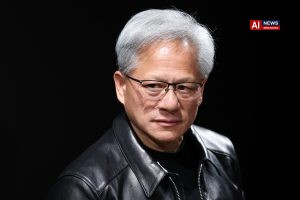
Tech giant Nvidia launches investigation after reports CEO was targeted by Chinese intelligence
**

Tech giant Nvidia launches investigation after reports CEO was targeted by Chinese intelligence - AI News Breaking
semiconductor powerhouse best known for its graphics‑processing units and artificial‑intelligence chips, has announced an internal investigation after media reports suggested that chief executive Jensen Huang may have been the target of a foreign intelligence operation. The company said it was “taking these allegations seriously” and would work with law‑enforcement agencies to determine whether any wrongdoing had occurred. The move follows a series of high‑profile cyber‑espionage cases involving technology firms and has reignited debate over the vulnerability of the United States’ critical‑technology sector to state‑backed actors.The allegations first surfaced in a series of articles published by a European investigative outlet, which cited unnamed sources claiming that Chinese intelligence services had attempted to cultivate a relationship with Huang in order to gain insight into Nvidia’s research and development roadmap..
According to the reports, the alleged effort involved a combination of social‑engineering tactics, covert meetings in neutral locations and the use of intermediaries linked to the Chinese diaspora. Nvidia’s statement, released early on Friday, declined to confirm any specific details of the alleged operation, but affirmed that the board had been briefed and that a “comprehensive review” was under way.Industry analysts say the timing of the reports could not be more consequential. Nvidia’s stock has surged over the past year, propelled by booming demand for its AI‑accelerated hardware, which powers everything from large‑language models to autonomous‑vehicle platforms..
The company’s market capitalisation now exceeds $1 trillion, placing it among the world’s most valuable public firms. Such prominence makes it a natural target for foreign intelligence services seeking to accelerate their own AI capabilities or to monitor the strategic direction of a key U.S. officials have repeatedly warned that Chinese espionage networks are increasingly focused on high‑technology sectors, including semiconductors, aerospace and biotech..
In a recent congressional hearing, the chairman of the House Committee on Energy and Commerce warned that “the theft of cutting‑edge intellectual property undermines our national security and economic competitiveness.” The committee is currently drafting legislation that would tighten export controls on advanced chips and impose harsher penalties on entities found to be colluding with foreign intelligence services. Nvidia’s investigation therefore arrives against a backdrop of intensifying policy scrutiny.Legal experts caution that the outcome of Nvidia’s internal probe could have far‑reaching implications for both corporate governance and international relations. If the investigation uncovers evidence that senior executives were compromised, the company could face civil penalties under the Foreign Corrupt Practices Act or the Economic Espionage Act, in addition to possible sanctions from the Department of Commerce..
Moreover, any confirmed link to a foreign intelligence service could trigger a broader diplomatic response, potentially escalating tensions already heightened by disputes over trade, technology transfers and the status of Taiwan.The Chinese government has not commented on the specific allegations, but its Ministry of State Security routinely denies involvement in espionage activities targeting foreign corporations. In previous statements, Chinese officials have framed such accusations as “politically motivated attempts to stoke anti‑China sentiment.” The diplomatic fallout from a confirmed case, however, could be significant, prompting a reassessment of existing bilateral agreements on cybersecurity cooperation and data sharing. Some observers fear that an escalation could lead to reciprocal measures, such as restrictions on Chinese firms operating in the United States.For Nvidia, the immediate priority is to reassure investors, customers and partners that its operations remain secure and that its supply chain is not compromised..
The company’s shares experienced a modest dip in after‑hours trading following the announcement, though analysts note that the broader market’s confidence in Nvidia’s technology leadership remains largely intact. “The firm has built robust security protocols around its R&D,” said a senior analyst at a leading investment bank. “Unless there is concrete evidence of a breach, the long‑term impact on its valuation should be limited.”In parallel, cybersecurity firms have begun monitoring the situation for signs of related activity..
Threat‑intelligence groups have identified a pattern of spear‑phishing campaigns aimed at senior executives in the semiconductor industry, often using language that references AI breakthroughs or upcoming product launches. While none of these campaigns have been directly linked to the current Nvidia inquiry, the prevalence of such attempts underscores the broader challenge of protecting high‑value intellectual property in an increasingly hostile digital environment.The investigation also about the adequacy of current corporate safeguards against foreign influence. Critics argue that many U.S..
companies lack comprehensive vetting processes for foreign contacts and that internal compliance teams are often under‑resourced. In response, the White House has signalled a possible revision of the Committee on Foreign Investment in the United States (CFIUS) framework, expanding its remit to include not only direct investments but also indirect influence operations that could affect national‑security‑critical technologies. If enacted, such reforms could impose new reporting obligations on companies like Nvidia, requiring them to disclose any attempted foreign intelligence contacts to the federal government.As the probe proceeds, the tech community will be watching closely for any indications of how pervasive state‑linked espionage may be within the sector..
While the exact nature of the alleged outreach to Jensen Huang remains unverified, the episode serves as a reminder that the race for AI supremacy is being contested on multiple fronts—commercial, technological and geopolitical. For now, Nvidia has pledged transparency, stating that it will update stakeholders as soon as the investigation yields substantive findings. The outcome will likely shape not only the company’s internal policies but also the broader discourse on safeguarding America’s cutting‑edge innovations from foreign interference..
Updated: November 8, 2026
Insight: If the probe uncovers even a whisper of foreign influence, Nvidia could become a cautionary beacon, prompting CEOs to treat geopolitical risk as an operational checklist rather than a peripheral concern.
The episode hints that the next frontier in the AI arms race will be less about chip performance and more about who can infiltrate