The Supreme Court will decide whether assault weapons bans violate the Second Amendment
 A Critic of Beijing Falls Short in Taiwan’s Key Mayoral Election
 EPA says no rise in contamination after Army detonates lead azide stockpile in Iowa
 Israeli Strike Kills 2 Workers at Gaza Clinic, Doctors Without Borders Says
 McQueen Pre-Fall 2027
Bitter Clash Over Fossil Fuels Derails U.N. Climate Talks
**
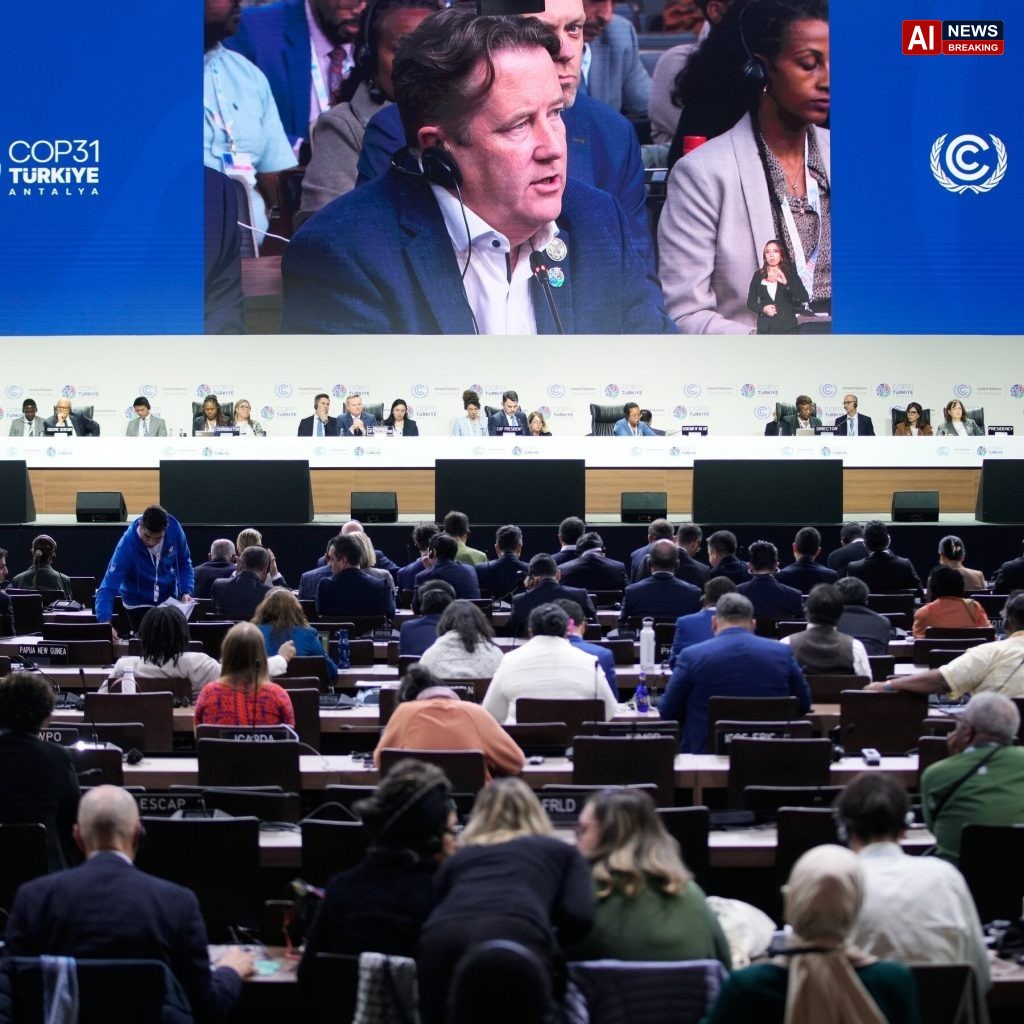
Bitter Clash Over Fossil Fuels Derails U.N. Climate Talks - AI News Breaking
bitter clash fossil fuels:
Bitter Clash Over Fossil Fuels Derails U.N. Climate Talks The latest round of United Nations climate negotiations ended in a stalemate as European nations and a coalition of vulnerable states rejected a draft agreement that failed to address the phase‑out of coal, oil and gas. The impasse was triggered by a concerted push from Saudi Arabia and a bloc of oil‑producing countries that insisted on removing any language committing to a systematic reduction of fossil‑fuel use..
Delegates walked away from the conference in Geneva with no consensus, underscoring the widening rift between climate‑focused economies and those whose revenues depend heavily on hydrocarbons. European Union representatives, led by the EU climate envoy, warned that the omission of a clear timeline for phasing out fossil fuels represented a “dangerous back‑sliding” that would jeopardise the goals of the Paris Agreement. They argued that without firm commitments, the world is on track to exceed the 1.5°C temperature limit, a threshold scientists say could trigger irreversible climate impacts..
The EU’s position was bolstered by a coalition of small island states, African nations and South Asian countries, all of which have already begun to feel the consequences of rising seas and extreme weather events. Saudi Arabia, the world’s largest oil exporter, countered that any reference to a mandatory phase‑out would threaten energy security and destabilise global markets. In a statement delivered by the Kingdom’s chief negotiator, Riyadh emphasized the need for “balanced solutions” that respect the development priorities of oil‑dependent economies..
The Saudi delegation, joined by other Gulf Cooperation Council members and several African oil producers, advocated for a voluntary, technology‑driven transition rather than legally binding targets. The disagreement over coal was equally contentious. While many developing nations have pledged to eliminate coal from their energy mix, the Saudi‑led bloc argued that coal remains a critical component of affordable electricity in many parts of the world..
They called for “flexibility” in the final text, suggesting that any coal‑related commitments should be left to national discretion. This stance was rebuffed by European and vulnerable nations, which highlighted recent data showing that coal-fired power is the single largest source of carbon emissions globally. Negotiators also clashed over financing mechanisms for the green transition..
The European Union proposed a substantial increase in climate finance, including a dedicated fund to support developing countries in shifting away from fossil fuels. Saudi Arabia, while acknowledging the importance of financial support, warned that “unprecedented fiscal burdens” could impede the economic stability of oil‑exporting states. The debate over who should bear the cost of the transition proved to be another wedge that prevented consensus..
In the midst of the deadlock, several non‑aligned countries attempted to bridge the divide by proposing a compromise language that would reference “phased reductions” rather than outright bans. However, this middle‑ground proposal failed to gain traction, as both sides viewed it as either too weak or too restrictive. The lack of a shared definition for “phased reductions” left the draft text vulnerable to divergent interpretations, further complicating the already fraught negotiations..
The fallout from the failed talks reverberated beyond the conference hall. Environmental NGOs issued stark warnings that the absence of a robust fossil‑fuel framework could embolden governments to delay or abandon climate policies at the national level. Meanwhile, markets responded with heightened volatility, as investors recalibrated expectations for future demand for oil and gas..
Analysts noted that the stalemate may accelerate the shift towards renewable energy in regions less dependent on hydrocarbons, but also risked entrenching fossil‑fuel subsidies in others. Political analysts pointed to the broader geopolitical context shaping the negotiations. The ongoing war in Ukraine, which has heightened concerns about energy independence, has forced many European countries to reconsider their reliance on Russian gas, yet they remain hesitant to confront oil‑rich allies..
This delicate balance between energy security and climate ambition has created a “policy paradox” that policymakers struggle to resolve without alienating key partners. The United Nations climate chief expressed disappointment but reaffirmed a commitment to keep dialogue open. In a press briefing, the UNFCCC ary‑general highlighted that the next session, slated for early next year, will include a review of the draft text and an invitation for additional input from civil society and the private sector..
He stressed that “the clock is ticking” and urged all parties to return with a willingness to make substantive concessions. For now, the immediate outlook remains uncertain. The draft agreement, stripped of its most ambitious fossil‑fuel provisions, will be circulated among member states for further comment..
Observers warn that without a clear pathway to phase out coal, oil and gas, the global community risks missing critical climate milestones, potentially locking in emissions for decades to come. The coming weeks will likely see intense diplomatic lobbying as nations weigh economic interests against mounting climate pressures. In the longer term, the episode may signal a shift in how climate diplomacy is conducted..
Some experts suggest that future negotiations could move away from universal agreements toward a more fragmented, region‑specific approach, allowing countries to tailor their transition strategies. Others contend that such a path would dilute collective responsibility and weaken the overall efficacy of the Paris framework. The next summit will test whether the international community can reconcile these divergent visions and forge a unified route forward..
Ultimately, the failure to secure a consensus on fossil‑fuel phase‑out underscores the complex interplay of environmental urgency, economic dependency and geopolitical strategy. As the world confronts escalating climate risks, the ability of the United Nations to mediate between opposing interests will be crucial. Whether the deadlocked talks become a catalyst for renewed compromise or a prelude to deeper division remains to be seen, but the stakes for humanity’s climate future could.
Updated: November 22, 2026
A deadlock at the U.N. climate talks saw European and vulnerable‑state delegates reject a draft that omitted firm fossil‑fuel phase‑out commitments, while Saudi‑led oil producers pushed for a voluntary, technology‑driven approach. The split underscores a widening rift between climate‑focused economies and those whose revenues depend on hydrocarbons, leaving the next summit with an uncertain path to Paris‑aligned targets.
The deadlock signals a dangerous bifurcation: climate‑savvy states will either be forced into a fractured, region‑by‑region transition that erodes global ambition, or they will capitulate to fossil‑fuel interests, cementing emissions pathways that threaten to overshoot 1.5°C. In either scenario, the UN’s role shifts from broker to watchdog—its failure to impose binding phase‑out clauses could embolden entrenched subsidies, widening the gap between the world’s