A Critic of Beijing Falls Short in Taiwan’s Key Mayoral Election
 EPA says no rise in contamination after Army detonates lead azide stockpile in Iowa
 Israeli Strike Kills 2 Workers at Gaza Clinic, Doctors Without Borders Says
 McQueen Pre-Fall 2027
 Mushfiqur Rahim to retire from Test cricket in February 2027
A Critic of Beijing Falls Short in Taiwan’s Key Mayoral Election
**
A Critic of Beijing Falls Short in Taiwan’s Key Mayoral Election - AI News Breaking
critic beijing falls short:
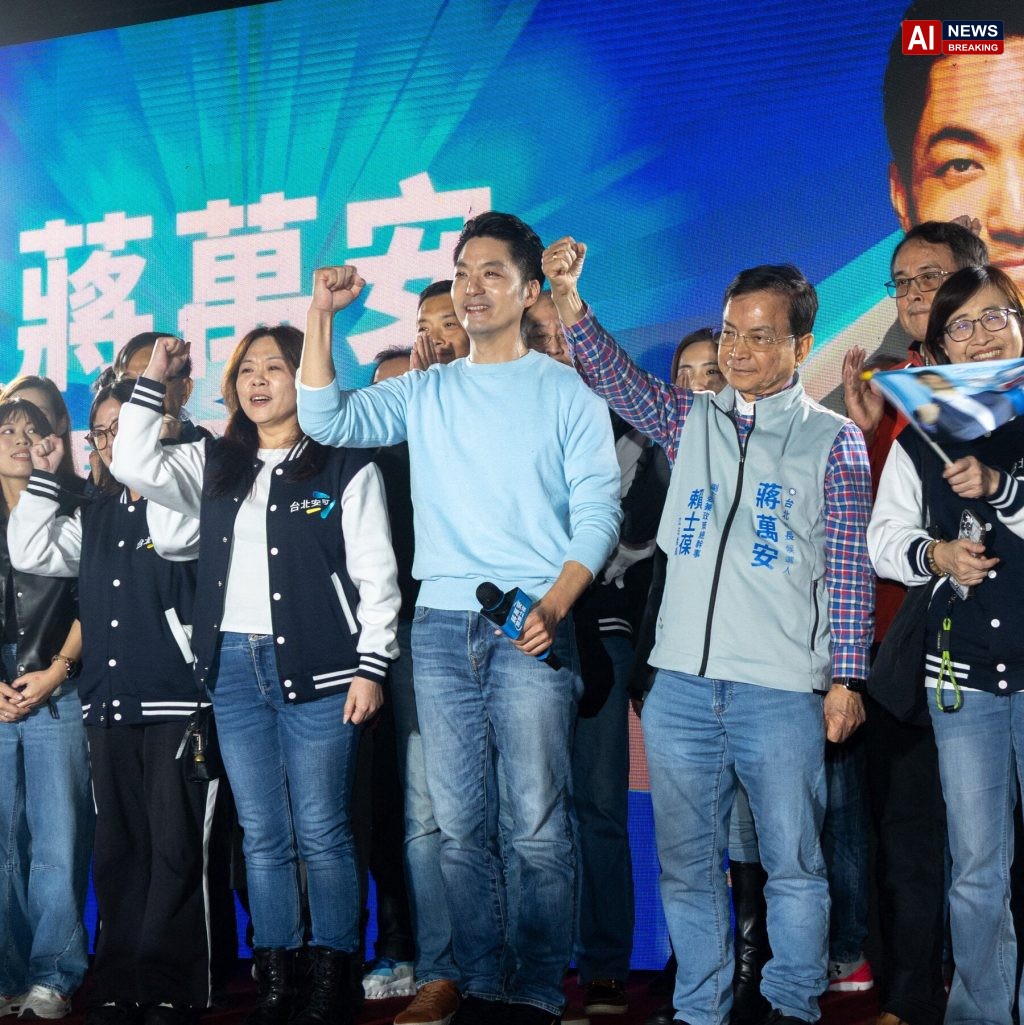
The recent mayoral election in Taipei, Taiwan’s capital, has concluded with the victory of a candidate who has long been critical of Beijing’s growing influence, a result that is likely to be welcomed in the mainland despite the official Chinese narrative that the island remains an inseparable part of the People’s Republic. The winning candidate, Dr Lin Chih‑chung, a former professor of political science and a former member of the Legislative Yuan, secured a clear majority over his main rival, a former city councilor with close ties to the ruling Democratic Progressive Party (DPP) and a more conciliatory stance toward cross‑strait relations. Lin’s campaign was built around a platform of “Taiwanese sovereignty and pragmatic governance,” emphasizing the need for greater international participation and a firmer defence of the island’s democratic institutions.The election, held on 26 November, formed part of Taiwan’s nationwide local elections that also decided the outcomes for several county magistrates and city mayors..
Turnout was unusually high, with more than 78 percent of eligible voters casting ballots, reflecting heightened public interest in the political direction of the island amid intensifying pressure from Beijing. Analysts point to a confluence of factors that shaped the result: a growing sense of identity distinct from mainland China, concerns over the erosion of civil liberties, and a backlash against perceived attempts by the central government to downplay Taiwan’s autonomy in the face of diplomatic isolation.Lin’s victory marks a significant shift in the political landscape of the capital, which has traditionally been a stronghold for the DPP. While the DPP’s candidate, Chen Yu‑hao, managed to retain a respectable share of the vote, he fell short of the 55‑percent threshold needed to force a runoff, prompting speculation that the electorate is seeking a more robust defence of Taiwan’s de facto independence..
The mayoral office, once a stepping stone for national leadership, now carries added weight as a symbolic bulwark against external interference, especially after recent statements from Beijing’s foreign ministry warning that any moves toward formal independence would be met with “firm and decisive” action.Beijing’s reaction to the result has been measured, with official spokespersons reiterating the “One China” principle and urging “peaceful reunification through dialogue.” However, behind the diplomatic veneer, internal assessments within the Chinese Communist Party (CCP) appear to view the outcome with a degree of unease. A senior official quoted in state media remarked that the election “reflects the resilience of Taiwan’s democratic system” and warned that “any external support for separatist forces will be countered with appropriate measures.” The comment underscores a broader strategic concern within the CCP that Taiwan’s democratic successes could embolden other regions under Chinese claim, such as Hong Kong and Xinjiang, to resist mainland policies.The implications of Lin’s win extend beyond the island’s political sphere. International observers, including the United States and the European Union, have praised the conduct of the election as “transparent and free,” reinforcing their long‑standing support for Taiwan’s participation in global institutions..
In Washington, a senior State Department official noted that the result “demonstrates the maturity of Taiwan’s democracy and the importance of allowing its people to decide their own future.” The comment arrives at a time when the United States is seeking to balance its strategic commitments to Taiwan with the desire to avoid direct confrontation with China, a balancing act that has become increasingly delicate following recent naval encounters in the Taiwan Strait.Domestically, the new mayor has outlined an ambitious agenda that includes expanding affordable housing, improving public transportation, and bolstering cyber‑security measures to protect municipal infrastructure from potential Chinese intrusion. He has also pledged to deepen cooperation with like‑minded cities worldwide, seeking to establish sister‑city agreements that could facilitate cultural exchange and economic collaboration. Critics, however, caution that the mayor’s focus on “sovereignty” may exacerbate tensions with Beijing, potentially leading to economic retaliation that could impact Taiwan’s export‑driven economy.Economic analysts note that while Taiwan’s technology sector remains robust, the island is increasingly vulnerable to supply‑chain disruptions that could be weaponised by a hostile mainland..
Lin’s administration has already signalled its intention to diversify trade partners and reduce dependence on mainland markets, a move that aligns with broader national strategies to secure “economic resilience.” Yet some business leaders warn that a hardening stance could provoke punitive tariffs or restrictions on the flow of components essential for semiconductor manufacturing, a sector that accounts for a sizable share of Taiwan’s GDP.The election also reignited debate over the role of the media in shaping public opinion on cross‑strait relations. During the campaign, state‑aligned outlets in mainland China amplified narratives that painted the DPP as “radical separatists,” while local Taiwanese media highlighted Lin’s track record of defending civil liberties and promoting transparent governance. Observers argue that the media environment on both sides of the strait has become a battlefield for legitimacy, with each side seeking to influence voter perception through selective reporting and digital outreach.In the weeks ahead, Lin is expected to convene a series of meetings with civic leaders, business representatives, and security experts to flesh out his policy roadmap..
He has also indicated a willingness to engage in dialogue with mainland officials, albeit on the condition that any discussions respect Taiwan’s democratic processes and the will of its people. This nuanced position reflects a broader trend among Taiwanese politicians who seek to maintain economic ties with the mainland while asserting political autonomy—a delicate dance that has defined the island’s post‑1990s political evolution.The mayoral contest in Taipei thus serves as a microcosm of the broader contest of narratives between Beijing’s insistence on reunification and Taiwan’s determination to chart an independent course. As the new administration takes office, the international community will be watching closely to see whether Lin’s governance can balance the twin imperatives of domestic progress and external pressure, and whether the election’s outcome will herald a new phase in cross‑strait relations or simply reaffirm the status quo..
Updated: November 28, 2026