The Supreme Court will decide whether assault weapons bans violate the Second Amendment
 A Critic of Beijing Falls Short in Taiwan’s Key Mayoral Election
 EPA says no rise in contamination after Army detonates lead azide stockpile in Iowa
 Israeli Strike Kills 2 Workers at Gaza Clinic, Doctors Without Borders Says
 McQueen Pre-Fall 2027
Bengaluru helmet‑less riding fines double to 42.90 lakh rupees
**
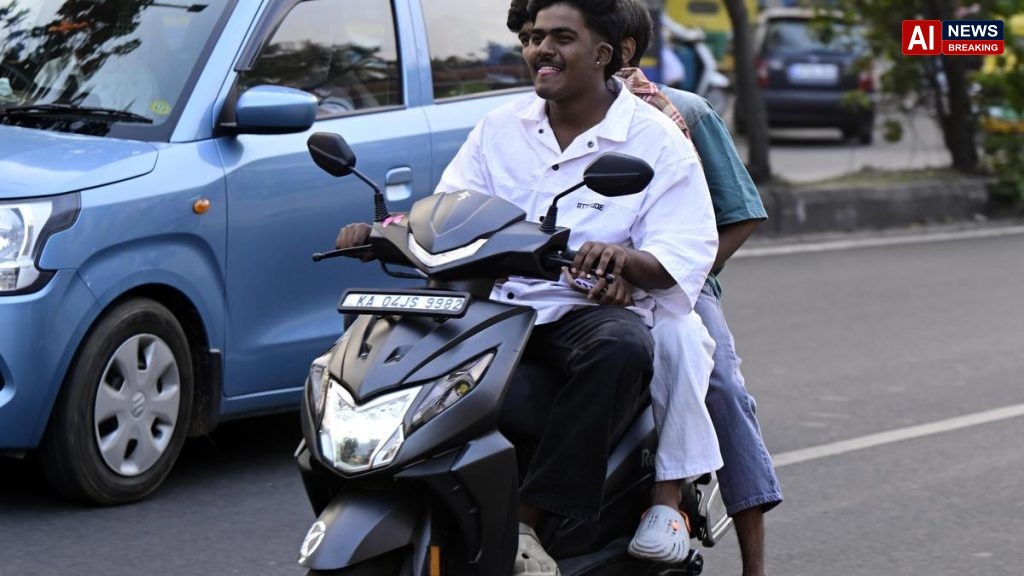
Helmetless riding cases in Bengaluru more than double compared to 2025, touch 42.90 lakh - AI News Breaking
bengaluru helmetless riding fines:
Helmetless riding cases in Bengaluru more than double compared to 2025, touch 42.90 lakh The Bengaluru traffic police (BTP) has recorded a sharp rise in helmet‑less riding violations, with the total value of fines reaching 42.90 lakh rupees – more than double the amount recorded for the same period in 2025. The surge, confirmed by a senior BTP officer speaking to The Hindu, reflects a shift in enforcement strategy that now relies on contactless, zero‑tolerance measures. Over the past five months, authorities have increasingly used automated cameras and electronic ticketing to detect riders who forgo protective headgear, a move intended to curb the high number of injuries and fatalities linked to non‑compliance..
According to the officer, the new approach has resulted in a marked increase in recorded cases. “We have booked violations with zero tolerance, and the numbers have doubled,” he said, emphasizing that the policy change was designed to send a clear signal to commuters. The BTP’s data shows that in the first five months of the current fiscal year, over 18,000 riders were cited for not wearing helmets, compared with just under 8,000 during the same period last year..
This dramatic rise in citations has translated directly into higher revenue from fines, pushing the total collection to the aforementioned 42.90 lakh rupees. The enforcement drive forms part of a broader road safety campaign launched by the Karnataka state government in early 2024. The initiative, dubbed “Safe Roads Bengaluru,” seeks to reduce traffic‑related deaths by 30 percent over the next three years..
Helmet usage is a central pillar of the plan, given that the National Crime Records Bureau reports that head injuries account for nearly 40 percent of all fatal road accidents in the city. By employing technology such as high‑resolution speed cameras and AI‑enabled image recognition, the BTP hopes to identify offenders quickly and issue fines without the need for physical stops. Critics, however, argue that the heavy reliance on automated enforcement may disproportionately affect low‑income commuters who cannot afford helmets or who ride two‑wheelers as their primary mode of transport..
Consumer rights groups have called for a more nuanced strategy that includes subsidised helmet schemes and public awareness drives. In response, the BTP has highlighted that helmets are now being sold at discounted rates in partnership with local manufacturers, and that community outreach programmes are being rolled out in schools and workplaces. Nonetheless, the debate underscores the tension between strict regulatory measures and the socioeconomic realities of Bengaluru’s sprawling urban populace..
Traffic data released by the city’s transport department shows that overall two‑wheeler traffic has risen by 12 percent year on year, driven by rising fuel costs and a growing preference for personal mobility over public transport. This increase in vehicle volume inevitably puts more riders on the road, amplifying the challenge of ensuring compliance with safety norms. The BTP’s senior officer noted that the rise in helmet‑less cases is not solely a function of stricter enforcement but also reflects the sheer number of two‑wheelers now plying Bengaluru’s streets..
“More vehicles mean more opportunities for violations,” he said, adding that the force is scaling its resources to keep pace with the demand. The financial impact of the fines is also being felt at the municipal level. Revenue from helmet‑less citations now accounts for roughly 8 percent of the BTP’s total fine collections for the fiscal year, a figure that city officials say is being reinvested into road safety infrastructure..
Funds are earmarked for the installation of additional speed breakers, improved signage, and the expansion of dedicated bike lanes in high‑traffic corridors such as Outer Ring Road and Mysore Road. By channeling penalty money back into safety measures, authorities hope to create a virtuous cycle that reduces accidents and, consequently, the need for punitive action. Public reaction to the increased enforcement has been mixed..
While many commuters welcome the emphasis on safety, others perceive the sudden surge in fines as punitive and overly aggressive. Social media platforms are buzzing with comments ranging from praise for the “tough stance” to frustration over “unfair targeting.” A recent poll conducted by a local news portal indicated that 57 percent of respondents support stricter helmet laws, while 32 percent feel that the enforcement methods are too harsh. The BTP has pledged to maintain transparency by publishing monthly statistics on violations and fine collections, a move aimed at building public trust..
Legal experts point out that the zero‑tolerance policy aligns with national road safety guidelines, which mandate mandatory helmet use for all two‑wheelers. However, they caution that automated ticketing must be calibrated to avoid errors, such as misidentifying riders or failing to account for legitimate exemptions, for example, medical conditions that prevent helmet use. The senior officer assured that the BTP’s system includes a verification step where flagged images are reviewed by trained personnel before a fine is issued, reducing the likelihood of wrongful citations..
This safeguard is intended to uphold the rule of law while leveraging technology for efficiency. In the broader context, Bengaluru’s rise in helmet‑less citations mirrors a national trend, with several metropolitan areas reporting similar spikes after adopting contactless enforcement. Cities like Hyderabad and Pune have also seen fine revenues double within a year after implementing AI‑driven monitoring..
The common thread appears to be a concerted effort by state governments to meet the targets set out in the Ministry of Road Transport and Highways’ “Vision Zero” agenda, which aspires to eliminate road deaths entirely. Bengaluru’s experience may therefore serve as a.
Updated: November 22, 2026
The surge in helmet‑less fines isn’t just a policing win—it signals that technology‑driven penalties are becoming a revenue stream, nudging commuters toward compliance while exposing affordability gaps. If the city reinvests those funds wisely, the crackdown could evolve from a punitive shock to a catalyst for broader safety