A Critic of Beijing Falls Short in Taiwan’s Key Mayoral Election
 EPA says no rise in contamination after Army detonates lead azide stockpile in Iowa
 Israeli Strike Kills 2 Workers at Gaza Clinic, Doctors Without Borders Says
 McQueen Pre-Fall 2027
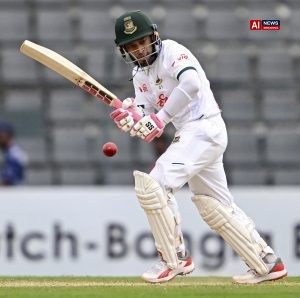
 Mushfiqur Rahim to retire from Test cricket in February 2027
De Villiers claims Australia’s 2018 ball tampering ‘started in Durban’
**

De Villiers claims Australia's 2018 ball tampering 'started in Durban' - AI News Breaking
villiers claims australias 2018:
Former South Africa captain AB de Villiers has sparked fresh debate over the origins of the 2018 ball‑tampering scandal that rocked Australian cricket, suggesting that the controversy began long before the infamous Sydney incident and that the first signs may have been visible during the opening Test of that series in Durban. Speaking to a panel of cricket analysts on a South African sports broadcast, de Villiers, who retired from international cricket in 2018, argued that the ball’s condition “reversed way too early” in the first Test, pointing to a pattern of behaviour that, in his view, predates the overt actions later in the Australian camp.De Villiers, who amassed 8,765 runs in 114 Tests and was widely praised for his innovative stroke‑play, said the ball’s premature reversal was evident from the footage of the match, which took place at Kingsmead between 28 February and 4 March 2018. “If you watch the swing and the seam movement, the ball was behaving oddly from the first day,” he asserted..
“It was not the usual wear and tear you’d expect after a few overs. Something had been done to it far earlier than anyone imagined.” His comments have drawn attention to the broader context of the series, which saw South Africa win 2‑1 and the Australian side subsequently embroiled in a high‑profile scandal involving the use of sandpaper to alter the ball’s condition.The allegations have reignited discussions about the prevalence of ball‑tampering across international cricket, a practice that, while illegal, has been alleged to occur in various forms and at different levels of the game. Historically, the International Cricket Council (ICC) has imposed strict penalties for any deliberate alteration of the ball, ranging from fines to bans for players and officials..
In 2018, after video evidence emerged of Australian bowler Cameron Bancroft using sandpaper, the Australian Cricket Board (now Cricket Australia) imposed a 12‑month ban on Bancroft, a 9‑month suspension on captain Steve Smith, and a 12‑month ban on vice‑captain David Warner, while also stripping the team of its World Cup and Test rankings points.De Villiers’ remarks raise questions about whether the manipulation of the ball was a systemic issue rather than an isolated incident. “We all know that the pressure to win in Australia is immense, but that doesn’t excuse the methods,” he said, adding that the focus on the Sydney Test had perhaps obscured earlier, subtler forms of tampering. “In Durban, the ball seemed to reverse its swing much earlier than the natural wear would dictate..
That should have raised eyebrows at the time.” He suggested that umpires and match officials might have missed or downplayed early signs, either due to lack of clarity in the laws or because the phenomenon was not yet associated with deliberate tampering.Cricket Australia’s current chief executive, Nick Hockley, responded to de Villiers’ statements in a brief press release, acknowledging the former player’s perspective but defending the thorough investigations that followed the 2018 incident. “The 2018 investigation was comprehensive and involved multiple independent experts,” Hockley wrote. “We remain committed to upholding the integrity of the game and continue to work with the ICC to ensure that any future concerns are addressed promptly and transparently.” He also noted that the governing body had introduced stricter ball‑handling protocols, including enhanced training for umpires and more rigorous equipment checks before each match.The ICC, which oversees the Laws of Cricket, has been under pressure to revisit its guidelines on ball tampering, especially after the 2018 revelations and subsequent incidents involving other nations..
In a recent meeting, the ICC’s playing conditions committee considered proposals to increase the number of spot‑checks on balls during play and to introduce a mandatory video review system for any unusual ball behaviour. While no final decision has been announced, the committee’s deliberations reflect a growing consensus that current measures may be insufficient to deter covert manipulation.Experts in sports ethics argue that the de Villiers commentary underscores a broader cultural problem within elite cricket, where competitive pressures can blur ethical boundaries. Dr Michele O’Connor, a professor of sports law at the University of Melbourne, highlighted that the “grey area” surrounding ball handling has long been exploited by players seeking an edge..
“The fact that a respected former player is pointing to early signs suggests that the issue may be more pervasive than previously thought,” she said. “It also emphasizes the need for clearer definitions and stricter enforcement to protect the sport’s credibility.”South African cricket fans have reacted with a mixture of surprise and vindication, with many taking to social media to applaud de Villiers for speaking out. Some commentators noted that South Africa’s own history with ball‑tampering allegations, notably the 2000 incident involving the use of a “shining” technique, adds a layer of complexity to the discussion..
Nonetheless, the prevailing sentiment among supporters is that de Villiers’ observations could prompt a re‑examination of past matches, potentially leading to a more nuanced understanding of how the game has evolved under competitive pressure.Meanwhile, former Australian players who were part of the 2018 squad have offered varied responses. Former fast bowler Mitchell Starc, who bowled in the Durban Test, defended the team’s conduct, stating that “the conditions in South Africa can be deceptive, and the ball does behave oddly at times.” In contrast, former Australian captain Michael Clarke, now a commentator, admitted that “the episode taught us all a hard lesson about the importance of transparency and the dangers of complacency.” He added that the team had since implemented stricter internal checks, a move he believes has reduced the risk of repeat incidents.As the cricket world continues to grapple with the legacy of the 2018 scandal, de Villiers’ assertion that the ball‑tampering saga may have begun in Durban adds a fresh dimension to an already complex narrative. Whether his claims will prompt formal investigations into the earlier match remains uncertain, but they have certainly reignited public scrutiny of the sport’s integrity mechanisms..
With the ICC expected to release new guidance later this year, the conversation sparked by de Villiers may influence policy decisions that aim to safeguard the game’s fairness for future generations..
Updated: November 24, 2026
De Villiers’ hindsight spotlights a systemic blind spot: if early ball‑behaviour anomalies went unchecked, the 2018 scandal was merely the visible tip of a deeper culture of covert advantage‑seeking.
Pressuring the ICC to codify “unusual swing” as a reportable offense could turn vague suspicion into enforceable standards, restoring credibility before the next scandal erupts.