The Supreme Court will decide whether assault weapons bans violate the Second Amendment
 A Critic of Beijing Falls Short in Taiwan’s Key Mayoral Election
 EPA says no rise in contamination after Army detonates lead azide stockpile in Iowa
 Israeli Strike Kills 2 Workers at Gaza Clinic, Doctors Without Borders Says
 McQueen Pre-Fall 2027
Samajwadi Party reveals 5 candidates for Uttar Pradesh Assembly elections
**
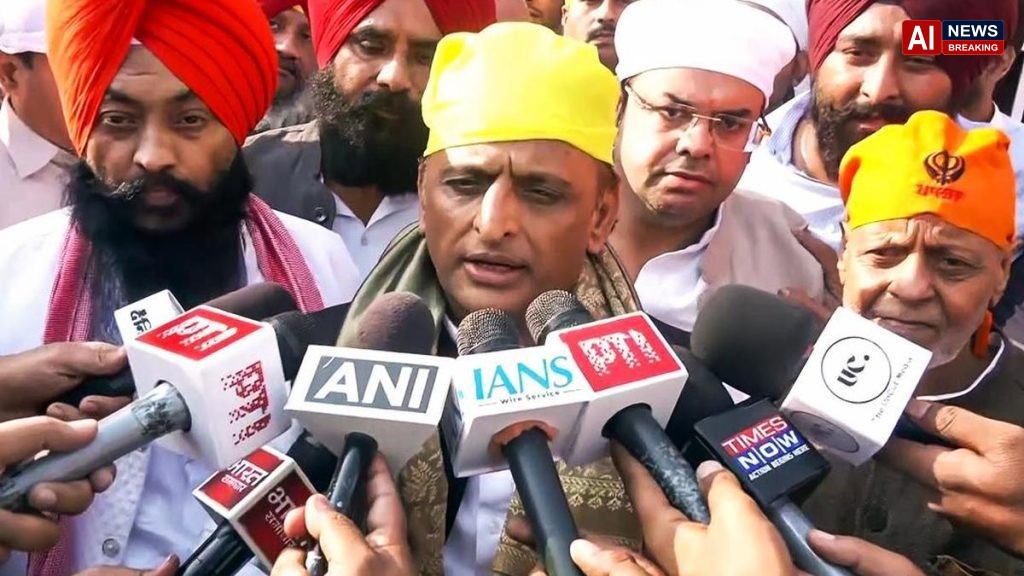
Samajwadi Party reveals 5 candidates for Uttar Pradesh Assembly elections - AI News Breaking
samajwadi party reveals candidates:
The Samajwadi Party (SP) has announced five candidates it will field in the upcoming Uttar Pradesh Legislative Assembly elections, a move that comes as the party continues intensive seat‑sharing talks with its long‑time ally, the Indian National Congress, in New Delhi. The list, released in a brief statement by the SP’s central leadership, includes a mix of seasoned legislators and fresh faces, reflecting the party’s attempt to balance experience with a drive to rejuvenate its electoral appeal across the state’s diverse constituencies.Among the five names disclosed, former minister and senior leader Azam Khan was confirmed for the Rampur constituency, a seat he has held since 1999 and where he enjoys a strong personal following. Khan, who has faced multiple legal challenges in recent years, is expected to rely on his deep-rooted networks among the Muslim electorate and his reputation as a grassroots activist..
The party’s decision to retain him, despite ongoing court cases, signals a calculated risk, betting on his ability to mobilise a sizable vote bank in a region where identity politics remains a pivotal factor.The second candidate named is Shivpal Singh Yadav, slated to contest from the Mainpuri district, a traditional stronghold of the Yadav family. Shivpal, who previously served as the state’s minister for public works and has been a vocal critic of internal party dynamics, is seen as a stabilising presence that could consolidate the SP’s rural base. His candidature is also viewed as an effort to mend fissures that emerged after the 2022 elections, when intra‑family rivalries threatened to fragment the party’s vote share.Joining them is former MP and veteran leader Dr..
Sukhbir Singh, chosen to stand in the Moradabad constituency, a seat known for its significant industrial population and a complex caste composition. Singh, a medical professional turned politician, has been active in local health initiatives and is expected to appeal to both the urban middle class and the agrarian communities. His selection underscores the SP’s strategy to field candidates with professional credentials, aiming to attract voters disillusioned with traditional politics.The fourth name on the list is a newcomer, Alka Sharma, a social activist from Lucknow who has led several women’s empowerment programmes in the city’s peripheral areas..
Sharma will contest from the Lucknow West constituency, a highly contested urban seat where the Bharatiya Janata Party (BJP) currently holds a marginal lead. Her candidature reflects the party’s push to present a fresh, gender‑balanced slate, attempting to tap into the growing demand for women’s representation in state legislatures. Observers note that her limited political experience may be offset by her strong community ties and advocacy record.Rounding out the quintet is senior farmer leader Rajendra Singh Chauhan, slated for the Etah constituency, a region that has witnessed fluctuating loyalties between the SP and the BJP in recent cycles..
Chauhan, who has led several farmer protests against rising input costs, is expected to galvanise the agrarian electorate by foregrounding issues such as loan waivers, irrigation schemes, and crop insurance. His inclusion signals the party’s intent to re‑engage with the rural base that it believes was alienated by the BJP’s development narrative.The announcement arrived amid a flurry of behind‑the‑scenes negotiations between the SP and the Congress, both of which have historically collaborated to challenge the BJP’s dominance in Uttar Pradesh. Sources close to the talks indicated that the two parties are still finalising a comprehensive seat‑sharing formula that would allocate roughly 30 per cent of the total 403 assembly seats to the Congress, while the SP would retain the remaining majority..
The precise distribution, however, remains fluid, with both sides wary of over‑promising to local leaders whose support is crucial for ground‑level campaigning.Political analysts suggest that the SP’s candidate list, while limited in number, is indicative of a broader tactical shift. By showcasing a blend of veteran politicians, professional entrants, and community activists, the party appears to be courting a wider demographic spectrum, aiming to counter the BJP’s narrative of development and good governance. The inclusion of high‑profile figures like Azam Khan and Shivpal Singh Yadav also serves to reassure the party’s core supporters, who have remained loyal despite recent internal discord and electoral setbacks.The Congress, on its part, has refrained from naming its own candidates pending the finalisation of the seat‑sharing agreement, but senior party officials have hinted at a parallel strategy of fielding candidates with strong local roots and a record of social service..
A spokesperson for the Congress declined to comment on the specifics of the negotiations, citing the need to maintain “strategic confidentiality” as the parties work towards a mutually beneficial arrangement.The Uttar Pradesh assembly election, scheduled for early 2027, is poised to become one of the most closely watched contests in Indian politics, given the state’s 80‑seat contribution to the Lok Sabha and its status as a bellwether for national trends. The BJP, currently governing the state under Chief Minister Yogi Adityanath, enjoys a robust organizational network and has leveraged welfare schemes such as the “One Nation One Ration Card” to consolidate its rural support. Yet, the opposition’s efforts to present a united front could reshape the electoral dynamics, especially if the SP‑Congress alliance manages to avoid internal friction and present a coherent alternative agenda.As the political calendar tightens, the five SP candidates will embark on intensive door‑to‑door campaigns, public rallies, and media engagements to solidify their positions ahead of the formal filing of nominations, due by the end of the month..
Voter sentiment surveys conducted by independent agencies indicate a modest swing towards the opposition bloc, though the BJP retains a comfortable lead in most urban pockets. The forthcoming weeks are expected to witness heightened political activity, with both the SP and the Congress keen to demonstrate their readiness to challenge the incumbent government and offer a credible alternative for Uttar Pradesh’s 240 million residents..
By pairing entrenched vote‑bank icons with fresh, professionally‑credentialed faces, the SP is trying to re‑brand itself as a coalition of experience and renewal, betting that identity politics can coexist with a demand for technocratic credibility. If the SP‑Congress seat‑share holds, this hybrid roster could force