The Supreme Court will decide whether assault weapons bans violate the Second Amendment
 A Critic of Beijing Falls Short in Taiwan’s Key Mayoral Election
 EPA says no rise in contamination after Army detonates lead azide stockpile in Iowa
 Israeli Strike Kills 2 Workers at Gaza Clinic, Doctors Without Borders Says
 McQueen Pre-Fall 2027
A Lion on the Loose Near Istanbul? Not So Fast.
**
A Lion on the Loose Near Istanbul? Not So Fast. - AI News Breaking
lion loose near istanbul:
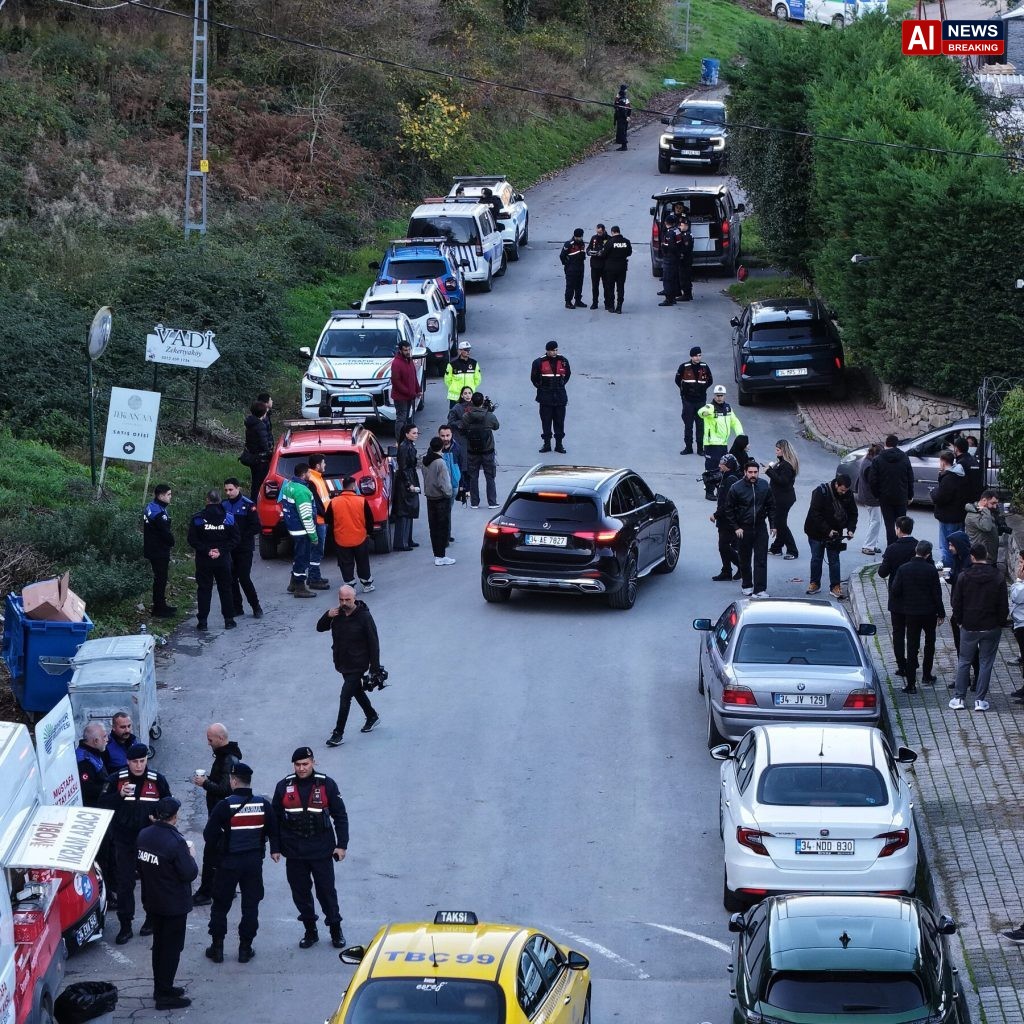
A blurry image captured by a traffic camera on the outskirts of Istanbul last week set off a cascade of alerts, social media speculation and an extensive police operation. The grainy footage appeared to show a large animal, its shape and movement suggesting the possibility of a lion, roaming along a highway that links the city with the industrial district of Tuzla. Within hours, the Turkish police, municipal authorities and wildlife officials mobilised a coordinated search, deploying drones, helicopters and ground teams in an effort to locate the animal and ensure public safety..
The episode quickly went viral, prompting questions about the plausibility of a big‑cat escape, the reliability of surveillance technology and the readiness of urban emergency services to respond to such an unlikely threat.The video, posted on a local community forum, showed a dark silhouette moving at a steady pace near the median strip of the O‑4 highway. Although the animal’s head was not clearly visible, its size relative to the surrounding vehicles led some commentators to describe it as “lion‑like”. Within minutes, the clip was shared on Twitter and Facebook, accompanied by captions such as “Lion on the loose!” and “Turkey’s biggest wildlife emergency”..
The hashtag #IstanbulLion trended locally, attracting both genuine concern and a wave of memes that satirised the notion of a predator prowling through one of the world’s most populous cities.In response, Istanbul’s Metropolitan Police announced the formation of a special task force, headed by the city’s chief of public safety, to investigate the claim. The department’s statement, released on its official website, emphasised that “the safety of residents and commuters is our top priority” and that “all necessary resources are being allocated to verify the presence of any large animal and to secure the affected area”. The police coordinated with the Turkish Forest and Water Management Authority (TUİK) and the Ministry of Agriculture and Forestry, which together dispatched a team of wildlife biologists, veterinarians and experienced big‑cat handlers from the Ankara Zoological Garden.Over the following 48 hours, a fleet of DJI Mavic drones equipped with thermal imaging cameras scanned the highway corridor, while two Eurocopter AS350 helicopters conducted aerial sweeps at low altitude..
Ground units set up checkpoints at key entry points, directing traffic away from the suspected location and distributing leaflets warning drivers to remain vigilant. The operation was supported by local municipalities, which temporarily closed several on‑ramps and deployed additional traffic police to manage congestion. By the end of the second day, however, no concrete evidence of a lion—or any other large carnivore—had been found.The lack of physical traces raised doubts among experts, prompting a more measured assessment of the situation..
Dr Ayşe Kılıç, a senior wildlife ecologist at Istanbul University, told reporters that “the probability of a wild lion being present in the European part of Turkey is virtually nil”. She explained that lions have been extinct in the wild on the Turkish mainland for over a century, and that any surviving individuals would be confined to protected reserves in Africa or, at most, private collections subject to strict licensing. “If a lion were to appear here, it would have to be the result of a deliberate illegal import or a severe breach of zoo security, both of which would leave a trail of documentation and forensic evidence,” Kılıç added.Meanwhile, a separate line of inquiry focused on the technical aspects of the surveillance footage itself..
The camera in question, part of a network managed by the Istanbul Metropolitan Municipality’s traffic department, records at a low frame rate and compresses images to conserve storage. Independent analysts who examined the clip noted that the animal’s gait, the length of its stride and the pattern of its shadow were inconsistent with a lion’s anatomy. “What we are seeing could easily be a large dog, a stray donkey or even a piece of cargo moving with the wind,” said Emre Demir, a forensic video specialist who consulted for a Turkish news agency..
Demir’s analysis highlighted the danger of drawing definitive conclusions from low‑resolution, motion‑blurred imagery, especially when the content is amplified by social media.The incident also sparked a broader discussion about the role of misinformation in emergency response. According to a study published last month by the Turkish Academy of Sciences, false alarms related to wildlife incursions have increased by 27 percent over the past five years, largely driven by viral online content. The study warned that such incidents can divert critical resources, create unnecessary public panic and erode trust in official communications..
In the case of the alleged lion, the rapid escalation from a shaky video to a city‑wide search illustrates how quickly speculation can outpace verification.As the search continued, authorities turned their attention to potential sources of the animal, should it exist. The Ministry of Agriculture and Forestry confirmed that all legally registered zoos, wildlife parks and private collections in the Istanbul region undergo routine inspections, and no reports of missing animals were logged in the past month. Nevertheless, officials did not dismiss the possibility of an illicit smuggling operation..
“Turkey is a transit point for wildlife trafficking, and we remain vigilant against any attempts to move large exotic species across our borders,” said a spokesperson for the Ministry’s Directorate of Wildlife Protection.By the third day, the police announced a shift in strategy, moving from active hunting to a more passive monitoring approach. The task force reduced aerial patrols and focused on gathering community reports, urging residents to report any unusual sightings through a dedicated hotline. Simultaneously, the Istanbul Metropolitan Police released a public statement acknowledging that, at that stage, “the existence of a lion or any comparable predator on the highway remains unconfirmed”..
The statement called for calm, emphasizing that no injuries or accidents had been reported in connection with the alleged animal.In the end, the search concluded without any definitive proof of a lion’s presence. The final report, issued by the Istanbul Police Department and the Ministry of Agriculture and Forestry, classified the incident as “inconclusive”, citing insufficient evidence to confirm or refute the claim. The report also noted that no tracks, droppings, blood, hair or DNA samples were recovered, and that the thermal scans failed to register any large warm‑blooded creature in the area during the operation..
The authorities praised the cooperation between multiple agencies and highlighted the value of rapid inter‑departmental communication, even as they acknowledged the resources expended on a case that may have been founded on a misinterpreted image.Public reaction to the outcome was mixed. While some citizens expressed relief that no dangerous animal was roaming the streets, others criticised the scale of the response as disproportionate. A petition circulating on an online platform called for a review of emergency protocols, arguing that “future alerts.
Updated: November 24, 2026
A blurry traffic‑camera clip set off a citywide hunt for a supposed lion on an Istanbul highway, prompting drones, helicopters and wildlife experts to scour the area. No evidence emerged, and officials declared the case inconclusive, warning that viral footage can trigger costly, unnecessary emergency responses.
The swift, costly response to a blurry clip shows how fragile public trust is when social media turns speculation into crisis, forcing agencies to deploy resources on unverified threats. This episode underscores the urgent need for clearer protocols that balance rapid action with rigorous evidence‑gathering, lest misinformation erode confidence in official communications.