The Supreme Court will decide whether assault weapons bans violate the Second Amendment
 A Critic of Beijing Falls Short in Taiwan’s Key Mayoral Election
 EPA says no rise in contamination after Army detonates lead azide stockpile in Iowa
 Israeli Strike Kills 2 Workers at Gaza Clinic, Doctors Without Borders Says
 McQueen Pre-Fall 2027
Social polarisation will replace communal polarisation in UP: Ramji Lal Suman
**
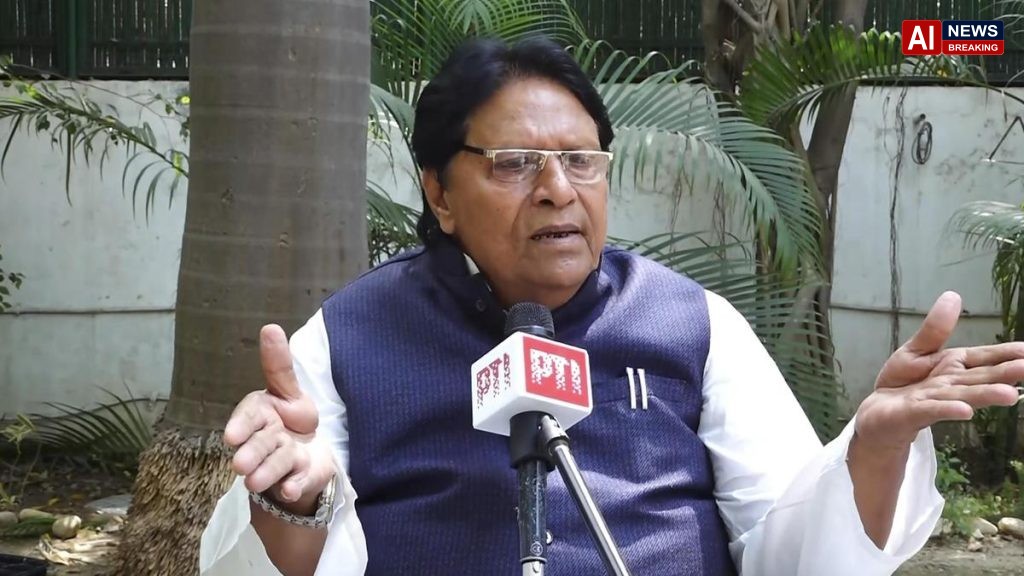
Social polarisation will replace communal polarisation in UP: Ramji Lal Suman - AI News Breaking
The Rajya Sabha member Ram Jai Lal Suman, who also serves as the National General ary of the Samajwadi Party, warned that the pattern of communal polarisation that has dominated Uttar Pradesh’s politics for decades is giving way to a broader social polarisation, a shift he says will undermine the Bharatiya Janata Party’s grip on the state. Speaking at a press conference in Lucknow, Suman argued that the BJP, once able to marshal the support of marginalised groups as “foot soldiers of Hindutwa,” is now increasingly as its reliance on religious rhetoric fails to resonate with a public that is growing weary of sectarian divides. He suggested that the party’s strategy, which has historically blended development promises with an emphasis on Hindu identity, is being challenged by a more inclusive, progressive sentiment that cuts across caste, class and regional lines.Suman’s assessment came amid a series of recent electoral setbacks for the BJP in the state’s municipal and local body polls, where the party’s vote share slipped in several districts that had previously been strongholds..
Analysts have pointed to a combination of factors, including farmer distress, unemployment and perceived erosion of law and order, as contributing to a decline in the party’s popularity. “The narrative of ‘one nation, one culture’ is losing its potency,” Suman said, noting that the electorate is increasingly prioritising issues such as education, health care and job creation over identity politics. “When people see that the promises made by the ruling party are not translating into tangible improvements in their daily lives, they begin to look for alternatives.”The Samajwadi Party, which has historically drawn support from OBCs, Muslims and the rural poor, sees the changing dynamics as an opportunity to broaden its appeal..
Suman highlighted the party’s recent outreach to Dalit leaders, women’s groups and youth organisations as evidence of a strategic pivot towards a more inclusive platform. “We are no longer a party that only speaks to a single segment of society,” he asserted. “Our agenda now embraces the aspirations of every citizen, irrespective of caste, creed or economic status.” By positioning itself as a champion of progressive values, the party hopes to attract voters disillusioned with the BJP’s increasingly polarising discourse.In addition to outlining a new political calculus for the Samajwadi Party, Suman addressed the Congress, urging it to adopt a pragmatic stance in forthcoming seat‑sharing talks..
He cautioned that the opposition’s failure to present a united front could squander the momentum generated by the current public mood. “The Congress must recognise that ideology alone will not win elections; it must engage in realistic negotiations that reflect ground realities,” he said. “If we want to offer a credible alternative to the BJP, we need to move beyond nostalgic politics and focus on concrete, people‑centric solutions.”Suman’s comments echo a broader trend observed by political scientists, who note that India’s electorate is becoming more issue‑oriented, especially among younger voters who are increasingly connected to digital media and global narratives..
A recent survey by the Centre for the Study of Developing Societies indicated that nearly 62 percent of respondents in Uttar Pradesh identified economic development and employment as their primary concerns, while only 27 percent cited religious identity as a decisive factor. This shift, analysts say, could reshape the state’s political landscape, compelling parties to recalibrate their messages and policy priorities.The BJP, for its part, has defended its record, pointing to infrastructure projects, digital initiatives and welfare schemes such as the Pradhan Mantri Awas Yojana and the Ujjwala LPG connection programme. Party spokespersons argue that the party’s vision of a “developmental Hindutwa” remains relevant to a majority of voters who appreciate the economic growth achieved during the last decade..
Nonetheless, internal sources reveal that senior leaders are grappling with how to address the growing disenchantment among traditional vote banks, particularly among Dalits and OBCs who feel sidelined by the party’s emphasis on upper‑caste narratives.Opposition leaders, while welcoming Suman’s optimism, warned that the road ahead is fraught with challenges. Former chief minister Akhilesh Yadav, speaking at a rally in Varanasi, cautioned that “fragmentation of the anti‑BJP front would simply hand the victory back to the incumbent.” He called for a “sensible coalition” that would pool resources and coordinate campaign strategies across constituencies. Similarly, senior Congress figure Rahul Gandhi, during a recent interview, underscored the need for “dialogue over division” and advocated for a seat‑sharing formula that respects the regional strengths of each party while avoiding duplication of candidates.The stakes of the upcoming state elections, scheduled for early next year, are high..
With the Uttar Pradesh Legislative Assembly comprising 403 seats, a decisive victory for any single party could set the tone for national politics, influencing the balance of power in the Rajya Sabha and the upcoming general elections. Experts warn that if the opposition fails to co‑ordinate effectively, the BJP may still secure a comfortable majority despite the current undercurrents of dissent. Conversely, a well‑orchestrated alliance could potentially break the BJP’s dominance in a state that has been its stronghold for more than a decade.Suman concluded by reiterating his confidence that “the tide is turning.” He urged all political actors to listen to the aspirations of the common man, emphasizing that the future of Uttar Pradesh hinges on inclusive development rather than divisive rhetoric..
“When the marginalized no longer become foot soldiers of any ideology, we move towards a truly democratic society,” he said. The remarks have sparked a lively debate across newsrooms, social media platforms and academic circles, with commentators dissecting the feasibility of the Samajwadi Party’s outreach strategy and the Congress’s willingness to compromise. As the election calendar tightens, the coming months will reveal whether the predicted shift from communal to social polarisation will indeed reshape the political fortunes of Uttar Pradesh’s major parties..
Updated: November 26, 2026
Rajya Sabha MP Ram Jai Lal Suman warned that Uttar Pradesh’s long‑standing communal divide is giving way to broader social polarisation, eroding the BJP’s hold as voters prioritize jobs, health and education. He said the Samajwadi Party’s outreach to Dalits, women and youth aims to capitalize on this shift, while urging the Congress to forge a pragmatic alliance to challenge the BJP.