The Supreme Court will decide whether assault weapons bans violate the Second Amendment
 A Critic of Beijing Falls Short in Taiwan’s Key Mayoral Election
 EPA says no rise in contamination after Army detonates lead azide stockpile in Iowa
 Israeli Strike Kills 2 Workers at Gaza Clinic, Doctors Without Borders Says
 McQueen Pre-Fall 2027
Centre seeks three-day special sitting of Parliament from 30 November
**
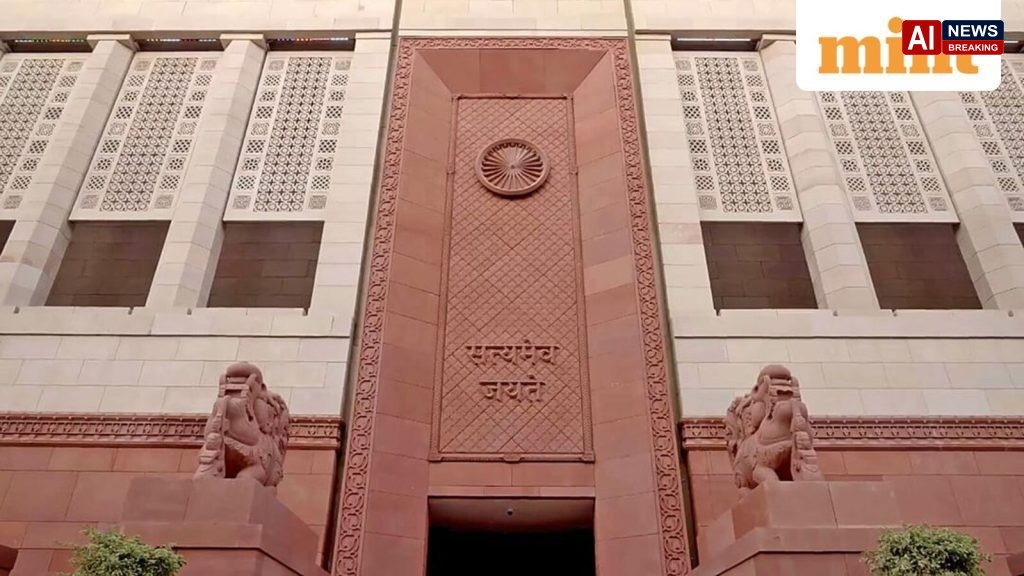
Centre seeks three-day special sitting of Parliament from 30 November - AI News Breaking
centre seeks threeday special:
The Union government has formally asked both houses of Parliament to convene for an extraordinary three‑day session that would begin on 30 November, with the Lok Sabha meeting on that day and the Rajya Sabha reconvening on 2 December. The request, submitted by the Ministry of Parliamentary Affairs, cites a “pressing need” to clear a backlog of pending legislation and to address several matters that the government deems critical ahead of the year‑end. While the official communique makes no explicit reference to any single bill, political analysts say the timing is closely linked to two contentious proposals that have dominated parliamentary debate in recent weeks: the Women’s Reservation Bill, which seeks to earmark a proportion of seats in the Lok Sabha and state legislatures for women, and the Delimitation Bill, which would redraw constituency boundaries based on the 2021 census.The government’s plea for a special sitting arrives against a backdrop of mounting pressure to resolve these issues before the next general election cycle..
The Women’s Reservation Bill, first introduced in 1996 and revived multiple times, aims to reserve 33 per cent of seats for women in the lower house and state assemblies. Proponents argue that such a quota is essential to correct the chronic under‑representation of women in Indian politics, which stands at roughly 14 per cent in the Lok Sabha. Critics, however, contend that the bill could disrupt existing party dynamics and may not be the most effective means of empowering women at the grassroots level..
The bill’s fate has been uncertain ever since the Lok Sabha voted it down in 2010, and despite renewed calls from the opposition and civil society groups, it has yet to secure a majority in the current Parliament.Parallel to the women’s quota debate, the Delimitation Bill has resurfaced after a long hiatus. The last delimitation exercise was carried out in 2002, based on the 2001 census, and the subsequent freeze on the number of seats allocated to each state was extended until after 2026. The present government, however, has signalled its intention to move forward with a fresh delimitation exercise, arguing that demographic shifts—particularly the rapid urbanisation and population growth in several states—necessitate a realignment of constituencies to ensure equitable representation..
The Bill proposes to use the 2021 census data, which would likely increase the number of seats for high‑growth states such as Uttar Pradesh, Bihar and Maharashtra, while reducing them for states with slower growth, notably those in the Northeast and the South. This redistribution has sparked fierce debate, with some regional parties warning that it could erode their electoral base.The request for a three‑day session also includes a list of routine matters, such as the passage of the annual financial statement, the approval of the Finance Bill, and the consideration of several pending bills related to taxation, corporate governance and social welfare. The Finance Bill, which accompanies the Union Budget presented in early February, has been pending since the budget’s introduction and is expected to be tabled during the special sitting..
The government’s inability to clear the Finance Bill has already caused concern among investors, who view the timely passage of fiscal legislation as a barometer of parliamentary efficiency and policy stability.Political parties have responded to the request with a mixture of cautious optimism and strategic positioning. The ruling Bharatiya Janata Party (BJP) has welcomed the opportunity to push its legislative agenda forward, emphasising that the special sitting will demonstrate the government’s commitment to “effective governance” and “prompt delivery of policies”. Senior BJP spokespersons have hinted that the Women’s Reservation Bill could be placed on the agenda, but have also suggested that any amendment would be subject to “broad consensus” to avoid polarising the house..
Opposition parties, led by the Indian National Congress and a coalition of regional parties, have seized the moment to call for a “transparent and inclusive debate” on both the women’s quota and delimitation proposals, warning that any hasty decision could exacerbate existing social and regional inequalities.In the Lok Sabha, the opposition is expected to raise procedural objections, including a demand for a detailed discussion on the methodology of the delimitation exercise and the criteria for allocating reserved seats to women. Several MPs have already submitted written motions requesting the formation of a parliamentary committee to examine the implications of the Women’s Reservation Bill, arguing that a comprehensive impact assessment is essential before the bill is taken up for a floor vote. The government, for its part, has signalled that it will seek to limit debate time in order to expedite the passage of the Finance Bill and other priority legislation, a move that could trigger further procedural clashes.The Rajya Sabha, scheduled to reconvene on 2 December, will likely face a different set of dynamics..
Historically, the upper house has been more receptive to the Women’s Reservation Bill, with several members expressing support for increased gender parity. However, the delimitation issue remains a thorny subject, particularly for parties representing states that could lose seats under the proposed reallocation. Senior leaders from the All India Trinamool Congress and the Dravida Munnetra Kazhagam have warned that any delimitation without adequate safeguards could undermine federal balance and fuel regional discontent..
The government’s approach to these concerns will be closely watched, as the upper house’s consent is essential for the bills to become law.Observers note that the three‑day window is unusually tight for the consideration of such weighty reforms. The parliamentary calendar, already crowded with committee reports, questions, and the pending implementation of several flagship schemes, leaves little room for extensive debate. Moreover, the proximity of the session to the festive season—when many MPs return to their constituencies—could affect attendance and the depth of discussion..
Some experts have suggested that the government might use the session primarily to secure procedural approvals, such as the introduction of the bills and the setting of a timetable for further debate, rather than to achieve final passage.The broader political context adds another layer of complexity. With state elections scheduled in several key regions over the next twelve months, parties are keen to demonstrate legislative productivity while also catering to regional sensibilities. The Women’s Reservation Bill, if passed, could become a rallying point for parties seeking to court women voters, whereas the delimitation exercise could reshape electoral maps in ways that advantage or disadvantage incumbents..
The BJP, which currently enjoys a strong majority in the Lok Sabha, may calculate that advancing these reforms now would cement its narrative of progressive governance, even as it navigates potential backlash from regional allies.Public reaction to the announced special sitting has been mixed. Women’s rights organisations have welcomed the prospect of finally moving the quota bill forward, organising rallies and social media campaigns to press parliamentarians for a decisive vote. Conversely, some civil society.
Updated: November 26, 2026
The government has called an extra three‑day parliamentary session from 30 Nov to 2 Dec to clear a legislative backlog, with the Women’s Reservation Bill and the Delimitation Bill expected to dominate debate. Parties brace for intense negotiations as the schedule tightens ahead of year‑end elections and looming state polls.
A rushed three‑day session risks turning landmark reforms into procedural theater, letting the government claim legislative vigor while sidestepping the deep, consensus‑building debate women’s quotas and delimitation demand.
If the bills slip through on speed rather than scrutiny, the resulting policy shockwaves could destabilise regional balances and erode public trust just as the electoral calendar tightens.