The Supreme Court will decide whether assault weapons bans violate the Second Amendment
 A Critic of Beijing Falls Short in Taiwan’s Key Mayoral Election
 EPA says no rise in contamination after Army detonates lead azide stockpile in Iowa
 Israeli Strike Kills 2 Workers at Gaza Clinic, Doctors Without Borders Says
 McQueen Pre-Fall 2027
President Murmu launches 12‑month plan to reduce court backlog
** In a landmark address at the Supreme Court’s Constitution Day celebrations, President Draupadi Murmu launched a 12‑month, three‑tiered strategy to tackle the chronic backlog of Indian courts. The plan earmarks ₹6 billion for new courtrooms and digital hubs, introduces fast‑track dockets for small‑value claims, expands the e‑Courts portal to 85 % of filings, and deploys AI‑driven case‑allocation tools, while also raising lower‑court judges’ salaries and promoting ADR to accelerate
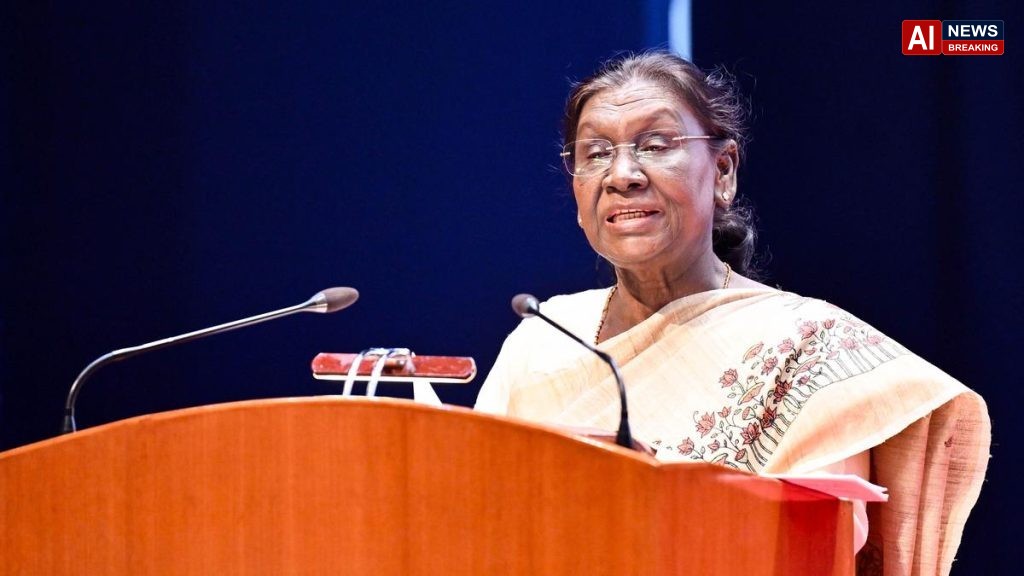
Pendency a challenge to justice delivery, says President - AI News Breaking
president murmu launches 12month:
Pendency a challenge to justice delivery, says President The Supreme Court’s Constitution Day celebrations on Tuesday turned into a rare platform for the nation’s head of state to address a long‑standing grievance of the legal system: pendency. President Draupadi Murmu, presiding over a gathering of judges, lawyers and civil‑society representatives, warned that the growing backlog of cases was eroding public confidence in the rule of law. She underscored that timely justice is not a luxury but a constitutional imperative, echoing Article 21’s guarantee of “the right to a speedy trial”..
Her remarks set the tone for a series of announcements on reforms aimed at unclogging the courts. Murmu began by outlining a three‑tiered strategy the government intends to roll out over the next twelve months. The first tier focuses on expanding infrastructure, with an allocation of ₹6 billion for new courtrooms, digital filing hubs and satellite benches in underserved districts..
“Physical space has become a bottleneck,” she noted, citing a recent survey that found 28 per cent of district courts operating beyond capacity. The investment will also fund upgrades to existing facilities, including air‑conditioning and disability‑friendly access, to ensure that the environment does not deter litigants from seeking redress. The second tier centres on procedural overhaul..
The President highlighted the impending amendment to the Code of Civil Procedure, which will introduce a “fast‑track” docket for cases involving personal injury, consumer disputes and small‑value claims under ₹5 million. Under the new rules, such matters must be resolved within 90 days of filing, a significant reduction from the current average of 450 days. Judges will be equipped with a “time‑budget” tool that flags cases at risk of delay, prompting early intervention by senior judges or case managers..
Technology, the President said, will be the linchpin of the third tier. The government plans to expand the e‑Courts portal to cover 85 per cent of all civil and criminal filings by the end of the fiscal year, up from the present 62 per cent. A pilot programme in Karnataka, which introduced video‑conferencing for pre‑trial hearings, has already cut waiting times by 30 per cent..
Murmu announced a partnership with the National Informatics Centre to develop AI‑driven case‑allocation algorithms that will match judges’ expertise with the nature of each docket, reducing mismatches that often stall progress. Addressing the legal fraternity, the President stressed that reforms must be balanced with the independence of the judiciary. “Speed cannot come at the cost of fairness,” she warned, recalling past controversies where rushed judgments led to reversible errors..
To safeguard due process, a new oversight committee comprising senior judges, senior advocates and members of civil society will be instituted. The committee’s remit will include quarterly audits of case‑flow statistics and the authority to recommend corrective measures to both the judiciary and the executive. The President also paid tribute to the Supreme Court’s own initiatives, citing the “National Judicial Data Grid” as a game‑changer in transparency..
Since its launch in 2018, the database has allowed the public to track the status of thousands of cases in real time, prompting greater accountability. Murmu urged state high courts to replicate the model, noting that uniform data standards would enable better comparative analysis and foster a culture of performance benchmarking across the country’s judicial network. In a surprising turn, Murmu announced a modest increase in the remuneration of lower‑court judges, citing research that links competitive salaries to reduced attrition and higher morale..
The proposed 8 per cent rise, to be funded through the judicial infrastructure budget, aims to attract talent from the private sector and retain experienced jurists. “A well‑compensated bench is less likely to seek alternative employment, which in turn curtails delays caused by frequent vacancies,” she explained. The President’s speech also touched upon alternative dispute resolution (ADR) mechanisms, which have long been touted as a remedy for case overload..
The government will launch a nationwide “ADR Awareness Campaign” targeting both urban and rural populations, encouraging mediation, arbitration and conciliation as first‑stop options for civil disputes. Funding will be earmarked for training mediators and establishing community mediation centres, especially in tribal and remote areas where access to formal courts remains limited. Murmu’s remarks were met with cautious optimism by the legal community..
Venugopal praised the focus on digital tools but warned that “technology alone cannot fix a system strained by chronic understaffing.” He called for an accelerated recruitment drive for judges and court staff, arguing that the current vacancy rate of 23 per cent in district courts is a primary driver of backlog. The President acknowledged this point, promising that the upcoming parliamentary budget will include a “judicial recruitment boost” to fill vacant posts within 18 months. Civil‑society groups, represented by the National Forum of Women’s Rights, welcomed the emphasis on speedy justice for vulnerable litigants..
They highlighted that women and children are disproportionately affected by delays in family‑law cases, such as maintenance and custody disputes. The forum urged the government to prioritize fast‑track courts for gender‑sensitive matters and to ensure that the AI allocation system does not inadvertently perpetuate biases against marginalized groups. International observers noted that India’s pendency problem mirrors trends in other large democracies, but the President’s comprehensive approach could set a benchmark..
A delegation from the Commonwealth Judicial Council, present at the ceremony, lauded.
Updated: November 26, 2026
India’s new “speed‑first” judicial blueprint could finally turn back the tide of public cynicism, but its reliance on AI and fast‑track dockets risks sidelining the nuanced, equity‑driven judgments that safeguard vulnerable litigants.
If the infrastructure and recruitment bursts outpace cultural shifts within