The Supreme Court will decide whether assault weapons bans violate the Second Amendment
 A Critic of Beijing Falls Short in Taiwan’s Key Mayoral Election
 EPA says no rise in contamination after Army detonates lead azide stockpile in Iowa
 Israeli Strike Kills 2 Workers at Gaza Clinic, Doctors Without Borders Says
 McQueen Pre-Fall 2027
Police investigate drug‑spiked concert robbery
**
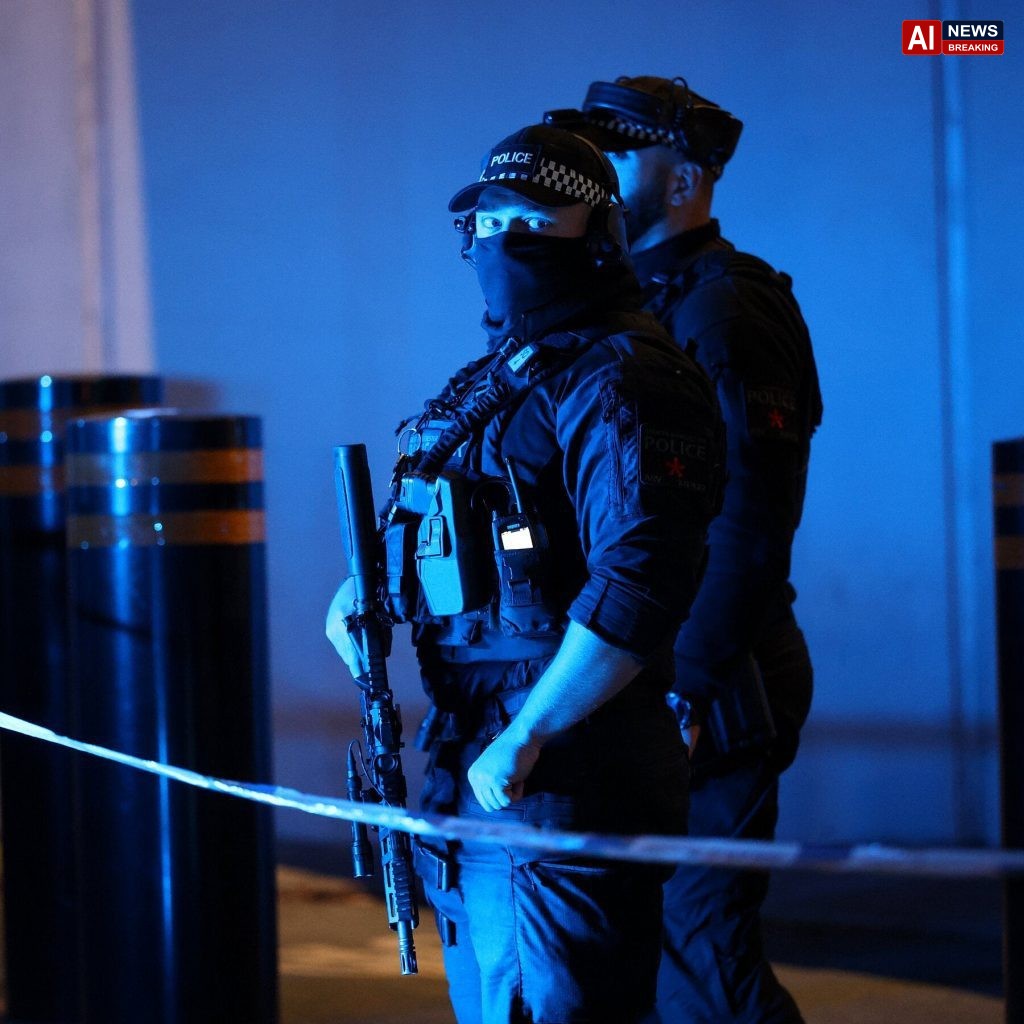
Police Link Release of Substance at Don Toliver Concert to Robbery Attempts - AI News Breaking
police investigate drugspiked concert:
Police in Manchester have said that the release of a psycho‑active substance at a Don Toliver concert on Sunday night was part of a coordinated effort by organised criminals to facilitate a string of robberies among the crowd. The Metropolitan Police’s Manchester Command released a statement after officers responded to a large‑scale incident at the Manchester Arena, where the American rapper performed to a capacity audience of around 21,000 people. Investigators believe that the drug, identified as a synthetic cannabinoid, was deliberately dispersed in the vicinity of the stage in order to impair attendees and create the conditions for opportunistic theft.The incident unfolded shortly after the headline act took to the stage, when witnesses reported a sudden, pungent odour spreading through the lower tiers of the arena..
Several concert‑goers complained of feeling light‑headed, nauseous and disoriented, with some describing a “mild euphoria” that quickly gave way to confusion. Ambulance crews were called to the venue, and the on‑site medical team treated more than 70 individuals for symptoms consistent with exposure to a potent psycho‑active compound. By the time the concert concluded, paramedics had transported a further 12 people to local hospitals for observation, although none required intensive care.In the aftermath, venue security footage was reviewed alongside statements from attendees, revealing a pattern of coordinated activity..
Video evidence showed small groups moving through the aisles at the same moments the odour was reported, each brandishing bags and backpacks that later appeared empty. The police noted that the perpetrators seemed to target individuals who were alone or appeared vulnerable, often approaching them under the pretext of offering assistance or “checking if they were okay”. Once the victims were disoriented by the drug, the assailants seized wallets, phones and other valuables before slipping away into the crowd.Detective Inspector Laura Hughes, leading the investigation, told a press conference that “the timing and method of the substance’s release suggest a level of planning that goes beyond a spontaneous act”..
She added that officers are treating the case as a serious organised crime operation, with links to a broader network that has been active in the North West region. “We have already identified a number of suspects who were observed distributing the substance from concealed containers,” she said, “and we are working closely with national drug enforcement units to trace the source of the compound.”The synthetic cannabinoid in question, identified by forensic analysts as “AB‑CHMINACA”, is classified as a Class B drug under the Misuse of Drugs Act 1971. It is known for its rapid onset of psycho‑active effects and can cause severe psychological distress, particularly when administered without the user’s knowledge..
The police warned that the unregulated nature of such substances makes them especially dangerous, as doses cannot be accurately measured and the chemicals often contain harmful adulterants. Health officials have urged anyone who attended the concert and experienced lingering symptoms, such as anxiety, heart palpitations or persistent dizziness, to seek medical advice promptly.Manchester City Council’s chief executive, Sir Richard Leese, expressed concern over the incident, emphasizing the need for stronger safeguards at large public events. “Our priority is the safety and well‑being of residents and visitors,” he said, “and we will be reviewing security protocols in partnership with venue operators, law enforcement and health services to prevent a repeat of what happened on Sunday.” The council has already commissioned an independent review of crowd‑control measures, focusing on how substances can be introduced into enclosed spaces and the effectiveness of on‑site medical response teams.The Manchester Arena, owned by the O2 brand, released a statement affirming its commitment to the safety of patrons..
It noted that the venue’s existing security framework includes bag checks, metal detectors and a network of trained staff to monitor crowd behaviour. However, the statement acknowledged that “the covert nature of the substance’s delivery presented a unique challenge” and that the management team would cooperate fully with the ongoing police investigation. The arena also announced that it would be upgrading its ventilation and air‑monitoring systems to detect volatile compounds more quickly in future events.Legal experts have highlighted the difficulty of prosecuting cases that involve the covert distribution of psycho‑active substances at mass gatherings..
Professor Emily Carr of the University of Manchester’s School of Law explained that “the prosecution must prove both the act of administering the drug without consent and the intent to facilitate theft, which can be a complex evidentiary hurdle.” She added that successful convictions often rely on a combination of forensic evidence, digital surveillance and testimony from victims who can recall the sequence of events despite the impairing effects of the drug.In the weeks following the concert, several individuals have come forward with claims of lost property and financial loss. A 22‑year‑old student from Leeds reported that his wallet, containing £200 in cash and his university identification, vanished while he was standing near the front of the stage. He recounted that a stranger handed him a bottle of water, after which he felt “a sudden wave of dizziness” and later discovered his belongings missing..
Similar accounts have been logged by at least 18 other attendees, prompting the police to establish a dedicated hotline for victims to report stolen items and provide statements.The investigation has also prompted a wider discussion about the role of social media in facilitating criminal activity at concerts. Police have traced several of the suspected perpetrators to online forums and messaging apps where instructions on “spiking crowds” were allegedly exchanged. While the authenticity of these messages is still being verified, the police have warned that the digital environment can be exploited by criminal groups to coordinate illicit activities, ranging from drug distribution to coordinated thefts, especially in settings where large crowds provide cover.As the Manchester police continue to gather evidence, they have appealed to the public for any additional information that might assist the inquiry..
Detective Inspector Hughes emphasized the importance of “even the smallest detail”, urging anyone who observed unusual behaviour, noticed unfamiliar objects being handed out, or experienced unexplained symptoms to contact the dedicated line. She reiterated that the operation is ongoing and that arrests are likely to be made as the investigative team pieces together the full scope of the organised crime network behind the incident.The incident at the Don Toliver concert has reignited calls for a national review of safety standards at music venues, particularly in light of a string of recent attacks across the UK that have targeted large public gatherings. While the police have assured the public that steps are being taken to disrupt the criminal network responsible, the episode serves as a stark reminder of the evolving tactics employed by organised groups seeking to exploit the vulnerabilities inherent in mass‑attendance events..
The outcome of the Manchester investigation will.
Police say a synthetic cannabinoid was deliberately sprayed at the Don Toliver concert in Manchester, leaving dozens ill and enabling a coordinated gang to rob disoriented fans, and they are now probing a wider organised‑crime network. venue officials and city leaders pledge tighter security and upgraded detection systems to prevent a repeat.
The audacious use of a synthetic cannabinoid to blind a crowd and rob them signals a new, drug‑enabled frontier for organized crime, forcing venues and law‑enforcement to treat concert security as a battlefield rather than a logistics chore.
If regulators and promoters fail to embed rapid chemical detection and digital‑intel monitoring into event design, the line between entertainment and crime‑scene will blur, eroding public confidence in mass gatherings.