
 The Supreme Court will decide whether assault weapons bans violate the Second Amendment
 A Critic of Beijing Falls Short in Taiwan’s Key Mayoral Election
 EPA says no rise in contamination after Army detonates lead azide stockpile in Iowa
 Israeli Strike Kills 2 Workers at Gaza Clinic, Doctors Without Borders Says
 McQueen Pre-Fall 2027
A Journalist Fights for Free Speech in Egypt, and to Stay Out of Jail
**
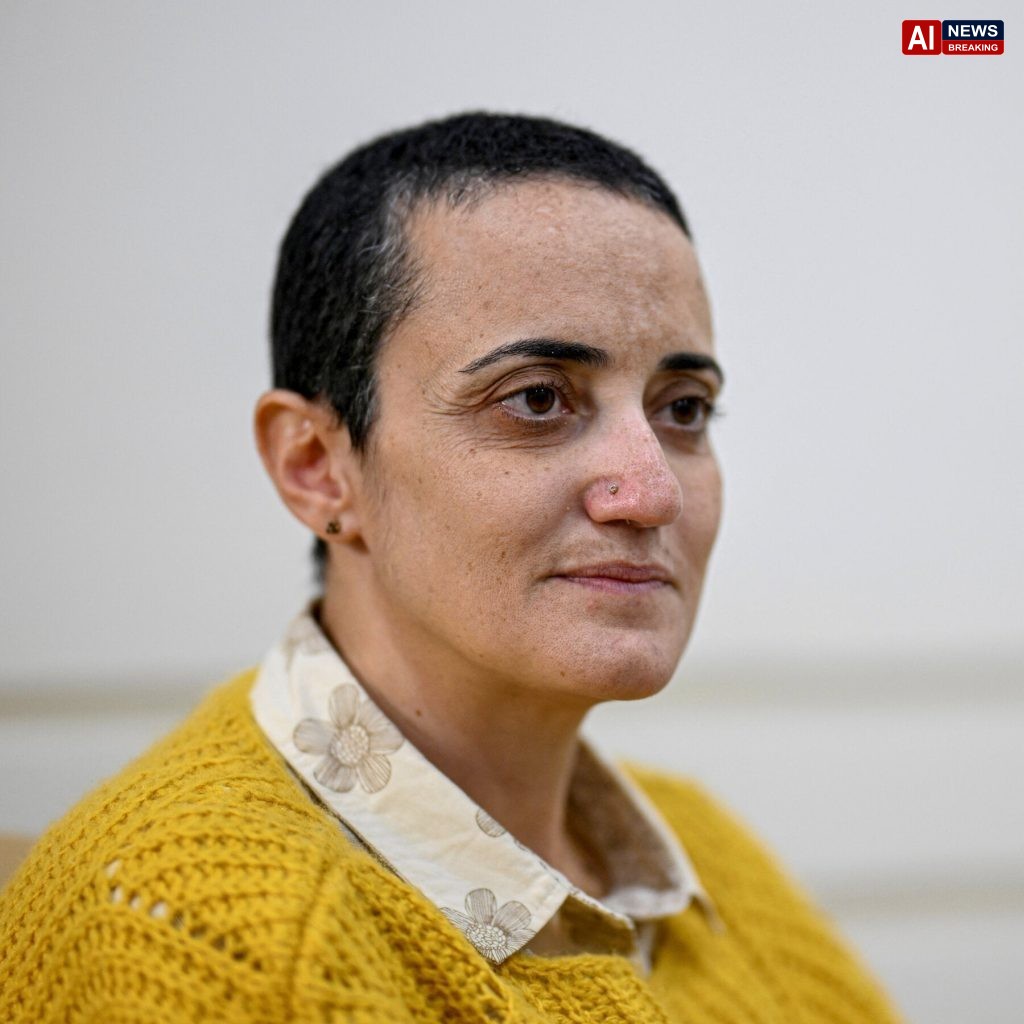
A Journalist Fights for Free Speech in Egypt, and to Stay Out of Jail - AI News Breaking
journalist fights free speech:
A Journalist Fights for Free Speech in Egypt, and to Stay Out of Jail Lina Attalah, the founder and editor‑in‑chief of Mada Masr, has become the focal point of two high‑profile court cases that could reshape the future of independent journalism in Egypt. The first case, filed by the state prosecutor, accuses her of publishing false information and “defaming the armed forces” after a series of articles on military procurement. The second, a civil suit brought by a powerful business conglomerate, alleges libel over reports on alleged corruption in a state‑linked construction project..
Both trials are being watched closely by local and international observers as a barometer of Egypt’s tolerance for dissent. Mada Masr, launched in 2013, quickly earned a reputation for investigative reporting that delved into topics often avoided by state‑aligned media, such as human rights abuses, judicial corruption, and the opaque financing of large‑scale infrastructure. Its digital‑only model allowed it to bypass the costly and heavily regulated print market, but also left it vulnerable to legal attacks that target online publishers..
The outlet’s newsroom, comprising a mix of seasoned journalists and young freelancers, has faced repeated raids, equipment seizures, and intimidation, yet it has persisted in publishing stories that challenge official narratives. The charges against Attalah stem largely from a June 2023 article that revealed discrepancies in the procurement of armored vehicles for the Egyptian army. Critics argue that the piece relied on publicly available data and expert analysis, while the prosecution claims it “maliciously” sowed doubt about the competence of the armed forces..
Under Egyptian law, the offense of “defaming the armed forces” carries a potential prison sentence of up to three years, a penalty that has been wielded in past cases against journalists who scrutinise the military. In the civil case, the plaintiff, a construction firm with close ties to the Ministry of Housing, alleges that Mada Masr’s reporting on alleged kickbacks and inflated contracts caused “significant financial loss” and damaged its reputation. The lawsuit seeks damages amounting to 5 million Egyptian pounds and an injunction to remove the articles from the internet..
Legal experts note that civil libel suits have become a common tool for powerful entities in Egypt to silence critical reporting, often resulting in self‑censorship due to the financial burden of defending such cases. Human rights organisations, including Reporters Without Borders and the Committee to Protect Journalists, have issued statements urging the Egyptian courts to respect press freedom and to reject what they describe as “politically motivated” prosecutions. They point to a broader pattern of crackdown that intensified after the 2013 coup, citing the 2020 law that expanded the state’s ability to block websites and imprison journalists for “spreading false news.” These groups argue that the outcomes of Attalah’s trials could set precedents that either reinforce or erode the limited space left for independent media..
The Egyptian government, meanwhile, maintains that its actions are lawful and necessary to protect national security and the reputation of state institutions. In a televised interview, the Minister of Information asserted that “no one is above the law,” and that journalists must “exercise responsibility when handling sensitive information.” The ministry’s spokesperson added that the state is prepared to “apply the full extent of the legal framework” to those who “intentionally undermine public order.” This stance reflects a broader narrative that frames critical reporting as a threat rather than a democratic function. Within Mada Masr’s newsroom, the atmosphere is a mixture of determination and apprehension..
Staff members have organised a support network to provide legal assistance, counselling, and financial aid to families affected by the lawsuits. The outlet’s senior editor, Ahmed Ghoneim, told a confidential source that “the team is more united than ever; we see this as a test of our resilience and a chance to prove that truth cannot be silenced.” Yet the possibility of a lengthy pre‑trial detention for Attalah looms, prompting colleagues to prepare contingency plans for editorial continuity. International diplomatic circles have also taken note..
A spokesperson for the European Union’s delegation in Cairo reminded Egyptian authorities that “respect for freedom of expression is a cornerstone of EU‑Egypt relations,” and hinted that any adverse verdict could affect cooperation on trade and security matters. The United States, through its State Department, issued a routine annual report highlighting concerns over press freedoms, but stopped short of a direct condemnation, reflecting a delicate balance between strategic interests and human‑rights advocacy. Legal scholars analysing the cases note that the Egyptian penal code’s provisions on defamation and false news are notoriously vague, allowing prosecutors wide discretion..
Professor Mohamed El‑Said of Cairo University explained that “the lack of clear definitions creates an environment where any critical piece can be construed as illegal.” He added that precedent from previous cases, where journalists received suspended sentences or fines, may influence the court’s calculus, especially if the judiciary seeks to avoid international criticism while appeasing domestic power structures. Public reaction inside Egypt has been mixed. While many citizens, especially younger, internet‑savvy users, have rallied behind Attalah through social‑media campaigns and petitions, others view the lawsuits as necessary checks on “sensationalist” journalism that could destabilise the nation..
Opinion polls conducted by a local research firm indicate that roughly 38 % of respondents support stricter regulation of media, citing concerns over national security, whereas 45 % express solidarity with independent outlets and fear a return to state‑controlled narratives. If the courts ultimately rule against Attalah, the ramifications could extend beyond Mada Masr. Smaller digital news platforms.
Updated: November 28, 2026
If the verdict swings toward prosecution, Egypt risks cementing a precedent where the state’s narrative eclipses investigative inquiry, leaving fledgling digital outlets to self‑censor or shut down. A conviction would also chill international investors wary of a press climate that treats critical reporting as a security threat, tightening the country’s diplomatic and economic ties.





