 Spain’s general elections approach with centre‑right gains.
 SpaceX Falcon 9 rocket launching private Cygnus XL cargo craft to the ISS today: Watch it live
 CM Chandrababu Naidu asks NDA MPs from Andhra to reach Delhi for key Bills
 Record Gold Prices Are Fueling Deadly Disease Outbreaks
 Former Vice-President Dhankhar to move to Tilak Marg apartment from Dec. 1 pending official accommodation
Spain’s general elections approach with centre‑right gains.
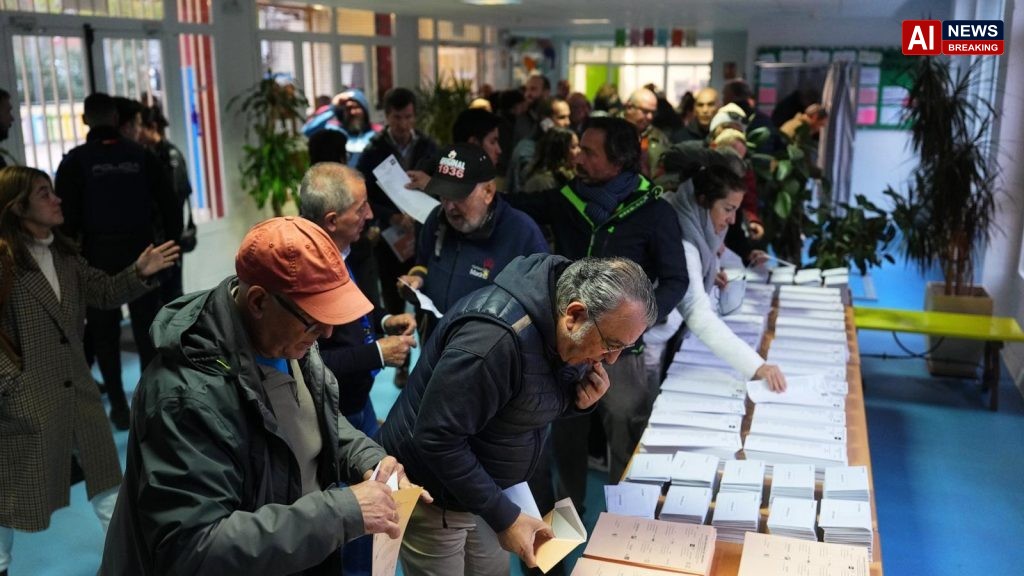
Polls open in Spanish elections that could see conservatives and far right unseat Pedro Sánchez - AI News Breaking
spains general elections approach:
Spain’s general elections, scheduled for 28‑29 May, have entered a new phase as voters prepare to cast their ballots in a political landscape that many analysts say could culminate in the ousting of incumbent Prime Minister Pedro Sánchez Olaza and usher in a government led by a coalition of the conservative People’s Party and the far‑right Vox. The final days of campaigning have witnessed a flurry of televised debates, party manifestos, and public rallies, all of which have sharpened the divisions between the left‑leaning Spanish Socialist Workers’ Party (PSOE) and its opponents. Opinion polls conducted in recent weeks indicate a precarious balance of power, with the centre‑right bloc gaining a small but pivotal edge over the ruling coalition.The surge in support for the People’s Party (PP) can be traced to a combination of economic concerns and a growing perception that Sánchez’s handling of inflation and public debt has eroded confidence in his ability to steer Spain through a turbulent global economy..
Voters in the Madrid and Andalusia regions, where the PP has long maintained a strong base, have expressed frustration over rising living costs and a perceived lack of tangible policy responses from the current government. In the latest poll, the PP has climbed to 35 percent, narrowly surpassing the PSOE’s 34 percent, and a margin that has spurred the party’s leaders to intensify their outreach to undecided voters.Meanwhile, Vox, the far‑right party that entered the Spanish parliament in 2018, has seen its support plateau at around 12 percent. Although the party’s share of the vote remains below the 5 percent threshold needed for a parliamentary majority, its role as a potential kingmaker cannot be underestimated..
Vox’s emphasis on stringent immigration controls and a return to traditional values has resonated with a segment of the electorate that feels alienated by the more liberal social policies championed by Sánchez’s administration. The party’s influence is further amplified by its strategic alliances with the PP in regions such as Catalonia and Galicia, where it has secured local governance in a few municipalities.In contrast to the right‑leaning momentum, the PSOE’s internal dynamics have been fraught with challenges. Sánchez’s decision to dissolve parliament earlier than anticipated, a move intended to secure a new mandate for his coalition, has been met with criticism both within the party and from opposition groups..
The ensuing leadership race, which culminated in Sánchez’s re‑election, was marked by heated debates over the party’s direction and its response to Spain’s growing social and economic disparities. While Sánchez’s supporters credit his record on social welfare and labor rights, detractors argue that his administration has been too cautious in tackling the nation’s fiscal deficits.The economic backdrop against which these elections are unfolding is one of persistent uncertainty. Spain’s inflation rate, which has hovered around 4 percent, has been driven by soaring energy costs, supply‑chain disruptions, and the lingering effects of the pandemic..
The government’s measures to curb inflation, including subsidies for low‑income households and price‑control mechanisms for essential goods, have been perceived as insufficient by a growing number of voters. A segment of the electorate, particularly in the southern provinces, is also concerned about the long‑term sustainability of Spain’s public debt, which has risen to over 95 percent of gross domestic product in recent years.The role of the European Union in the upcoming elections has been a recurrent theme across campaign platforms. Both the PP and Vox have pledged to renegotiate Spain’s participation in EU fiscal frameworks, arguing that the bloc’s austerity measures have stifled domestic growth..
Conversely, Sánchez’s government has defended the importance of maintaining strong ties with Brussels, citing benefits such as the stability of the eurozone and access to EU funding for infrastructure projects. The divergence in stances on EU policy has further highlighted the ideological cleavages that define the current electoral contest.A notable feature of the campaign has been the increased involvement of grassroots movements and civil society organizations. Anti‑corruption groups, labour unions, and environmental NGOs have mobilised to influence public opinion through social media campaigns, public demonstrations, and targeted outreach..
While the PSOE has traditionally enjoyed robust support from labour unions, the PP and Vox have also managed to cultivate a new base among young voters by promising job creation schemes and a revival of Spain’s manufacturing sector. This generational shift, combined with the heightened role of digital campaigning, has added another layer of complexity to an already intricate political tableau.In the days leading up to the polls, the Spanish electorate has been offered a stark choice: to continue with Sánchez’s coalition government, which has championed progressive reforms on issues such as gender equality and climate change, or to shift power to a more conservative coalition that prioritises fiscal restraint and traditional values. The electoral outcome is poised to set the tone for Spain’s domestic agenda for the coming years and could have implications for its role within the European Union, its economic recovery plan, and its social cohesion.As the country heads to the polls, the uncertainty surrounding the final results remains palpable..
While polls suggest a narrow advantage for the centre‑right bloc, the highly proportional electoral system in Spain allows for the possibility of significant shifts in the balance of power, particularly if smaller parties succeed in surpassing the 5 percent threshold. The performance of regional parties, such as the Catalan pro‑independence Junts per Catalunya and the Basque nationalist EH Bildu, will also be decisive in shaping the post‑election coalition. The ultimate configuration of Spain’s next government will therefore hinge not only on the national vote but also on how the diverse regional dynamics resolve in the days following the election..
Spain’s May 28‑29 general election is poised to decide whether Prime Minister Pedro Sánchez Olaza’s coalition survives or a centre‑right alliance of the People’s Party and Vox takes power, with polls showing a razor‑thin edge for the latter. Voters face a stark choice between continuing progressive reforms and navigating Spain’s economic challenges or shifting to a government that promises fiscal restraint and tougher immigration policies.
This development highlights evolving dynamics and may have broader implications in the near term.