 SpaceX Falcon 9 rocket launching private Cygnus XL cargo craft to the ISS today: Watch it live
 CM Chandrababu Naidu asks NDA MPs from Andhra to reach Delhi for key Bills
 Record Gold Prices Are Fueling Deadly Disease Outbreaks
 Former Vice-President Dhankhar to move to Tilak Marg apartment from Dec. 1 pending official accommodation
 Who Is Alberto Núñez Feijóo, Spain’s Conservative Opposition Leader?
SpaceX Falcon 9 rocket launching private Cygnus XL cargo craft to the ISS today: Watch it live
**
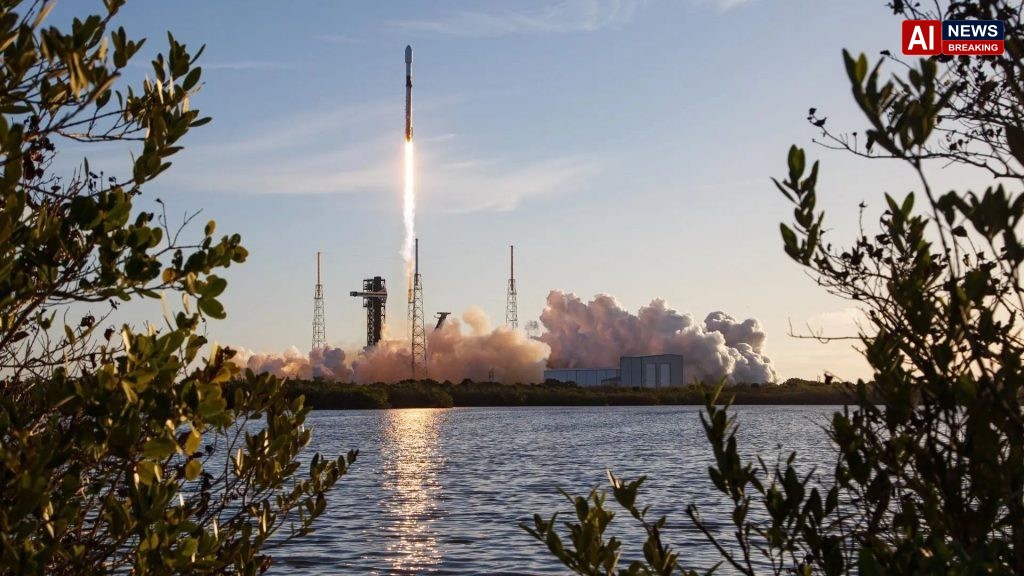
SpaceX Falcon 9 rocket launching private Cygnus XL cargo craft to the ISS today: Watch it live - AI News Breaking
spacex falcon rocket launching:
SpaceX’s Falcon 9 rocket is scheduled to lift off from Florida’s Cape Canaveral Space Force Station at 10:47 a.m. EST (1547 GMT) today, carrying Northrop Grumman’s Cygnus XL robotic cargo freighter to the International Space Station. The launch marks the 25th resupply mission for the Cygnus series and the fourth flight of the upgraded XL variant, which can transport roughly 30 % more cargo than its predecessor..
The combined payload exceeds five tonnes, a substantial contribution to the ISS’s ongoing scientific and maintenance operations. The mission, designated Cygnus XL‑25, is part of NASA’s Commercial Resupply Services contract, which has seen the Cygnus fleet deliver a range of supplies, scientific experiments, and spare parts to the orbital laboratory. The freighter will be guided into low Earth orbit by the Falcon 9’s first stage, after which the upper stage will ignite to place the vehicle into a precise rendezvous trajectory with the station..
Once docked, the cargo will be transferred to the ISS’s internal storage and crewed experiments will be set for deployment. Observers can follow the launch live via NASA’s official livestream platform, with a secondary stream expected to be hosted by Space.com if the agency releases the footage. The broadcast will begin at 10:25 a.m..
EST (1525 GMT), providing viewers with a 22‑minute countdown before the Falcon 9 engines ignite. The feed will include live commentary from mission specialists, behind‑the‑scenes footage of the vehicle’s preparation, and expert analysis of the mission’s objectives. The Falcon 9 rocket itself has a storied history of reliability, having launched more than 300 missions since its first flight in 2010..
Its first stage, powered by nine Merlin engines, will perform the majority of the ascent, while the second stage, equipped with a single Merlin Vacuum engine, will place the Cygnus freighter into a stable orbit. After separation, the Cygnus will deploy its own propulsion system to fine‑tune its approach to the ISS, a process that typically takes around two days. Cygnus XL’s design improvements include an expanded payload bay and enhanced thermal protection, allowing it to carry a wider variety of cargo types..
The freighter’s autonomous docking system has been refined to accommodate the ISS’s rotating frame of reference, ensuring a smooth connection without the need for manual intervention. This capability is essential for the efficient transfer of high‑value scientific payloads, which often require precise placement within the station’s internal modules. NASA’s cargo contract with Northrop Grumman has been renewed through 2028, reflecting the agency’s confidence in the Cygnus platform’s performance..
The partnership has delivered more than 50 missions to date, providing critical support for the ISS’s research programmes in life sciences, physics, and Earth observation. Each mission also delivers spare parts for the station’s life‑support systems, ensuring long‑term habitability for the crew aboard. The payload for today’s mission includes a mix of fresh produce, scientific instruments, and laboratory equipment..
Fresh lettuce and spinach, grown in the ISS’s Veggie module, will be replenished to maintain the crew’s diet, while a new set of micro‑gravity experiments will be deployed to the station’s Columbus laboratory. The freighter also carries spare parts for the ISS’s Canadarm2 robotic arm, ensuring the station remains capable of handling external payloads and maintenance tasks. In addition to the scientific cargo, the Cygnus XL will carry a new suite of environmental monitoring instruments..
These devices will help scientists track air quality, temperature, and humidity within the station’s habitable modules, providing data that can improve life‑support algorithms and crew health monitoring. The instruments are also designed to operate autonomously for up to 180 days, giving researchers a long‑term view of the ISS environment. The launch also serves as a test of the Cygnus XL’s upgraded thermal shielding, which has been designed to withstand the intense heat of re‑entry..
Although the freighter will not return to Earth, its heat‑shielding system provides a critical safety margin for any future missions that might involve a return to orbit. The technology development continues as SpaceX and Northrop Grumman work toward the next generation of cargo vehicles. The mission’s success depends on the precise coordination between SpaceX, Northrop Grumman, and NASA..
Mission control teams will monitor every phase, from launch vehicle ignition to docking manoeuvres, ensuring that the vehicle remains on its intended trajectory. In the event of any anomaly, contingency procedures have been rehearsed over several test missions, giving the teams confidence in their ability to respond quickly. As the rocket lifts off, the roar of the Merlin engines will be audible to those within the launch corridor, while viewers on Earth will see the plume of black smoke and the gradual climb into the blue dome..
The Falcon 9’s ascent is a familiar sight for space enthusiasts, yet each launch carries its own significance for the scientific community and the continued human presence in low Earth orbit. Once the Cygnus freighter has docked, the crew aboard the ISS will begin unloading the cargo, a process that can take several hours. The transfer will be closely monitored, with video feeds providing real‑time updates on the installation of new equipment..
The mission’s completion will mark another milestone in the collaborative effort between NASA and its commercial partners, reinforcing the vital role of private industry in sustaining human spaceflight..
Updated: November 29, 2026
SpaceX will launch a Falcon 9 from Cape Canaveral today carrying Northrop Grumman’s upgraded Cygnus XL cargo ship, the 25th resupply flight to the ISS, with more than five tonnes of supplies, experiments and spare parts. The mission, part of NASA’s Commercial Resupply Services contract, aims to dock the freighter within two days, bolstering the station’s science program and crew provisions.