 DMK has betrayed T.N.’s interests on delimitation: Aadhav Arjuna
 Netanyahu’s Power-Sharing Offer Rejected Eisenkot Turns to Opposition Allies as Israel Faces Coalition Crisis
 Why is OPEC+ keeping oil production unchanged despite the Iran war, and what does it mean for global crude prices?
 Tripura youths held with 1.85 kg gold worth over 2.24 crore in DRI raid at New Jalpaiguri railway station
 Karnataka Christian Welfare Schemes: KCCDC Chairman Appeals to Eligible Families to Claim Government Benefits
DMK has betrayed T.N.’s interests on delimitation: Aadhav Arjuna
**
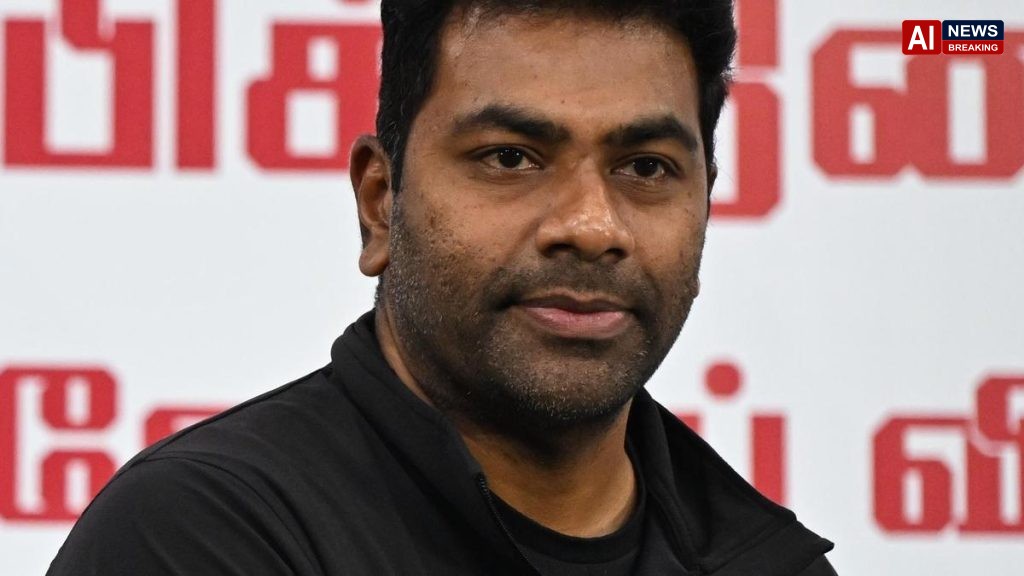
DMK has betrayed T.N.’s interests on delimitation: Aadhav Arjuna - AI News Breaking
betrayed interests delimitation aadhav:
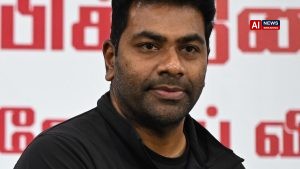
The Dravida Munnetra Kazhagam’s (DMK) recent stance on the country’s delimitation exercise has sparked a fierce debate in Tamil Nadu, with party veteran Aadhav Arjuna accusing the leadership of abandoning the state’s long‑held interests. At a press conference in Chennai on Thursday, Arjuna, a former Member of Parliament and senior figure within the party’s grassroots network, warned that the DMK’s current approach could erode Tamil Nadu’s political clout at the national level. He argued that any alteration to the allocation of Lok Sabha seats, or the introduction of new reservations, must respect the existing balance that has, in his view, underpinned the state’s representation since independence.Arjuna’s criticism comes at a time when the central government is gearing up for the next nationwide delimitation, a constitutional process that recalibrates the distribution of the 543 seats in the Lok Sabha based on the latest census figures..
The last major redrawing of boundaries took place in 2008, and the current map has been in place for over a decade. While the Election Commission has signalled that the upcoming exercise will be the first to incorporate the 2021 census, political parties across the country are lobbying for adjustments that they believe will advantage their regional strongholds. In Tamil Nadu, the DMK has traditionally advocated for a modest increase in seats, citing population growth and the need for more equitable representation of rural constituencies.Contrastingly, Arjuna urged the party to adopt a more cautious line, insisting that the number of Lok Sabha seats should remain fixed at 543 for at least the next quarter‑century..
He cited the potential disruption to the delicate equilibrium of regional representation, warning that a sudden expansion could trigger a cascade of demands from other states, leading to an unwieldy and imbalanced Parliament. “If we open the floodgates now, we risk compromising the very structure that ensures each state’s voice is heard in proportion to its population,” he told reporters, his tone measured but unmistakably urgent.The DMK’s current position, as articulated by its chief minister and party president, M. Stalin, has been to seek a modest increase in Tamil Nadu’s seats, arguing that the state’s share of the national electorate has risen faster than the average..
Stalin’s office has pointed to demographic data indicating that Tamil Nadu’s population grew by roughly 10 percent between the 2011 and 2021 censuses, a rate that, if reflected in the Lok Sabha, would warrant an additional seat or two. Supporters of this view claim that the existing allocation, fixed at 39 seats for the state, no longer mirrors the demographic reality and that any denial would be a disservice to the electorate.Arjuna, however, dismissed these arguments as short‑sighted, contending that the real issue lies in the proposed 33 percent reservation for women within the existing strength of the House. He praised the central government’s initiative to boost female representation but cautioned that it must be implemented without expanding the total number of seats..
“The principle of women’s reservation should operate within the current framework. Adding more seats merely to accommodate the quota dilutes the merit‑based competition that the electorate expects,” he said, invoking the need for a balanced approach that upholds both gender equity and parliamentary efficiency.The tension between the two positions reflects a broader national debate on how best to modernise India’s parliamentary system while preserving its federal character. Critics of a fixed‑seat model argue that it freezes representation in a way that ignores shifting population patterns, potentially marginalising rapidly growing regions..
Proponents of the status quo, like Arjuna, argue that the constitutional guarantee of a maximum of 543 seats—enshrined in Article 81 of the Constitution—was designed to prevent the legislature from becoming unmanageably large, and that any increase should be approached with utmost restraint.Political analysts note that the DMK’s internal rift could have electoral repercussions ahead of the next general election. “If the party appears divided on a core issue such as delimitation, it may weaken its bargaining power in coalition talks and undermine its narrative of unified leadership,” observed Dr. Nisha Rao, a senior fellow at the Institute of Indian Politics..
She added that the DMK’s ability to reconcile these divergent views will be crucial for maintaining its dominance in Tamil Nadu, where the party has governed for most of the past decade.In the meantime, the central government has indicated that the delimitation commission will be appointed within the next six months, with a clear mandate to factor in both population data and the constitutional ceiling on seats. Sources close to the commission suggest that the body will also be tasked with operationalising the women’s reservation, a step that could set a precedent for future reforms. The commission’s final report, expected by early 2027, will likely determine whether Arjuna’s warnings hold sway or whether the DMK’s push for additional seats will reshape the state’s representation in New Delhi.As the debate unfolds, Tamil Nadu’s electorate watches closely..
Voters in the state have traditionally placed a high value on regional autonomy and fair representation, and any perception that their interests are being compromised could influence future voting patterns. For now, the DMK leadership faces the delicate task of balancing its long‑term strategic goals with the immediate concerns raised by senior members like Arjuna, whose appeal to maintain the existing 543‑seat structure and to embed the 33 percent women’s quota within that framework underscores a broader struggle over how India’s democratic institutions should evolve in the coming decades..
Updated: November 29, 2026
Arjuna’s warning that a modest seat boost could unleash a cascade of regional claims hints at a hidden power‑play: the DMK may be leveraging delimitation to cement its coalition leverage, not just to correct demographic math.
If the party succumbs to internal dissent, its once‑unified front could