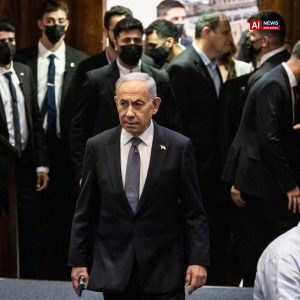
 Netanyahu’s Power-Sharing Offer Rejected Eisenkot Turns to Opposition Allies as Israel Faces Coalition Crisis
 Why is OPEC+ keeping oil production unchanged despite the Iran war, and what does it mean for global crude prices?
 Tripura youths held with 1.85 kg gold worth over 2.24 crore in DRI raid at New Jalpaiguri railway station
 Karnataka Christian Welfare Schemes: KCCDC Chairman Appeals to Eligible Families to Claim Government Benefits
 New California insurance commissioner has a bold plan for state-run wildfire insurance
Netanyahu’s Power-Sharing Offer Rejected Eisenkot Turns to Opposition Allies as Israel Faces Coalition Crisis
** Negotiations between Prime Minister Benjamin Netanyahu and former chief of staff Gadi Eisenkot have collapsed, ending hopes for a unity government and plunging Israel into a continued parliamentary deadlock.
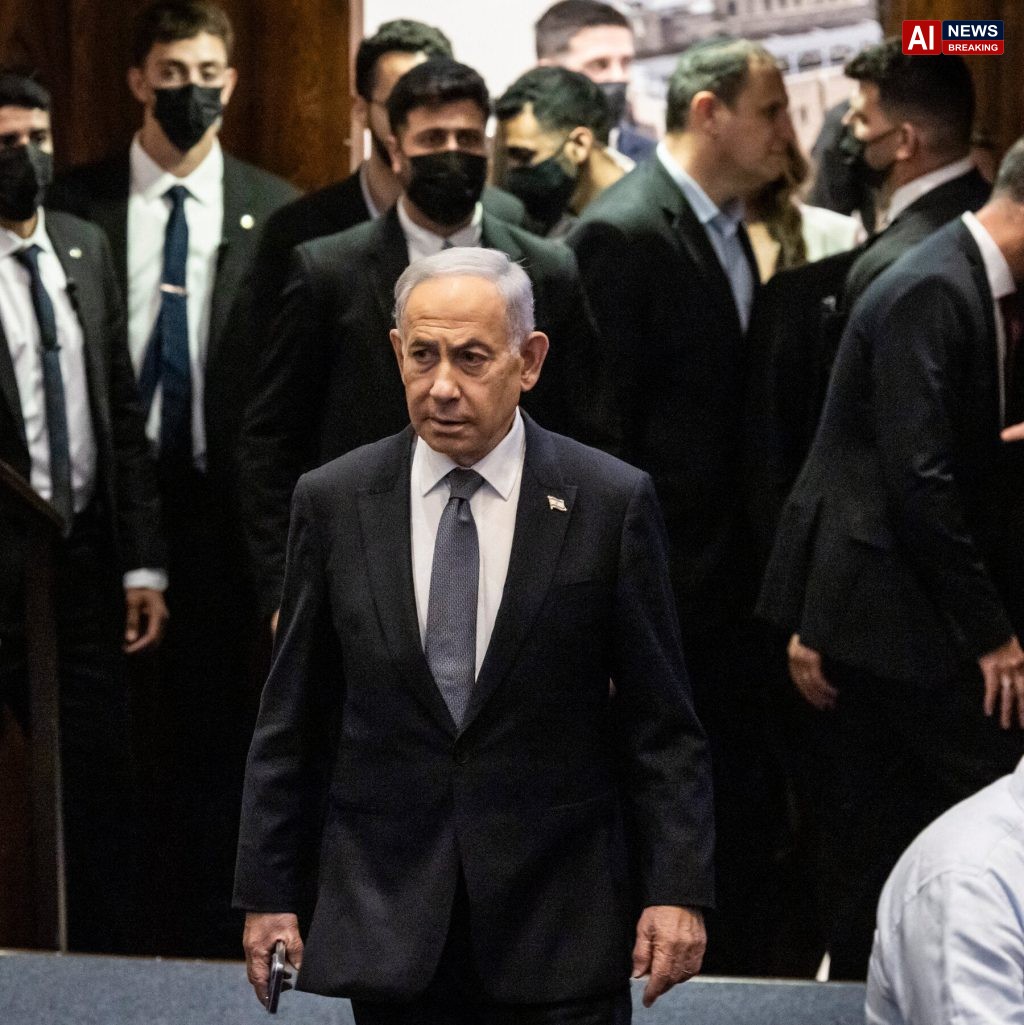
No Sign of Unity Deal in Israel as Netanyahu-Eisenkot Talks End - AI News Breaking
netanyahus powersharing offer rejected:
Prime Minister Benjamin Netanyahu’s invitation to share power with former chief of staff Gadi Eisenkot has so far produced no concrete outcome, and talks between the two senior figures appear to have stalled. The brief window for negotiations, opened in the wake of the latest round of elections that left Israel’s political landscape fragmented, has now closed without any formal agreement or timetable for a coalition. Observers note that while Netanyahu’s overture was seen as a pragmatic move to secure a governing majority, the lack of follow‑up signals deep‑seated divergences that may prove insurmountable.The electoral stalemate that followed the March vote left Netanyahu’s Likud party with 32 seats out of 120, far short of the 61 needed for a majority..
Eisenkot, who leads the centrist “National Unity” list, secured 21 seats, positioning his bloc as a potential kingmaker. Early speculation suggested that a joint “unity” government could combine Netanyahu’s experience with Eisenkot’s security credentials, appealing to voters weary of repeated elections. Yet insiders report that negotiations quickly hit a wall over key policy portfolios, the role of the defence minister, and the extent of Netanyahu’s authority in any power‑sharing arrangement.One of the most contentious points has been the future of the defence ministry, a post traditionally held by the prime minister or a close ally..
Eisenkot, a former military chief with a reputation for pragmatic security decisions, insisted on retaining a decisive role in defence policy, while Netanyahu, whose tenure has been marked by a strong personal grip on security matters, was reluctant to cede full control. Sources close to the talks say that the two sides could not agree on whether the defence portfolio would be shared, rotated, or placed under a neutral minister, leading to an impasse that halted further dialogue.Another sticking point involves the composition of the coalition’s economic team. Eisenkot’s platform emphasizes fiscal responsibility and modest reforms to address inflation and housing costs, whereas Netanyahu’s administration has pursued a more interventionist approach, including subsidies for technology firms and increased spending on infrastructure..
Negotiators from both camps reportedly clashed over the allocation of ministries such as finance and treasury, with Eisenkot demanding greater influence to steer the government’s economic agenda, a demand Netanyahu was unwilling to meet without substantial concessions elsewhere.The political calculus surrounding the talks also reflects broader strategic concerns. Netanyahu, who has been prime minister for over a decade, faces ongoing legal challenges and a series of corruption investigations that have eroded his domestic support. Forming a coalition with Eisenkot could have offered a veneer of renewal and a chance to sidestep further elections..
However, analysts argue that Netanyahu may now be weighing the benefits of a minority government, which would allow him to retain tighter control over his agenda while letting legal proceedings unfold without the added scrutiny of a power‑sharing partner.Eisenkot, for his part, appears to be recalibrating his strategy. His party’s performance, while respectable for a newly formed list, fell short of the 20‑seat threshold that would guarantee a decisive bargaining chip. In recent public statements, Eisenkot has emphasized the need for a stable government to address pressing security threats, particularly the ongoing tensions along Israel’s northern and southern borders..
Yet he has also signalled willingness to explore alternative alliances, including possible cooperation with centrist and right‑wing parties that share a common stance on national security, thereby keeping his options open as the political deadline approaches.The absence of a formal unity agreement has broader implications for Israel’s governance in the coming months. Without a clear majority, the Knesset is likely to remain in a state of flux, with legislative initiatives subject to ad‑hoc coalitions and frequent negotiations. This environment could hinder the government’s ability to respond swiftly to external crises, such as the volatile situation in Gaza and the looming Iranian nuclear question, both of which demand coordinated policy responses..
Moreover, the protracted deadlock may erode public confidence, as citizens grow increasingly frustrated by repeated elections and the perception of a dysfunctional parliamentary system.International observers have expressed concern over the stalemate, noting that Israel’s strategic partnerships rely on a predictable domestic political climate. The United States, Europe and regional allies have all called for a swift resolution that would restore a stable governing coalition capable of addressing security and diplomatic challenges. In diplomatic circles, the lack of a unity government is viewed as a potential weakening of Israel’s negotiating position, particularly in matters requiring swift decision‑making, such as cease‑fire talks or humanitarian coordination in conflict zones.As the deadline for forming a government draws near, the political spotlight shifts to the next round of back‑channel discussions..
Senior figures from Likud, the National Unity list and several smaller parties are reportedly meeting informally to assess whether a broader coalition—perhaps one that includes elements of the far‑right Otzma Yehudit or the centrist Yesh Atid—could be assembled. Such a configuration would require significant compromise on both ideological and policy fronts, and would likely reshape the balance of power within the Knesset. Whether these talks will yield a workable majority or simply prolong the impasse remains uncertain.In the interim, Netanyahu continues to lead a caretaker government, handling day‑to‑day affairs while maintaining a public posture of openness to partnership..
Eisenkot, meanwhile, has refrained from making definitive statements about his next steps, opting instead to focus on his party’s legislative priorities and the broader national discourse on security and economic reform. The coming weeks will determine whether Israel moves toward a unified administration capable of navigating its complex internal and external challenges, or whether the political deadlock will persist, prompting yet another election cycle and further testing the resilience of its democratic institutions..
Updated: November 29, 2026
Netanyahu’s refusal to dilute his security grip, even at the cost of a functional coalition, hints that personal survival will trump Israel’s need for decisive wartime governance, eroding both domestic legitimacy and diplomatic leverage.
Meanwhile, Eisenkot’s pivot toward flexible alliances may force a fragmented Knesset into ad‑hoc bargaining, turning Israel’s policy engine into a perpetual negotiation table that weakens its strategic posture on Gaza, Iran and beyond.