 Trump signs Retirement Timing Act to aid retirees with benefit calculators
 ICC summons former Philippine president Duterte
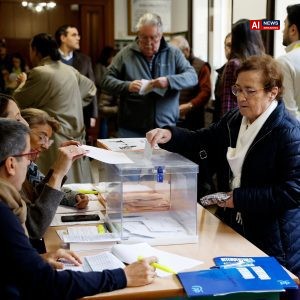
 Live Updates: Polls Close After High Turnout in Spanish Elections
 DMK has betrayed T.N.’s interests on delimitation: Aadhav Arjuna
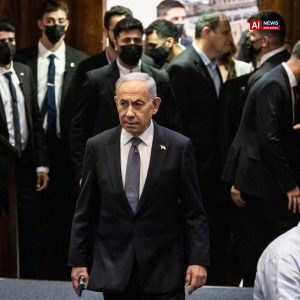
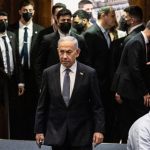 Netanyahu’s Power-Sharing Offer Rejected Eisenkot Turns to Opposition Allies as Israel Faces Coalition Crisis
ICC summons former Philippine president Duterte
**

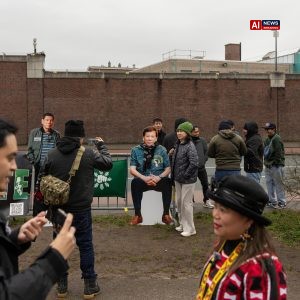
What to Know About Rodrigo Duterte’s Trial at the I.C.C. - AI News Breaking
Rodrigo Duterte, the Philippines’ former president who served from 2016 to 2022, is now the subject of a formal investigation by the International Criminal Court (ICC) over the alleged crimes against humanity committed during his nationwide anti‑drug campaign. The ICC’s Pre‑Trial Chamber in The Hague announced in June 2024 that it would issue a summons for Duterte to appear before the court, a step that follows a lengthy probe by the Office of the Prosecutor into the “war on drugs” that resulted in thousands of deaths. The move marks the first time a sitting or former head of state from Southeast Asia has faced such a prospect at the ICC, and it has sparked intense debate both within the Philippines and across the international community.The investigation centres on allegations that Duterte’s policy of “kill, arrest or surrender” – a directive issued in July 2016 – led to extrajudicial killings, arbitrary arrests and other serious violations of international law..
Human rights organisations estimate that between 2016 and 2022, more than 30,000 individuals were killed in police operations linked to the anti‑drug drive, with a substantial proportion believed to have been executed without due process. The ICC’s Office of the Prosecutor, under the leadership of Karim Khan, argues that the scale and systematic nature of these killings satisfy the legal threshold for crimes against humanity, specifically under the statutes concerning murder, persecution and enforced disappearance.Duterte’s government has consistently rejected the ICC’s jurisdiction, maintaining that the Philippines is a sovereign nation capable of addressing its own internal affairs. In 2019, the country withdrew from the Rome Statute, the treaty that established the ICC, a decision that was later reversed in 2023 when the new administration under President Ferdinand Marcos Jr..
signalled a willingness to re‑engage with international institutions. Nonetheless, the ICC maintains that its jurisdiction applies retroactively to crimes committed while the Philippines was a party to the treaty, and that the withdrawal does not affect ongoing investigations into alleged atrocities. Legal scholars note that the court’s precedent, set in cases such as the Sudanese President Omar al‑Bashir, supports the principle that no head of state is immune from accountability for grave breaches of international law.Domestically, the prospect of an ICC summons has been met with a mixture of defiance and concern..
Duterte, who remains a polarising yet popular figure, has dismissed the court’s actions as “foreign interference” and warned that any attempt to prosecute him would be “a betrayal of the Filipino people.” Opinion polls conducted in early 2024 show that despite a decline in his approval rating since leaving office, a majority of respondents still view his anti‑drug campaign as a necessary measure to combat crime and corruption. Critics argue that this continued support underscores deep‑seated societal divisions over law‑and‑order policies, and they caution that the ICC’s involvement could inflame nationalist sentiments.The legal process now moves to the pre‑trial stage, where the court will determine whether there is sufficient evidence to issue a full arrest warrant or, alternatively, a summons requiring Duterte to appear voluntarily. The Pre‑Trial Chamber has indicated that it will consider the possibility of a “conditional summons,” a mechanism that allows a suspect to appear before the court while remaining in their home country, subject to assurances that they will not impede the investigation..
This option has been used in other cases, notably involving former Sudanese officials, and could serve as a compromise that respects both the court’s authority and the Philippines’ concerns about sovereignty.International reactions have been swift. The United States, a long‑standing ally of the Philippines, has expressed “serious concern” over the allegations but stopped short of commenting on the ICC’s procedural decisions. The European Union has called for “full cooperation with the court” and reiterated its commitment to upholding human rights standards..
Meanwhile, regional bodies such as the Association of Southeast Asian Nations (ASEAN) have remained largely silent, reflecting the bloc’s traditional reluctance to intervene in the domestic affairs of member states.Human rights defenders in the Philippines have welcomed the ICC’s actions as a potential avenue for justice that has been denied at the national level. Groups such as the Philippine Commission on Human Rights and the International Federation for Human Rights have filed amicus briefs supporting the court’s jurisdiction and urging it to proceed with a warrant. They argue that domestic investigations have been hampered by political interference and a lack of independence within the police and judiciary, making an international forum the only viable path for accountability.Conversely, supporters of Duterte contend that the ICC’s focus on the anti‑drug campaign distracts from other pressing issues, such as economic recovery and the country’s response to natural disasters..
They point to the fact that the Philippines has made significant strides in reducing homicide rates and improving public safety since the campaign’s inception. Some legal experts caution that the ICC’s involvement could set a precedent that might be used by future governments to target political opponents, potentially politicising the court’s mandate.The upcoming months will be crucial in shaping the trajectory of the case. Should the ICC issue a summons, the Philippines will need to decide whether to comply, challenge the decision in the court’s Appeals Chamber, or pursue a diplomatic resolution..
Any outcome will have ramifications not only for Duterte himself but also for the broader discourse on the limits of state power in combating crime, the role of international justice mechanisms, and the balance between national sovereignty and universal human rights obligations.As the situation unfolds, observers note that the case embodies a clash between two competing narratives: one that frames Duterte’s anti‑drug war as a necessary, albeit harsh, response to a severe societal problem, and another that depicts it as a systematic campaign of terror that violated fundamental legal norms. The ICC’s determination will be watched closely by governments, NGOs and scholars worldwide, offering a test of the court’s capacity to hold powerful leaders to account while navigating the complex interplay of politics, law and public opinion..
Updated: November 29, 2026
The ICC’s move forces the Philippines to confront a stark choice: protect a populist legacy of “tough love” or acknowledge that unchecked state violence erodes the very legitimacy that once made Duterte’s brand of order appealing.
If the summons sticks, it could recalibrate Southeast Asia